The U.S. is seeing the highest number of West Nile virus cases at this point in the year in more than two decades, officials said.
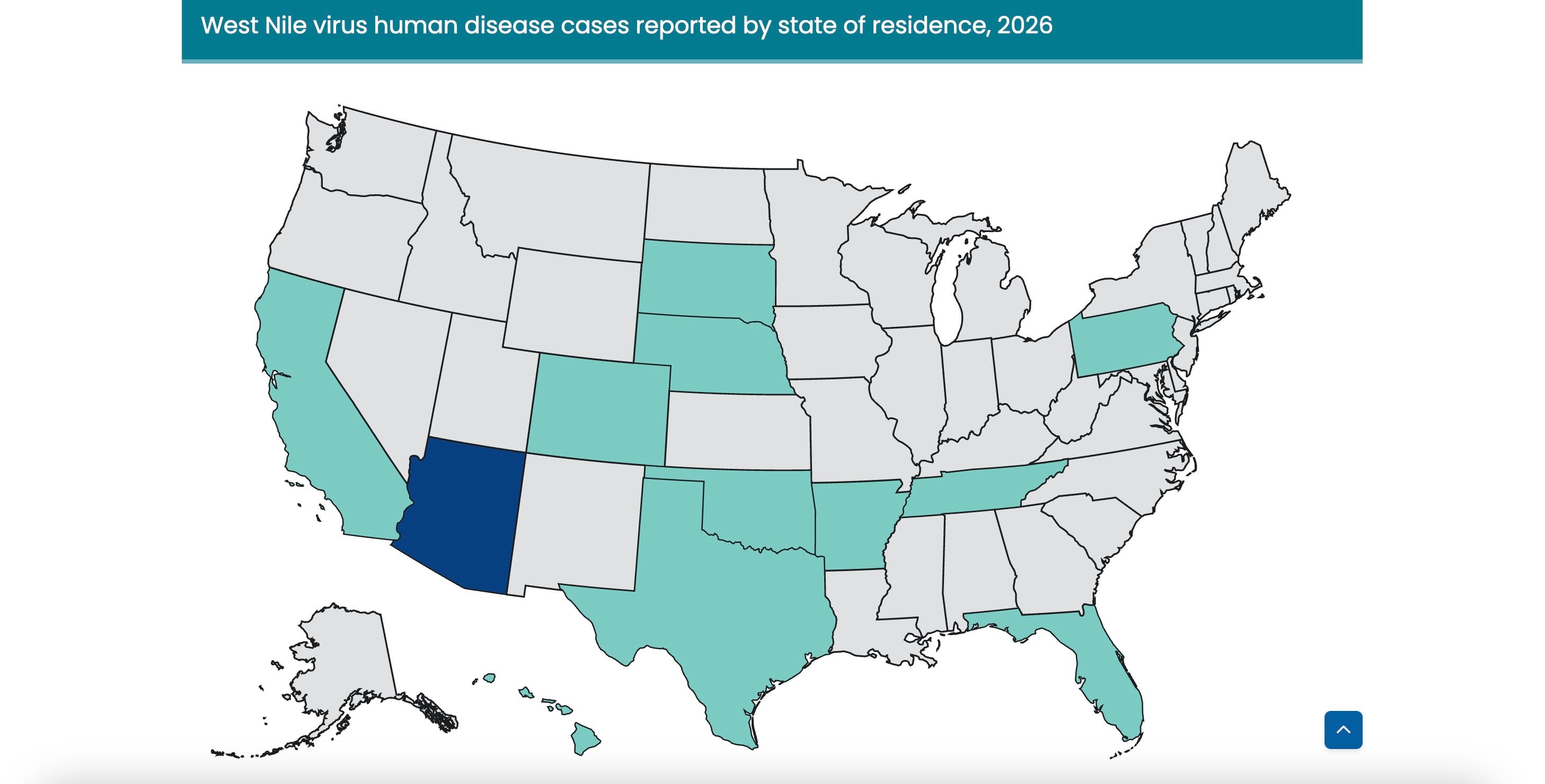
At least 48 cases of the mosquito-borne illness have been reported so far, including 38 that have been cases of severe neuroinvasive disease, the Centers for Disease Control and Prevention said Wednesday.
That’s the highest number of cases reported by this time of the year since 2004. There are typically an average of 10 disease cases by the end of June.
“This surge is driven by early circulation of the virus, with 23 states reporting West Nile virus activity – also the highest number recorded over the last 10 years,” the CDC said in a statement. Arizona has reported 32 cases.
West Nile is the leading cause of mosquito-related disease in the Lower 48 states, causing about 130 deaths each year.
Infections can lead to brain swelling and inflammation that can result in long-term disability or death. Although that occurs in fewer than 1 percent of people who are infected. Seniors and people with underlying medical conditions are at an increased risk.
Most people who are infected do not develop ailments, but one in five develop a fever and other symptoms, such as headache, body aches, joint pain, vomiting, diarrhea and rash.
There are currently no treatments available for infections. Most people who experience mild illness recover completely, but fatigue and weakness can last for weeks or months.
The virus spreads through the bites of infected mosquitoes and around 2,000 people are diagnosed with West Nile each year – a number that the CDC says is an underestimate.
People are typically infected during mosquito season, which runs from June through October, and the number of people diagnosed with West Nile typically peaks in late August to early September.
Warmer temperatures help mosquitoes to thrive, and summers are getting hotter due to human-caused climate change.
A warmer atmosphere can hold more moisture and mosquitoes hatch in standing water.
With millions of Americans expected to head outside this Fourth of July weekend, even amid sweltering heat, mosquitoes will have more chances to bite.
The best way to protect yourself from West Nile virus is to prevent any bites.
Americans should use insect repellent that’s been registered with the Environmental Protection Agency, put screens on windows, doors or air conditioning units, and wear long, loose-fitting shirts and pants so it is harder for mosquitoes to bite the skin.
The time of day you head outside also matters, according to the CDC.
“Avoid being outside between dusk and dawn when the mosquitoes that spread West Nile virus are most active,” the agency said.