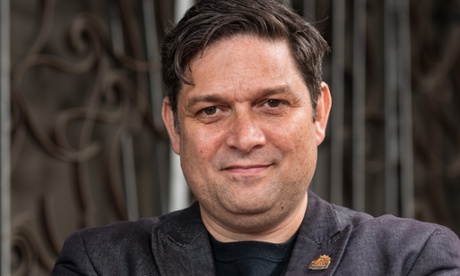
Wesley Enoch, the incoming artistic director of Sydney festival, has said the new wave of practising artists appointed as festival directors is set to shake up Australia’s major city festival circuit.
“There is something about people who know what it’s like to be in the room making the work, who can talk in different ways and create agency for artists,” said the director and playwright, speaking to Guardian Australia as his appointment was made public.
“There is a discussion going on around the producer-led model versus the artist-led model like it’s a dichotomy. In fact, I think it’s a sensibility about what artists can do. If you know how the work is made, if you have been in the room before, you can take greater risks.”
In late 2014, the outgoing artistic director of Belvoir theatre, Ralph Myers, called for more artists to take up the reins as artistic directors of Australia’s major arts organisations and festivals. Enoch joins Neil Armfield, co-artistic director of Adelaide festival with Rachel Healy, Jonathan Holloway at Melbourne festival and David Bertold of Brisbane festival as newly announced festival directors.
Practising artists offer different perspectives, said Enoch, whose tenure begins in 2017. “Sometimes a producer-led model is about what is the known; something they can put their finger on and go: ‘I know that.’ It’s not an act of creativity, it’s an act of recognition.”
Although he will not announce his first program until October 2016, Enoch said he is particularly interested in the idea of the citizen artist, the international trend towards “participatory models” of work, and about getting more people involved.
“[Festivals are] about the elite artist, the specialist artists, but also about these artists out there making work in different ways – in their communities or within online communities – and how they can be engaged to creatively reimagine the city,” he said.
Asked about the optimal balance between international and Australian work in a festival program, Enoch said it comes down to work that is relevant to its audience. “It’s not just about importing international culture and international narratives, it’s actually about making sure there is relevance to the city that is playing host.”
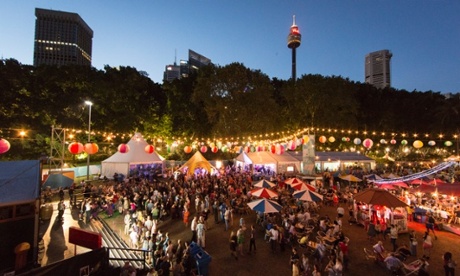
He said he had “big plans” for Indigenous work in his Sydney program, and was particularly interested in exploring ideas around colonisation and Australia Day, a contentious date for many people. He would be talking to the city’s Indigenous elders about it, he added, asking: “how we can look at that date, what can we do with this, and how do we look at interrogating it in a different way?”
A Noonuccal Nuugi man from Stradbroke Island, Enoch is only the second Indigenous Australian to direct one of the country’s major city arts festivals, after Stephen Page, who programmed the 2004 Adelaide festival. Enoch has spoken about approaching the perennial and thorny question of corporate sponsorship at arm’s length, and plans to continue that approach in Sydney.
“The pursuit of the ultimately clean money is very difficult,” he said. “For me it’s about forming relationships with sponsors and philanthropists and getting a sense of aligning values. What are we trying to do together? How are we trying to make the city a better place to live in?”
In May, he wrote an impassioned open letter to arts minister and attorney general George Brandis urging him to reconsider cuts to the Australia Council and re-install “a funding regime that is arm’s length from the cut and thrust of political life”.
“Self-interest and selective access can create short sightedness, nepotism and a kind of artistic narrowing that, if left unchecked, could make our artistic and cultural expression inbred, insular and ultimately moribund,” Enoch’s letter concluded.
Although he said it’s too early to tell whether the cuts will directly impact Sydney festival, it is likely to feel the impact as part of the wider “ecology” of the arts. “In any ecology, what is perceived as the smallest thing, a bacteria or an insect or a small bird, [can have] knock-on effects,” he said. “I think that’s the same in the arts.”
Nurturing artists and small companies is essential for the future of the arts. “They are as much a vital part of what’s going on as anything else and sometimes that’s where real innovation is happening.”
With Sydney’s outgoing artistic director Lieven Bertels particularly proud of the number of free events on offer, Enoch said he is keen to continue them. “You can’t have high art in theatre events without a base of easily accessible, either no- or low-price point participation in the cultural life of the city,” he said.
“[Every arts institution] needs to make sure our engagement is not just a commercial transaction. That’s part of it, I’m not going to deny that, but it’s also a cultural transaction, a transaction of ideas and participation, and gathering people together. And you do need free events to do that. ”