For years, legal immigration offered a stable path into the United States through student visas, work permits, family sponsorships and green card applications. Under US President Donald Trump’s second term, that process is facing tighter scrutiny. The administration has expanded its immigration agenda beyond illegal border crossings, introducing stricter reviews for international students, skilled foreign workers, asylum seekers and migrants already living legally in the country. Through executive orders, federal agency directives and tougher vetting standards, the White House is reshaping how legal immigration works in America.
The Trump administration says the measures are aimed at protecting national security, preserving jobs for American workers and preventing abuse of immigration systems. Universities, immigration lawyers and business groups say the changes are increasing delays, uncertainty and compliance burdens for migrants and employers alike.
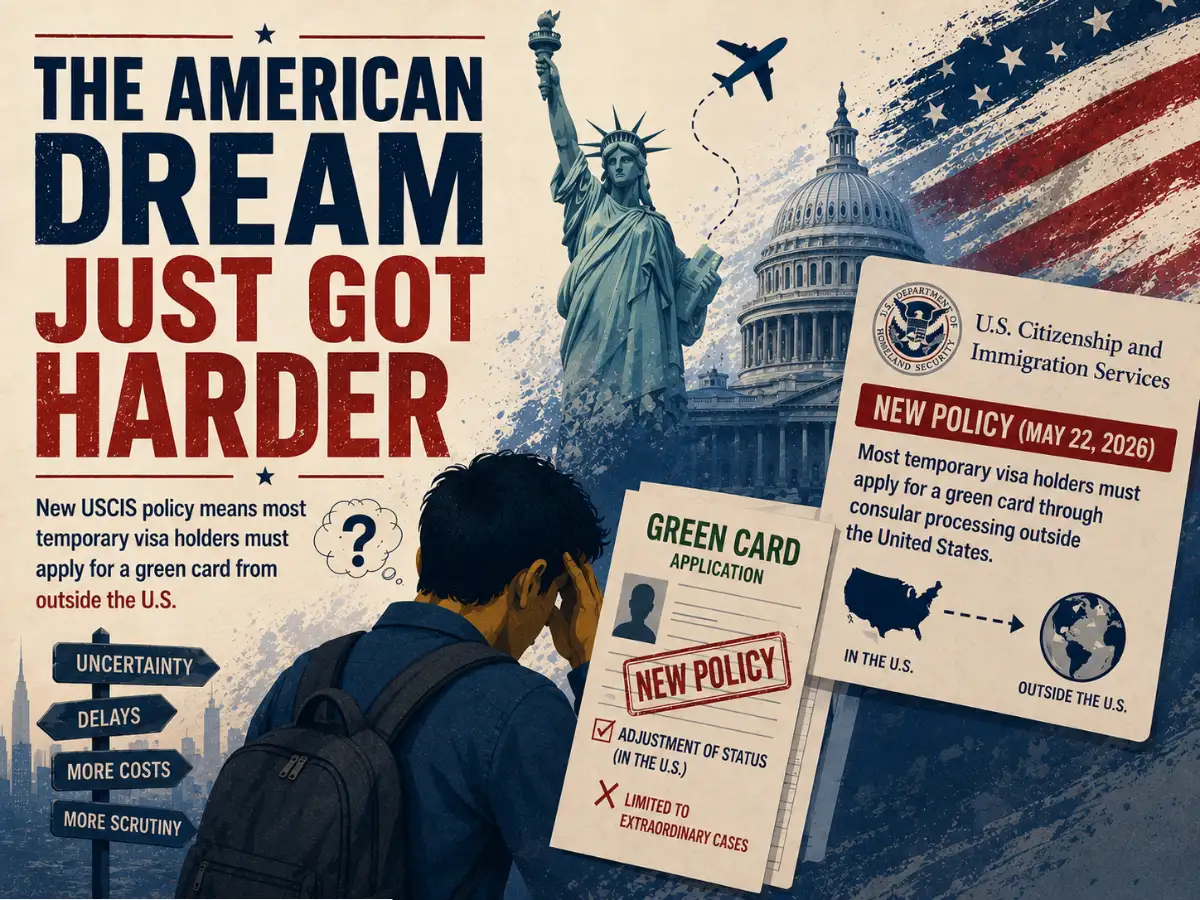
The latest shift came on May 22, when US Citizenship and Immigration Services (USCIS) announced a new policy memo that could significantly change how temporary visa holders apply for permanent residency in the United States.
Also Read| Want a green card? Leave the United States first
Green card applicants may now have to leave the US
One of the most closely watched developments involves the green card process for temporary visa holders already living in the United States.
On May 22, USCIS announced a new policy memo stating that, consistent with long-standing immigration law and immigration court decisions, migrants seeking adjustment of status should complete the green card process through consular processing outside the United States.
The agency said immigration officers would review applications “on a case-by-case basis” to determine whether applicants qualify for what USCIS described as an “extraordinary form of relief.”
“We’re returning to the original intent of the law to ensure aliens navigate our nation’s immigration system properly. From now on, an alien who is in the U.S. temporarily and wants a Green Card must return to their home country to apply, except in extraordinary circumstances. This policy allows our immigration system to function as the law intended instead of incentivizing loopholes,” USCIS spokesman Zach Kahler said.
Also Read| Jaishankar flags visa curbs with Rubio, US says measures not targeted at India
“When aliens apply from their home country, it reduces the need to find and remove those who decide to slip into the shadows and remain in the U.S. illegally after being denied residency,” he added.
“Nonimmigrants, like students, temporary workers, or people on tourist visas, come to the U.S. for a short time and for a specific purpose. Our system is designed for them to leave when their visit is over. Their visit should not function as the first step in the Green Card process,” Kahler also said.
According to USCIS, processing more applications through overseas consulates would allow the agency to focus resources on other immigration priorities, including visas for victims of violent crime and human trafficking, as well as naturalisation applications.
What this means for applicants
The policy could make the green card process longer, more expensive and more uncertain for many temporary visa holders already living in the United States. Applicants may now have to leave the country and attend visa interviews at US consulates abroad instead of completing the process through USCIS inside the US.
Immigration lawyers say this could especially affect H-1B workers, L-1 employees, international students and dependent family members who were planning to transition to permanent residency while remaining in the country.
The shift may also increase the risk of visa delays, administrative processing and travel-related disruptions for applicants waiting outside the United States.
Also Read| Marco Rubio says new US green card policy ‘not about India’, cites global immigration overhaul
Timeline: Trump’s second-term legal immigration crackdown
January 2025: Expanded visa vetting begins
Soon after returning to office, the administration directed US embassies and consulates to increase social media screening and background reviews for student, tourist and employment visa applicants.
The US State Department said the expanded screening measures were aimed at strengthening national security vetting procedures.
March 2025: H-1B visa scrutiny increases
USCIS increased reviews of H-1B petitions, requesting additional evidence from employers on wages, job qualifications and worker eligibility.
The agency said the measures were intended to strengthen programme integrity and prevent fraud in employment-based visa systems.
August 2025: Public charge rules revived
The administration reinstated stricter public charge screening standards for visa and green card applicants.
Under DHS guidance, immigration officers may consider factors such as income, education, financial resources and likelihood of using public benefits when reviewing applications.
DHS said the policy was intended to “promote immigrant self-sufficiency” and protect taxpayer resources.
May 22, 2026: USCIS announces green card policy memo
USCIS announced new guidance emphasising that temporary visa holders seeking permanent residency should generally complete the process outside the United States through consular processing.
The agency described adjustment of status as an “extraordinary form of relief” subject to discretionary review.
Student visa scrutiny increases
The administration has expanded checks on international students and exchange visitors applying for F, J and M visas.
The State Department and DHS have increased social media reviews, background screening and compliance monitoring involving educational institutions hosting foreign students.
Federal officials have also increased scrutiny involving visa holders linked to campus protests and political activism.
Some applicants have reported delays, additional interviews and visa revocations during Trump’s second term.
According to the US Department of Commerce, international students contributed more than $40 billion annually to the American economy before the latest restrictions and policy changes.
Universities and higher education groups have warned that prolonged visa uncertainty could affect international enrollment and research programmes.
H-1B and employment visa restrictions
The administration has tightened scrutiny of employment-based visas, especially the H-1B programme widely used by technology, healthcare and consulting companies.
USCIS has expanded requests for evidence, increased fraud investigations and reviewed wage-level compliance more aggressively.
The agency said the measures are designed to ensure employers prioritise American workers and comply with federal immigration rules.
Business groups including the US Chamber of Commerce have warned that tighter visa restrictions may worsen skilled worker shortages in engineering, healthcare and information technology sectors.
Also Read| H-1B selections for FY27 show higher share of US master’s degree holders
Tougher asylum and refugee rules
The administration has continued efforts to narrow asylum eligibility standards while increasing vetting procedures for refugee and asylum applicants.
DHS and Department of Justice guidance during the Trump era has supported stricter interpretation of asylum protections involving gang violence and domestic abuse claims.
The administration has also maintained refugee admission targets below levels seen under previous administrations.
Federal officials say the asylum system must focus on individuals fleeing persecution rather than broader economic hardship.
Public charge screening returns
Trump has revived stricter “public charge” screening standards for immigrants seeking visas or green cards.
Under DHS guidance, immigration officers can deny applications if they believe an individual is likely to depend on government assistance programmes in the future.
The policy increases scrutiny of applicants’ income, education, financial records and health insurance status.
Immigrant advocacy organisations say the rules discourage legally eligible families from accessing healthcare and welfare services.
Family migration faces tighter checks
USCIS has increased interviews, document verification and fraud investigations involving family-sponsored immigration petitions.
Marriage-based green card applications are facing additional scrutiny, including expanded documentation reviews and in-person interviews.
Trump administration officials have repeatedly argued the immigration system should prioritise merit-based migration over extended family sponsorship.
Immigration lawyers say the stricter reviews are increasing processing delays for families waiting for approvals.
Citizenship reviews and denaturalisation cases expand
The administration has also expanded reviews of naturalised US citizens suspected of immigration fraud during the citizenship process.
The Department of Justice said it is working with USCIS attorneys on denaturalisation cases involving allegations of false information, concealed criminal histories or fraudulent immigration records.
Federal officials say the effort is focused on fraud prevention and national security risks.
Birthright citizenship challenge continues
Trump has renewed efforts to challenge automatic birthright citizenship for children born in the United States to undocumented immigrants or temporary visa holders.
The White House argues that the current interpretation of the 14th Amendment should be reconsidered.
Legal experts and civil rights groups say any attempt to end birthright citizenship through executive action would likely face constitutional challenges in federal courts.
Legal battles expected
Several immigration organisations and advocacy groups have challenged or are preparing to challenge parts of the administration’s immigration agenda in federal courts.
Critics argue some measures exceed executive authority or conflict with existing immigration law and administrative procedure requirements.
Federal courts blocked several immigration policies during Trump’s first term, and immigration law experts expect continued legal scrutiny during the second term.
Broader shift beyond border enforcement
Trump’s second-term immigration agenda marks a broader shift from focusing mainly on illegal border crossings to tightening oversight across the legal immigration system itself.
Through executive orders, USCIS policy memorandums, DHS directives and State Department visa guidance, the administration has increased scrutiny across student, employment and family-based migration pathways while expanding discretionary review powers inside the immigration system.
Supporters say the policies strengthen immigration enforcement, protect American workers and improve national security. Universities, employers and immigrant groups warn the changes could disrupt hiring, reduce international enrollment and slow long-term economic growth in the United States.