'Is anyone available for a booty call? Let's Talk," Aroon posted his Facebook status with an attached photo of him naked. Within just a blink of an eye, the 20-year-old university student got a direct message in his inbox before moving to chat with that person on Skype.

Aroon, one of many young people who spends a lot of time online in the so-called "dark side", is a subject explored by the recent research project "Format And Learning Direction Of Children And Youth In The Generation Z", conducted by the Faculty of Learning Science and Education at Thammasat University. The research aims at examining the behaviours of the young generation in order to find a solution in problematic cases.
The dark side scatters throughout social networks including Facebook, Twitter and Instagram as well as applications targeting LGBTI users like Grindr, Jack'D and Blued. So called because it is a platform where young people express themselves in ways that are unacceptable, if not illegal, such as posting sexually explicit photos and videos, their sexual organs or using drugs. In the study, these kids call themselves "youth in the dark".
"For them, the term doesn't mean bad or dirty. It means they are in hidden areas. Nobody questions true identities because their contents are lubricious, immoral and illegal," explained Akara Metasuk, lecturer at the Faculty of Learning Science and Education.
UNDERSTANDING DIFFERENCES
One of the objectives of the research is to understand Gen Z in order to break the generation gap. Defined as people born from the mid-1990s to early 2000s, Gen Z accounts for around 2.5 million people in Thailand. The research was created because many adults find Gen Z, who have grown up with new technology, difficult to understand.
The study's main subjects are youths aged 15-25 in the three southernmost provinces who are attending the International Science Olympiads, are BNK48 fans, congregate in online dark sides, are online influencers and work as tutors.
Akara used an ethnography method to study youth in online dark zones. He spent seven months in the dark web interacting with and observing the behaviour of young users aged between 18 and 25. He discovered that to Gen Z the virtual world is as important as the physical world while Gen X and Gen Y focus more on the real world. The study also found these young people feel more comfortable on the internet's dark side because the physical world can't serve what they want.
"Some of them feel they have no value in the physical world. Some are judged due to their physical appearances," Akara said. "Some can't express or get consultation about their lusts. Some want to share opinions with people who have the same interests. It is also an area where people learn and get advice about LGBTI issues while our society still discriminates against these groups."
Akara suggested that society shouldn't label such activities as wrong. Rather, diversity should be recognised. And like many countries in Europe, the Thai government should legalise some sex-related items and issues such as sex toys or pornography. So people who engage to these kinds of issues won't be judged and can speak up about the issues openly.
DEEP SOUTH EDUCATION
The internet, however, is used in a more positive way among children in Thailand's Deep South. Thammasat University lecturer Kitti Kongtuk, who conducted research about young people in the three southernmost provinces of Thailand, divided Gen Z students into three groups -- students in religious ponoh schools, students in Islamic schools with a dual system (religion mixed with general education) and students in general education schools.
While students in ponoh schools have better language skills than other groups, especially those who receive scholarships to study in other Islamic countries such as Saudi Arabia, Turkey and Dubai, those who study in dual-system Islamic schools have the hardest time. In one day, they study Islam in the morning and have general studies for lower or upper secondary school in the afternoon. During their free time, university-bound students have to study by themselves so they can catch up with other students who are in the general programme. Front, a 16-year-old student from Chongraksat Wittaya School in Pattani, for example, would like to study architecture at Thammasat University. When he has time, he uses the internet to enhance his knowledge.
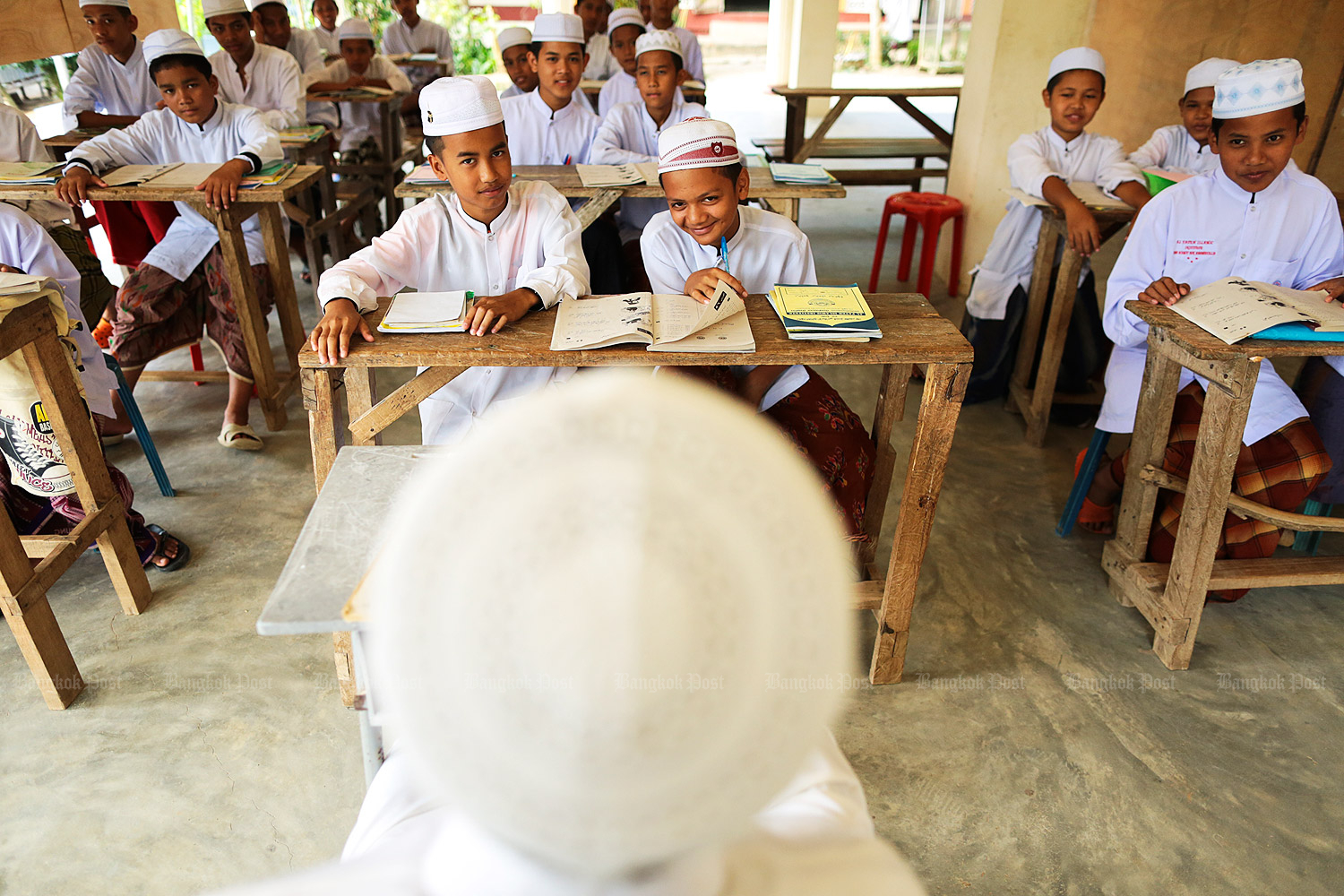
"I try to improve myself by learning from the internet. The downside is that I'm not sure whether I have accurate information or not compared to other students who study in general programmes. But the dual system helps students to merge religion and the real world. If we run a business, we do it with ethical practices," Front said.
ROLE MODEL ARTISTS
Some Gen Z spend their leisure time following the girl teen idol group BNK48. Chalida Joongpan, a Thammasat lecturer, studied BNK48's fan club by interviewing 11 members. Student-aged fans look up to the band as role models while those old enough to work admire their liveliness, beauty and consider the singers a source of energy.
Warit Wijitworasart, a 17-year-old silver medal winner at the International Science Olympiads in Bulgaria, China and Thailand, is a fan of BNK48's captain Cherprang Areekul. Cherprang majors in chemistry at Mahidol University International College and wants to make people more interested in science. Warit wants to do likewise.
"Cherprang said she wants to use her idol status to underline the importance of science. I have a similar goal. I would like others to see that science isn't difficult. With science and technology, our country can be developed," Warit said.
Being hooked on artists has its downside too. Some fans neglect their responsibilities and instead follow their idols around. Others spend a lot of money on merchandise and events. According to Chalida's study, young fans sometimes spend 10,000-30,000 baht per year on their teen idols.
For these reasons, most parents allow their children to be fans of BNK48 only on certain conditions.
"I wish parents would sit down and talk to their children about their idols," said Chalida. "The conversation will make them understand their children more and will in turn make the young happy."