Get all your news in one place.
100’s of premium titles.
One app.
Start reading
The Guardian - UK
The Guardian - UK
Environment

Weird and wonderful species discovered in the Heart of Borneo

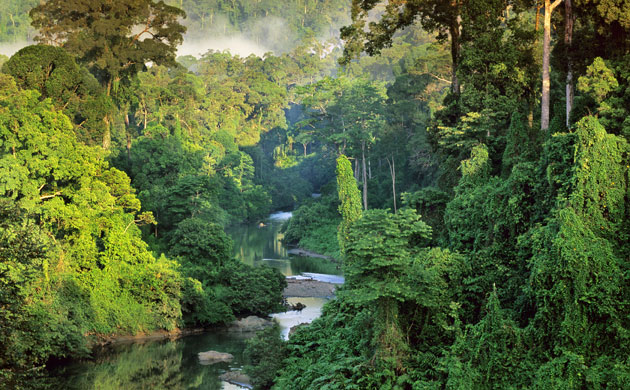
Borneo’s New World: River in Lowland Rainforest of Danum Valley
River in the lowland rainforest of the Danum valley on Borneo, Sabah State, Malaysia. Explorers have been visiting the island of Borneo for centuries, but vast tracts of its interior are yet to be biologically explored. The Heart of Borneo, an 'island within an island' is home to 10 species of primate, more than 350 birds, 150 reptiles and amphibians and a staggering 10,000 plants that are found nowhere else in the world
Photograph: Frans Lanting/Corbis
Borneo’s New World: Newly Discovered Species in the Heart of Borneo WWF report
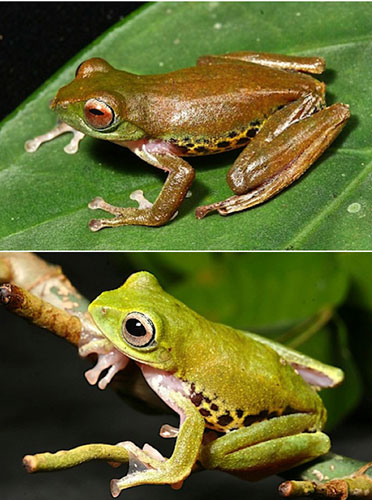
This unique frog was found 1,650m above sea level in Gunung Mulu national park, Sarawak, in the Heart of Borneo. The species is known only in the Tapin valley near a small stream in the area, making it highly endemic. The Mulu flying frog - as it is commonly known - is tiny, with males growing to just 3.5cm. It is unusual in that the species has bright green skin at night (bottom image) but changes colour to display a brown hue during the day (top image). As the photographs show, the eyes of this minute species also change colour. Flying frogs are frogs with the ability to glide as a result of large and fully webbed feet, and aerodynamic flaps of skin on the arms and legs. Borneo has at least three other species of flying frogs
Photograph: WWF
Borneo’s New World: Newly Discovered Species in the Heart of Borneo WWF report
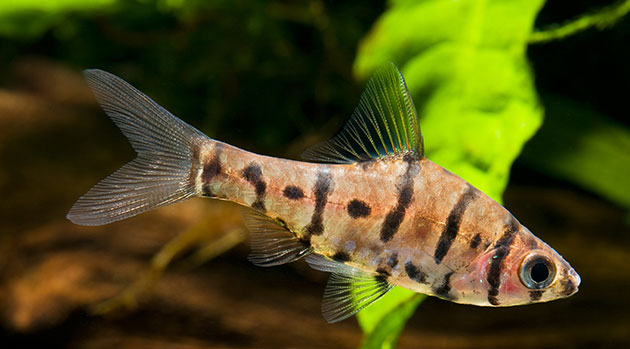
This striking zebra-striped fish (Eirmotus insignis) is one of 17 fish discovered in the Heart of Borneo in recent years. It measures around 3.6cm and typically inhabits slow-moving, shallow, shady rainforest streams and swamps
Photograph: CK Yeo/WWF
Borneo’s New World: Newly Discovered Species in the Heart of Borneo WWF report
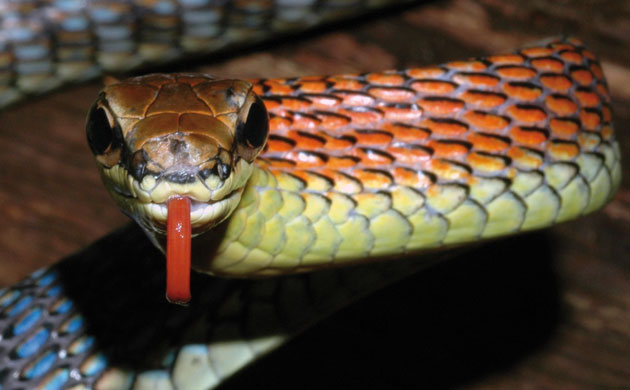
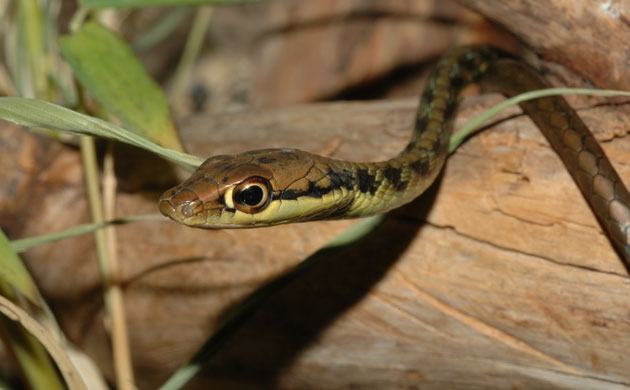
Dendrelaphis kopsteini, commonly called Kopstein’s bronzeback, is a beautiful-looking snake that can grow to 1.5m in length. Discovered in 2007 in lowland to upland rainforest, this uncommon new species differs from all other Dendrelaphis species by a bright orange, almost flame-like, neck colouration that gradually fuses into an extraordinary iridescent and vivid blue, green and brown pattern, that extends the entire length of the snake. The top of the head is deep bronze, a characteristic of all bronzeback snakes, and a dark stripe extends from the snout, across the eye, to the start of the neck. When threatened, the Kopstein’s bronzeback has the ability to flare its nape, revealing bright orange colours. Like most Dendrelaphis species, the Kopstein’s bronzeback has an aggressive disposition with a painful bite. In the wild, many inhabit trees and they hunt frogs and lizards
Photograph: Gemot Vogel/WWF
Borneo’s New World: Newly Discovered Species in the Heart of Borneo WWF report
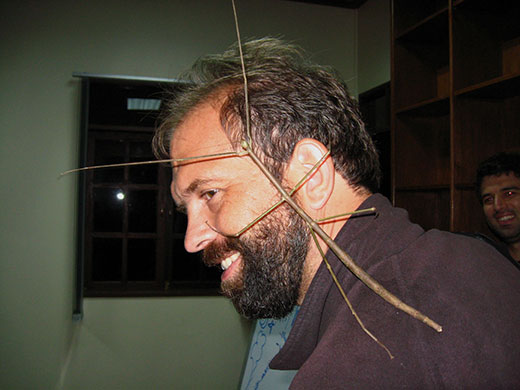
This enormous stick insect, found near Gunung Kinabalu park, Sabah, measures 56.7cm. Despite its size, very little is known about its biology and ecology. It is believed to inhabit the high rainforest canopy making it especially elusive and difficult to study. Also known as ‘Chan’s megastick’ after the scientist that donated this particular specimen to the Natural History Museum in London, this species is the current title holder for a number of world records. In addition to being the world’s longest insect, the species also wins the insect world record for the longest body, measuring an impressive 35.7cm. Only three specimens of this extraordinary creature have ever been found, all of them from the Heart of Borneo. Borneo has long been known as an exciting hub for monster insects, not least the giant cockroaches that measure 10cm in length and were only discovered in 2004
Photograph: WWF
Borneo’s New World: Newly Discovered Species in the Heart of Borneo WWF report
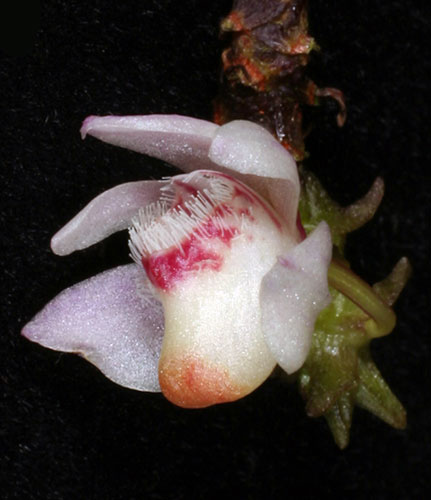
Experts say that nowhere else nurtures such an extensive and diverse collection of orchids as Borneo. Around 3,000 species of orchid can be found here, more than anywhere else on Earth. Conservationists say the past three years have been very fruitful when it comes to new orchid discoveries. No less than 37 new orchids were discovered in the Heart of Borneo, accounting for most of the 51 new orchids discovered or described on the entire island since the beginning of 2007. This orchid, Thrixspermum erythrolomum, comes from Gunung Trus Madi, Malaysia’s second highest mountain at 2,642m. This mountain is well known to support a diverse range of unique flora and fauna
Photograph: WWF
Borneo’s New World: Newly Discovered Species in the Heart of Borneo WWF report
A new bird species, the spectacled flowerpecker, was recently discovered in the Danum valley conservation area, Sabah, in the Heart of Borneo. Scientists observed the bird while walking along a 250m rainforest canopy walkway. The bird is an attractive grey colour with bright white arcs above and below the eye, a white throat extending as a broad white stripe down the centre of the belly, and white tufts at the breast sides. The name given to the species refers to the bird’s prominent eye-rings. The finding is all the more surprising given its location in Danum valley, where a scientific research station has been in operation since 1986. Scientists believe the species is a canopy specialist, inhabiting and feeding off fruits in the high trees. The species very rarely ventures below the canopy, explaining why the bird has only just been found
Photograph: WWF
Borneo’s New World: Newly Discovered Species in the Heart of Borneo WWF report
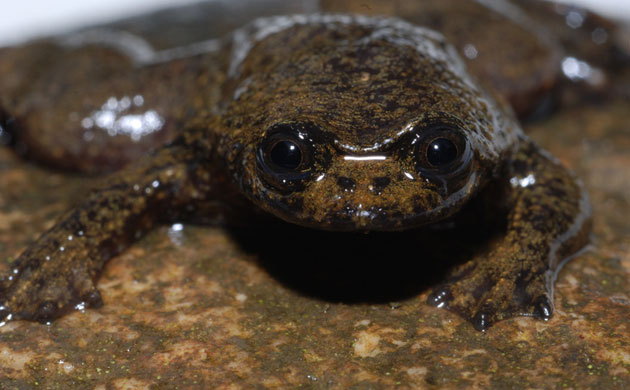
Although not a new species discovery, scientists did discover something amazing about the Bornean flat-headed Frog in 2008. The 7cm-long species is the world’s first lungless frog. Instead of lungs, this unique species breathes entirely through its skin. Other organs can be found in the place lungs would normally be, which makes the overall appearance of the frog flatter. As well as a larger surface area with which to absorb more oxygen, scientists believe this flatter and more aerodynamic shape allow the frogs to maneouvre more capably in the fast flowing streams the species inhabits in the Kalimantan rainforest, in the Heart of Borneo. The species was first discovered in 1978 and is currently listed as endangered on the IUCN red list of threatened species. It is known only from two locations in the middle of the Kapuas river basin, where the species is threatened by pollution from mining activities
Photograph: David Bickford/National University of Singapore/WWF
Borneo’s New World: Newly Discovered Species in the Heart of Borneo WWF report
Perhaps the rarest of the extensive invertebrate species group are slugs which, according to scientists, are infrequently encountered. At great altitudes on Borneo, several rare and highly endemic species appear to exist, including this new colourful green and yellow species, Ibycus rachelae, from Sabah. Discovered on leaves in primary montane forest at altitudes up to 1,900m on Mount Kinabalu, the species has a particularly long tail, three times the length of its head, with a body length of 4cm. According to scientists, the slug has the habit of wrapping the long tail around its body when resting. From the Ariophantidae family, this unusual species makes use of so-called ‘love darts’ in courtship. Made of calcium carbonate, the love dart is harpoon-like which pierces and injects a hormone into a mate, and may play a role in increasing the chances of reproduction
Photograph: WWF
Borneo’s New World: Newly Discovered Species in the Heart of Borneo WWF report
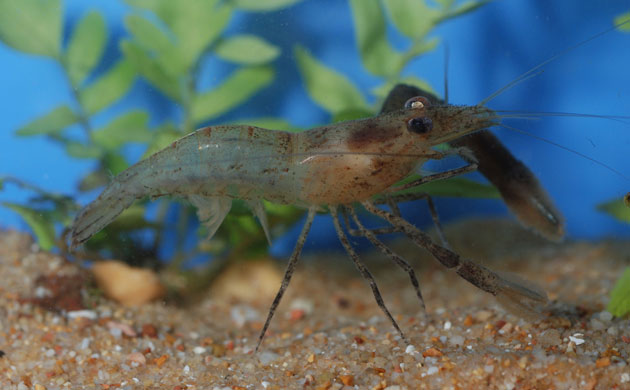
This new freshwater prawn species (Macrobrachium kelianense) is one of two newly identified species in the Kelian River. This river flows through pristine tropical rainforest and into the 980km-long Mahakam River, the largest river in East Kalimantan. The river is particularly rich in wildlife, with nearly 150 endemic fish species, 300 bird species and the critically endangered Irrawaddy dolphin. The new prawn is tiny, measuring barely more than one centremetre in length and it differs from similar species by having a greater number of teeth. Several other new species of freshwater prawn from Borneo are currently awaiting official scientific description
Photograph: WWF
Borneo’s New World: Newly Discovered Species in the Heart of Borneo WWF report
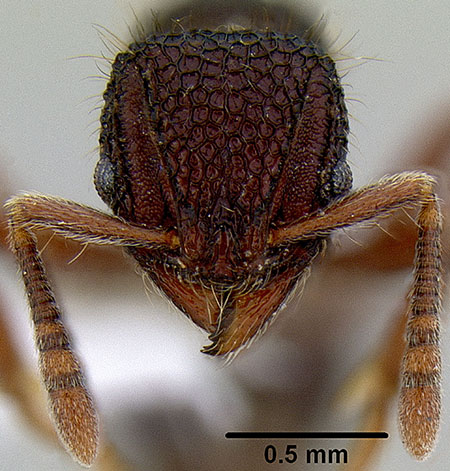
A sizeable number of other new invertebrate species have also been discovered since the signing of the Heart of Borneo conservation plan. These include net-winged beetles, a benthic water bug, a wasp, ants and flies. In total, 29 new invertebrates have been identified. This new reddish-brown ant, Lordomyrma reticulate, came from leaf litter in lowland rainforest in Sabah. The discovery of this species is highly significant as it has expanded the known range of the genus to include south-east Asia
Photograph: WWF
Borneo’s New World: Newly Discovered Species in the Heart of Borneo WWF report
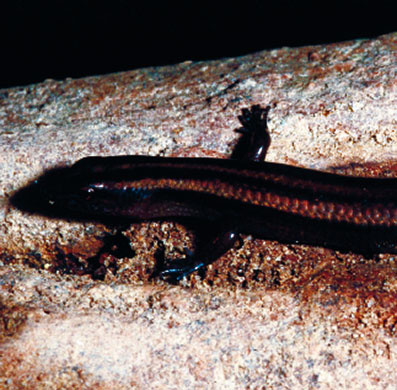
In 2007 scientists described a new species of skink from several isolated localities in Sabah, Sarawak, and Kalimantan. This skink had been mistakenly referred to as Lipinia quadrivittata for 90 years. It was only when a team of scientists examined the Borneo skink carefully that they realised the species had different DNA, colouration and an independent evolutionary history. The new species finds itself in good company: Nanga Tekalit in Sarawak is rich in herpetofauna, including as many as 40 species of lizards
Photograph: WWF
Borneo’s New World: Newly Discovered Species in the Heart of Borneo WWF report
Dendrelaphis haasi, a new snake species discovered in 2008
Photograph: Gernot Vogel/WWF
Sign up to read this article
Read news from 100’s of titles, curated specifically for you.
Already a member? Sign in here
Related Stories
Top stories on inkl right now
One subscription that gives you access to news from hundreds of sites
Already a member? Sign in here
Our Picks
Fourteen days free
Download the app
One app. One membership.
100+ trusted global sources.