Get all your news in one place.
100’s of premium titles.
One app.
Start reading
The Guardian - UK
The Guardian - UK
Environment

Week in wildlife - in pictures

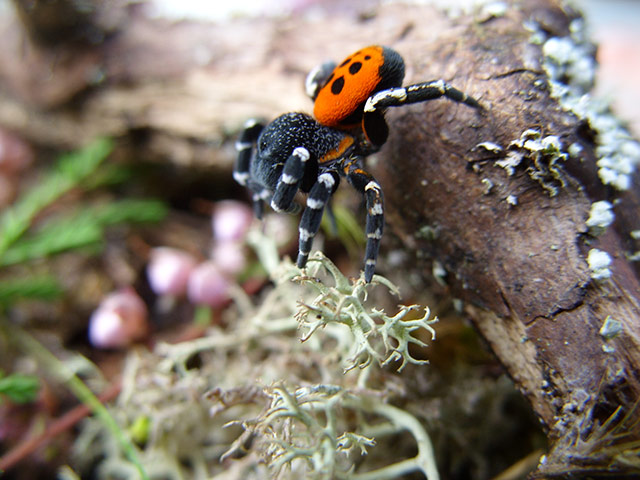
Week in Wildlife: Male ladybird spider in habitat
The ladybird spider, the most elusive arachnid in Britain, which derives its name from the male's red markings during the mating season, can be found in only one undisclosed location in Dorset. In 1994, its numbers slumped to just 56, but following habitat management, a recent web count now indicates a population of around 1,000 Photograph: Natural England
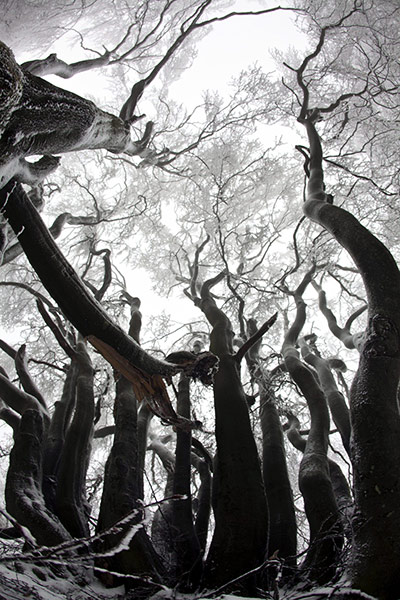
Week in Wildlife: Winter weather on Taunus mountains
A skywards view of tree trunks covered with a layer of snow in the Taunus Mountains region, north-west of Frankfurt, Germany.
Send us your pictures of frost for our Green shoots nature photography club
Photograph: Frank Rumpenhorst/EPA
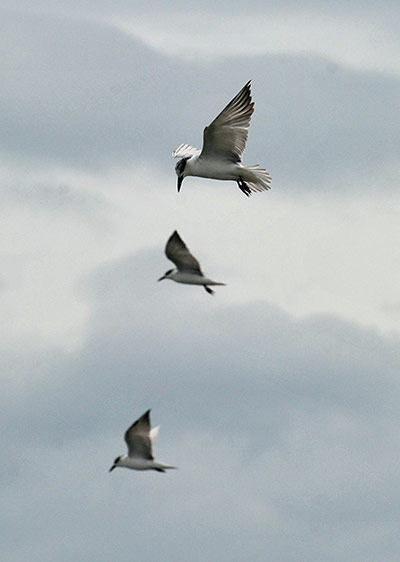
Week in Wildlife: migratory whiskered terns
Migratory whiskered terns looking for food at a bird sanctuary in the town of Candaba, Pampanga province, north of Manila, Philippines. The number of birds flying south to important wintering grounds in the Philippines has fallen sharply this year, with experts saying the dramatic demise of wetlands and hunting are to blame Photograph: Ted Aljibe/AFP/Getty Images
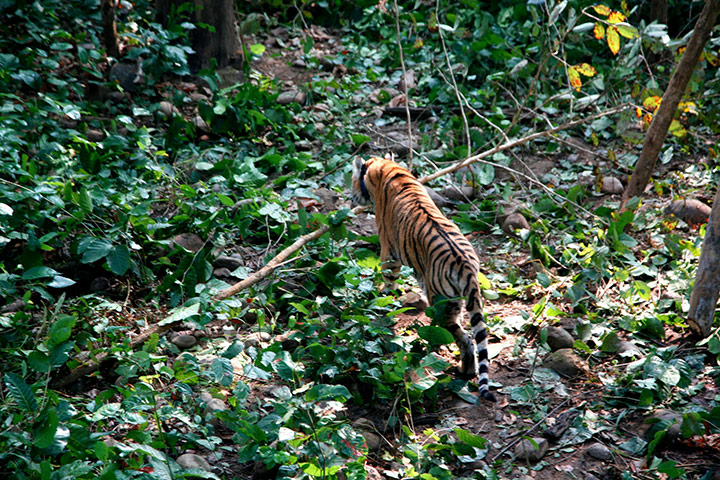
Week in Wildlife: Nepal Tiger
This handout photo released by WWF Nepal shows a collar-fitted wild tiger making its way into the forest after it was released into Bardia national park last week. The injured tiger, that strayed into a tourist resort, has been fitted with a satellite collar so its progress can be tracked, the government said. The ambitious project is part of Nepal's efforts to increase its population of Royal Bengal tigers, which once roamed the country's southern plains in their hundreds, but are now estimated to number only around 120 Photograph: Min Bajracharya/AFP/Getty Images
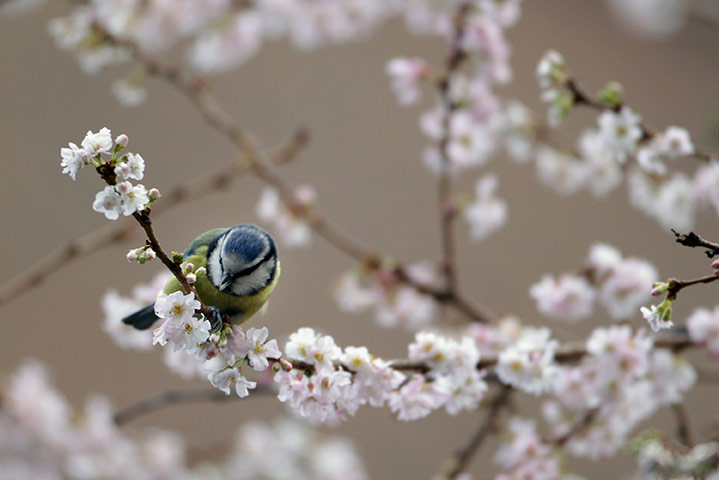
Week in Wildlife: A Blue Tit collects early blossom from a tree in Mayfair, London
A blue tit collects early blossom from a tree in Mayfair, London, England. Many trees around the UK are coming into blossom as spring approaches. Birds such as blue tits take advantage of this, collecting the petals to line their nests. The harsh early winter is likely to have driven more birds than usual into gardens in search of food - including some unusual visitors, wildlife experts said today. As the RSPB launched its annual Big Garden Birdwatch, with at least half a million people expected to be counting birds in their gardens this weekend, the charity said it was keen to know how the coldest recorded December had affected birds Photograph: Dan Kitwood/Getty Images
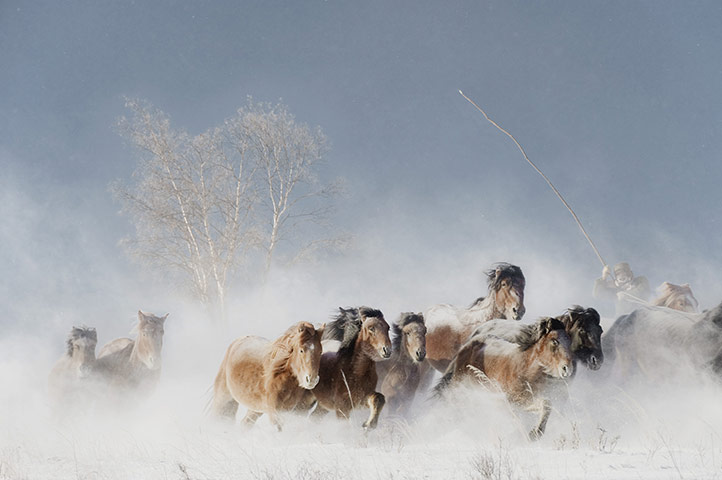
Week in Wildlife: Wild horses in Outer Mongolia
A stampede of wild ponies in Hexigten, Mongolia, is captured by 62-year-old photographer Li Gang, who spends winters trailing the horses in temperatures well below freezing Photograph: Li Gang/BNPS
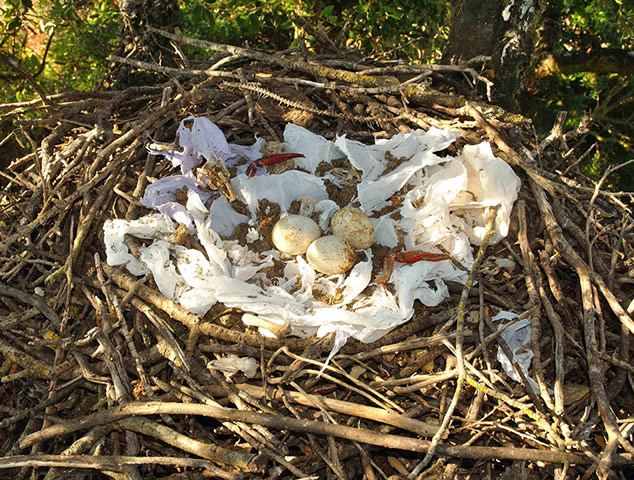
Week in Wildlife: The decorated nest of an 11-year-old black kite
The decorated nest of an 11-year-old black kite. Among black kites nesting in Spain's Doñana national park, breeding pairs collect an abundance of white plastic bits and tuck them into their nests, says the ecologist Fabrizio Sergio
Photograph: F. Sergio/CSIC
Week in Wildlife: Thailand closes coral sites because of bleaching
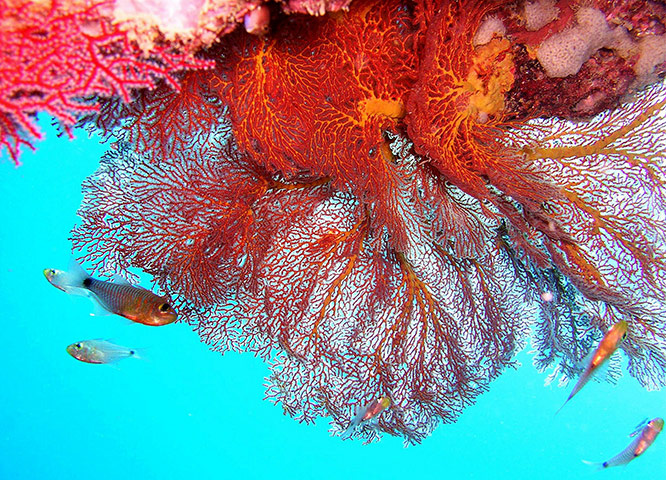
A variety of fish species in an area of a newly discovered reef in Thailand's southern Phang-Nga province. Thailand has closed a host of popular dive sites to tourists to allow coral reefs to recover from widespread bleaching caused by warmer sea temperatures Photograph: WWF/AFP/Getty Images
Week in Wildlife: Rothschild Giraffe at Prague zoo
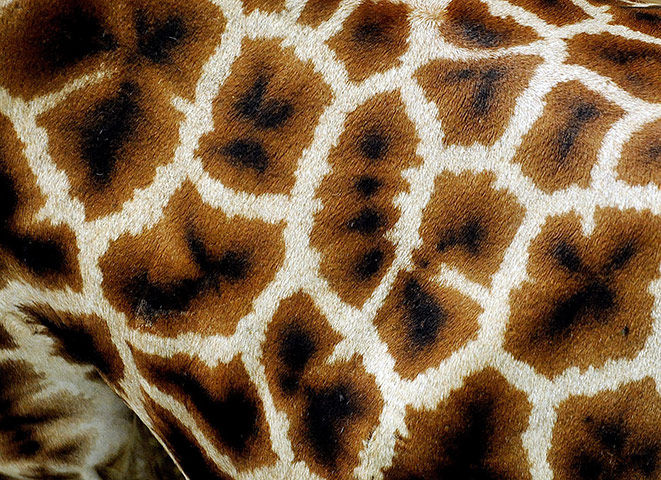
A close-up of a Rothschild giraffe's coat at the Prague zoo, Czech Republi. Native to Uganda and west-central Kenya, there are believed to be less than 700 of this species left in the wild, with more than 450 kept in zoos Photograph: FILIP SINGER/EPA
Week in Wildlife: A baby orangutan clings to her mother at
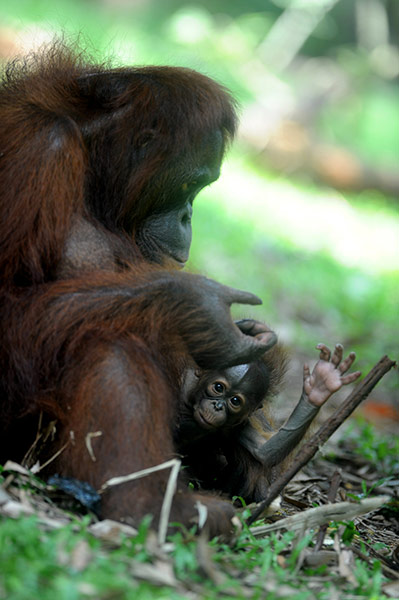
A baby orang-utan and her mother in Ragunan zoo in Jakarta. Orang-utans are far more genetically diverse than thought, a finding that could help their survival, say scientists delivering their full DNA analysis of the critically endangered ape. The study, published in the journal Nature, also reveals that the orang-utan - "the man of the forest" - has hardly evolved over the past 15 million years, in sharp contrast to Homo sapiens and his closest cousin, the chimpanzee. Once widely distributed across south-east Asia, only two populations of the intelligent, tree dwelling ape remain in the wild in Borneo and Sumatra islands of Indonesia Photograph: ROMEO GACAD/AFP/Getty Images
From the agencies: Animals At The Heathrow Animals Reception Centre
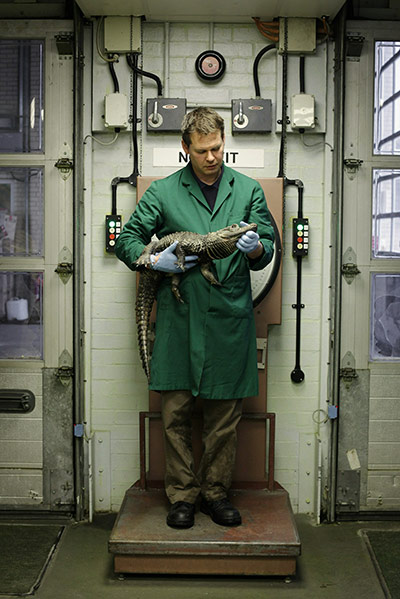
Triston Bradfield weighs a west African dwarf crocodile at Heathrow airport's animal reception centre in London, England Photograph: Dan Kitwood/Action images
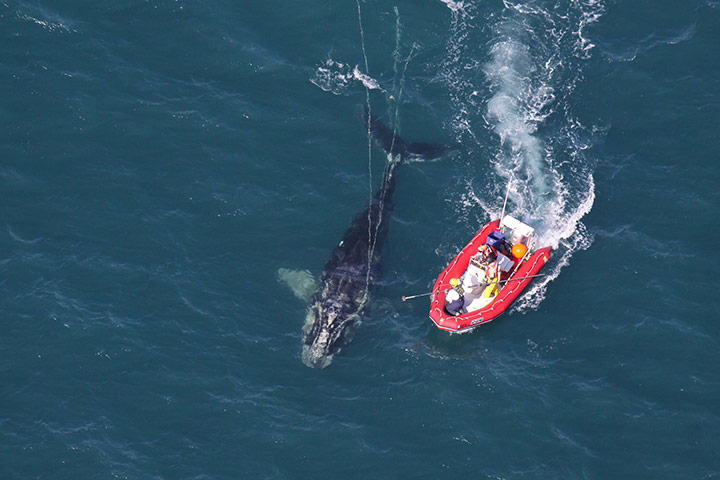
Week in Wildlife: North Atlantic right whale
Scientists from the US National Oceanic and Atmospheric Administration fisheries service successfully used at-sea chemical sedation to help cut the remaining ropes from a young North Atlantic right whale off the coast of Cape Canaveral, Florida. The sedative given to the whale allowed the disentanglement team to approach the animal and safely remove 50 feet of rope, which was wrapped through its mouth and around its flippers
Photograph: EcoHealth Alliance
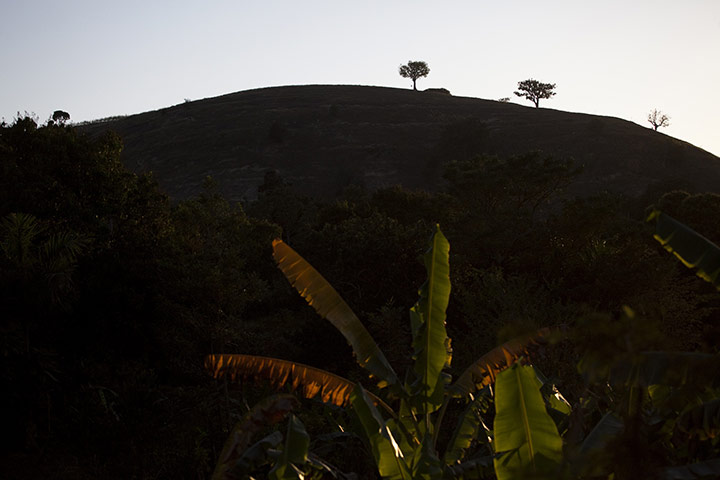
Week in Wildlife: Trees sit at the top of a mountain in Nord Ouest, Haiti
Trees on a mountain ridge in Nord Ouest, Haiti. Haiti's forests have been plagued by large-scale deforestation. The country has less than 2% of its original forest cover remaining Photograph: Rodrigo Abd/AP
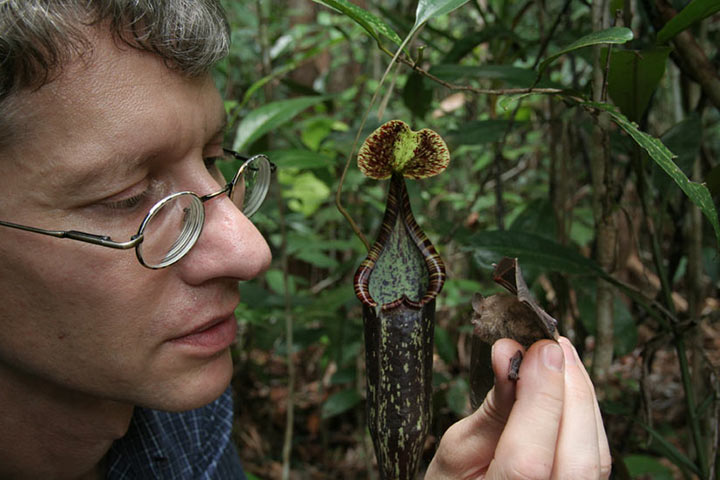
Week in Wildlife: Hardwicke's woolly bats
Ulmar Grafe, a biologist at University of Brunei Darussalam biologist, and his team discovered that bats in Borneo have been roosting in carnivorous pitcher plants. The droppings of the tiny Hardwicke's woolly bat (Kerivoula hardwickii) act as a vital nutrient for the plants in return for shelter for the bats
Photograph: Holger Bohn/Universiti Brunei Darussalam
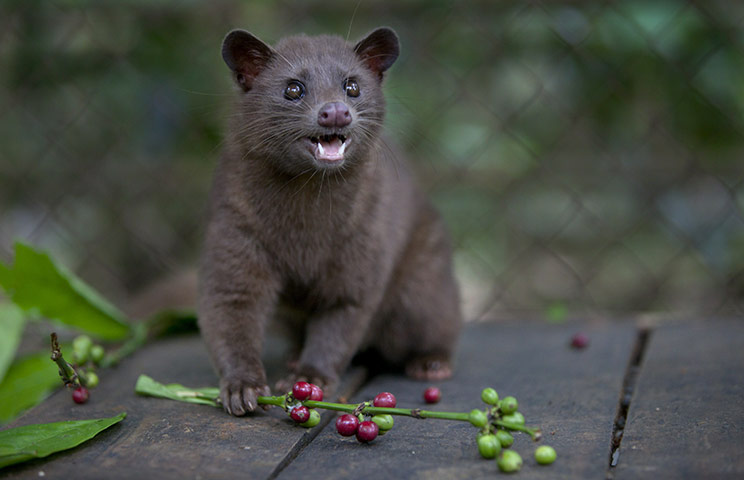
Week in Wildlife: Indonesians Farm Civet Cats To Produce World's Most Valuable Coffee
A luwak feeds on coffee berries in Bali, Indonesia. Luwak coffee is known as the most expensive coffee in the world because of the way the beans are processed and the limited supply. The luwak is an Asian palm civet, which looks like a cross between a cat and a ferret. The civet climbs the coffee trees to find the best berries, eats them, and eventually the complete bean emerges in its stool. Coffee farmers then harvest the civet droppings and take the beans to a processing plant. Luwak coffee is produced mainly on the islands of Sumatra, Java, Bali and Sulawesi in the Indonesian archipelago, and also in the Philippines
Photograph: Paula Bronstein/Getty Images
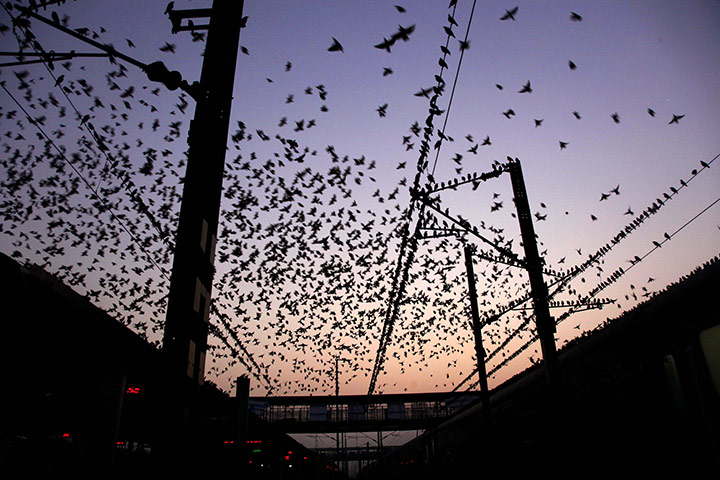
Week in Wildlife: Mynah birds fly over a railway station early morning in Allahabad, India
Mynah birds gathering over a railway station in Allahabad, India, on 22 January 2011. Mynah birds are native to open woodland in Asia, but have adapted extremely well to urban environments Photograph: Rajesh Kumar Singh/AP
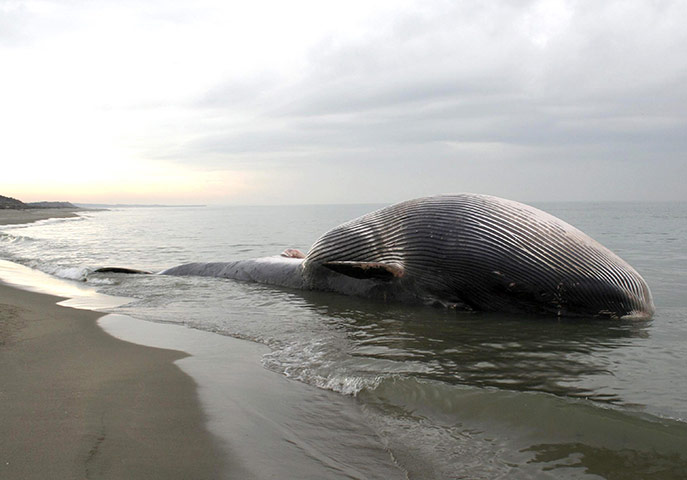
Week in Wildlife: Whale lies dead on a beach of the San Rossore
A 25m-long whale lies dead on a beach of the San Rossore near Pisa, Italy Photograph: Stringer/EPA
Week in Wildlife: Forests sell-off plans
A protest sign on a tree in the Forest of Dean, Gloucestershire, one of the the country's heritage woodlands which may be affected by the government's plans for a £250m sell-off of England's public forests Photograph: Tim Ireland/PA
Sign up to read this article
Read news from 100’s of titles, curated specifically for you.
Already a member? Sign in here
Related Stories
Top stories on inkl right now
One subscription that gives you access to news from hundreds of sites
Already a member? Sign in here
Our Picks
Fourteen days free
Download the app
One app. One membership.
100+ trusted global sources.