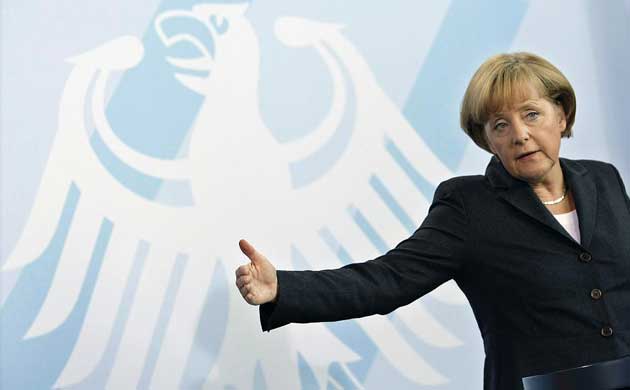
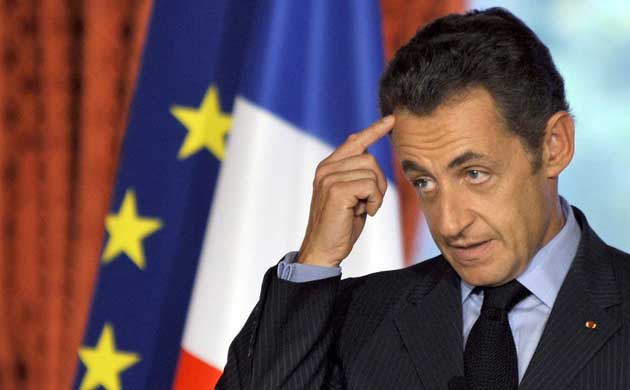
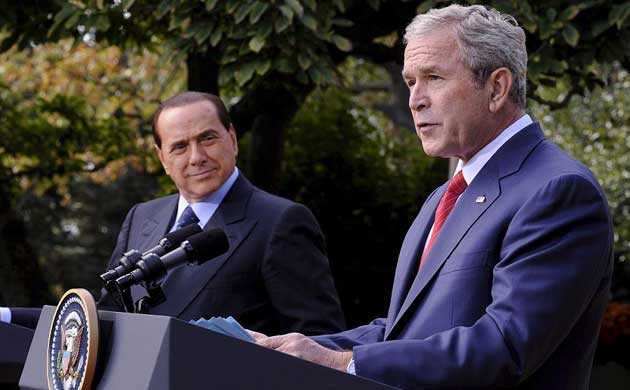
Monday: German chancellor Angela Merkel announces a rescue package for the country's banking system worth up to €500bn (£391bn)Photograph: Herbert Knosowski/APMonday: French president Nicolas Sarkozy announces a €360bn package for France at the Elysee Palace in ParisPhotograph: Gerard Cerles/AFPMonday: Silvio Berlusconi and George Bush address the media after meeting to discuss the plunging business confidence across the globe on a day Wall Street returned to positive moodPhotograph: Shawn Thew/EPA
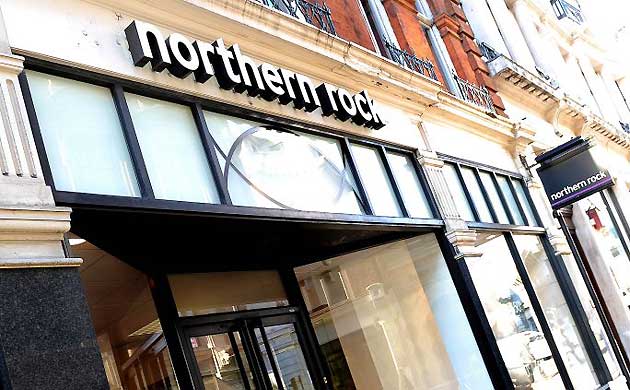
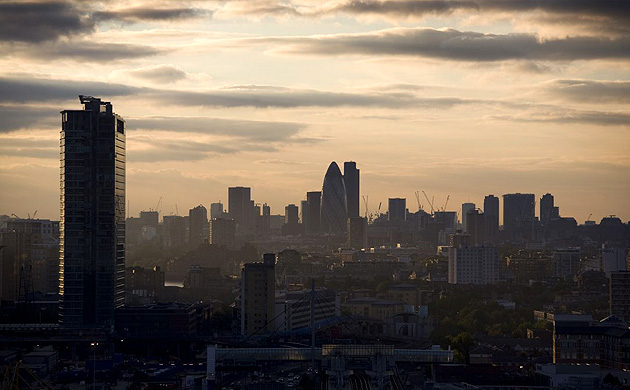
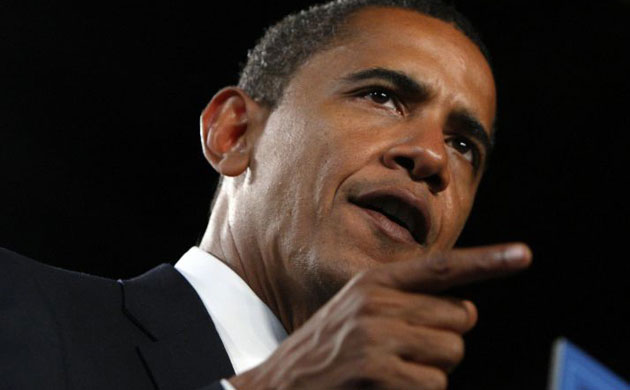
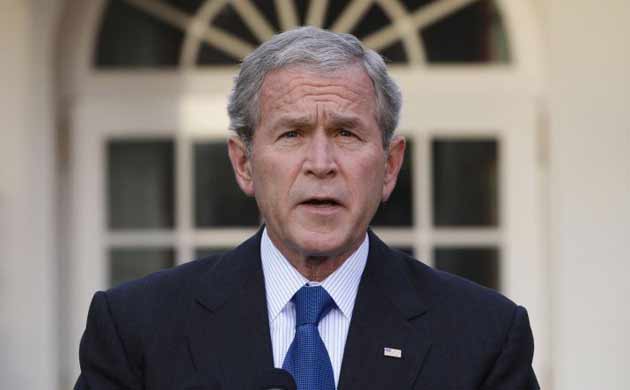
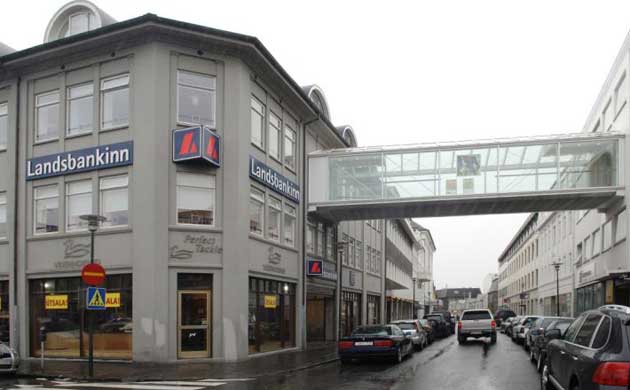
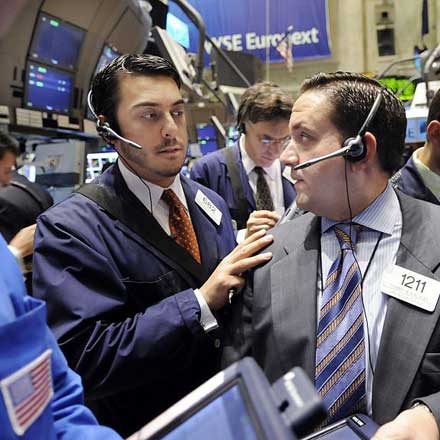
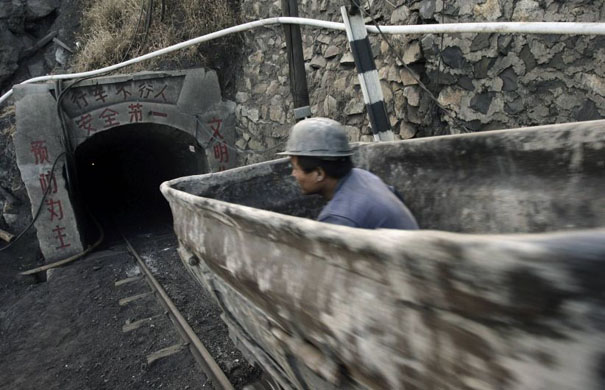
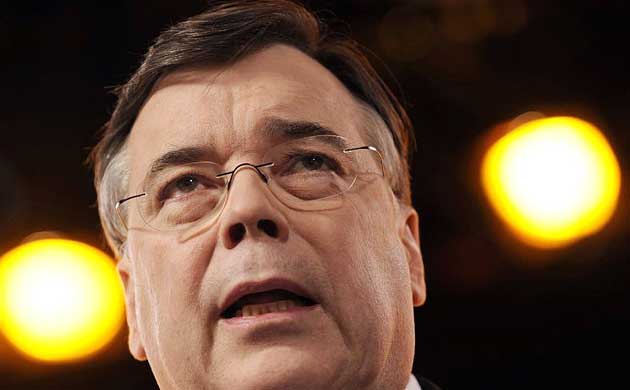
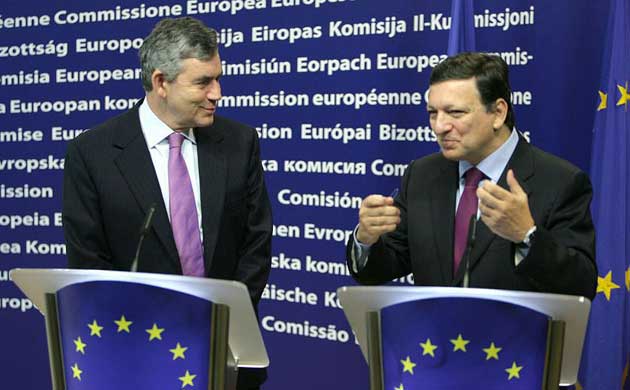
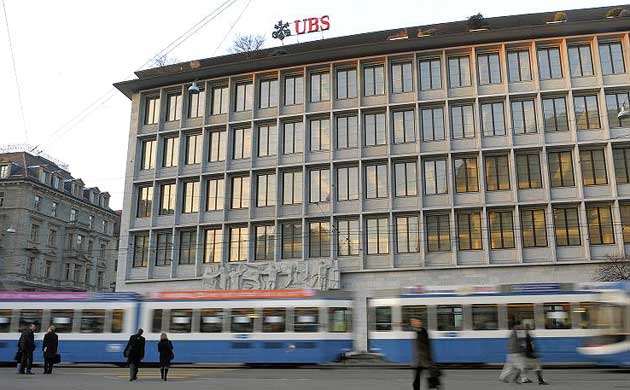
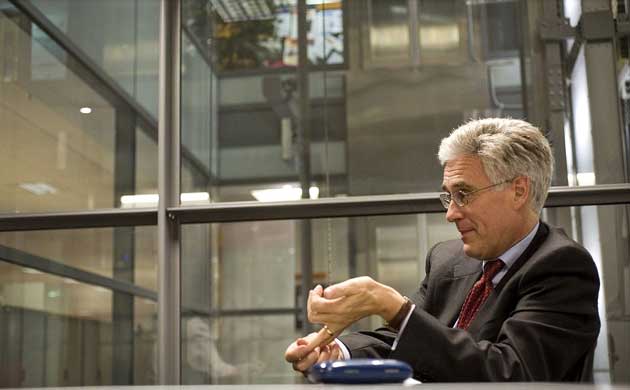
N is for Nationalisation: The mortgage lender Northern Rock was finally nationalised early this year, followed by the buy-to-let specialist Bradford & Bingley in the autumn, raising fears of a domino effect in the British banking sector. Authorities elsewhere – from the US to Germany – resorted to similar measures to prevent the financial sector collapsingPhotograph: Sara Lee/GuardianTuesday: Sunset over the City of London and Docklands on the day the markets breathed again, with share prices bouncing back in London, Frankfurt and New York, eurozone nations announced a trillion euro plan to save ailing banks and Gordon Brown claims the £37bn bail-out will offer 'rock of stability' in crisis Photograph: David Levene/GuardianTuesday: In Toledo, Ohio, Barack Obama sets out a $60bn rescue plan aimed at creating more jobs and easing the burden on US households suffering from the economic shakeoutPhotograph: Jim Young/ReutersTuesday: US president George Bush announces 'a reluctant intervention to tackle an unprecedented crisis'Photograph: Jason Reed/ReutersI is for Iceland: After an era of cheap borrowing, Iceland's economy experienced unimaginable turbulence as the credit crunch bit. Its three largest banks were nationalised, inflation hovered in double-digit territory and the stockmarket closed down for several days while Russia and Britain negotiated loans and sent finance officials to reinstate financial stability. Interest rates were hiked to 18% to try and restore trust in the freefalling krónaPhotograph: IPA/ReutersTuesday: Traders in New York react to the US government's plans to spend $250bn to buy stock in private banksPhotograph: Richard Drew/APWednesday: David Blanchflower, one of the members of the Bank of England's monetary policy committee, described Wednesday's unemployment figures as 'truly horrendous and much worse than I had feared'Photograph: Public domainWednesday: Shares in Rio Tinto and other mining stocks fell by up to 9% on Wednesday when the company said it was cutting back production at some of its aluminium smeltersPhotograph: Shengli/ReutersWednesday: 'This is the time to find solutions,' says Iceland's prime minister Geir Haarde after the country's central bank slashed interest rates by 3.5% on WednesdayPhotograph: Olivier Morin/AFPWednesday: Gordon Brown and Jose Manuel Barroso address a press conference at the European commission headquarters in Brussels, Belgium. Brown was feted in Brussels for his bail-out plan, which has been replicated across Europe and copied in the USPhotograph: Denis Closon/Rex FeaturesThursday: The Zurich headquarters of the Swiss banking giant UBS, which received a capital injection from the government on ThursdayPhotograph: Fabrice Coffrini/AFPFriday: The head of the government's financial watchdog, Lord Adair Turner, warns the City that the days of soft-touch regulation are over. Turner admitted that the Financial Service Authority had tried to regulate Britain's big banks 'on the cheap' in the past but that a new and more stringent regime was now on the wayPhotograph: Martin Argles/Guardian
Sign up to read this article
Read news from 100’s of titles, curated specifically for you.