Good morning. A visit yesterday by the new Israeli national security minister, Itamar Ben-Gvir, to the al-Aqsa mosque compound in Jerusalem lasted only 15 minutes. Ben-Gvir has visited before. He did not enter the mosque. And he did not pray.
Nonetheless, the far-right politician’s trip drew an immediate wave of international criticism, and warnings of violent retribution from Hamas. A member of the Knesset allied to Ben-Gvir was asked what should happen if rockets were fired from the Gaza strip in response, and threatened targeted killings of militants, adding: “If it’s up to me, Gaza burns.”
To understand why Ben-Gvir’s visit drew such alarm and rapid escalation, you have to understand his history of provocation, his relationship with Benjamin Netanyahu, and why the al-Aqsa compound – known by Jews as the Temple Mount – is such a contested place. For today’s newsletter, I spoke to Oliver Holmes, an international news editor for the Guardian and former Jerusalem correspondent, about all that – and what might happen next. Here are the headlines.
Five big stories
NHS | Doctors have accused Rishi Sunak of being “delusional” after he denied the NHS was in crisis and insisted it had the money it needed to cope with the surge in winter illness. A spokesperson for the PM said Downing Street was “confident” adequate funding was in place.
US politics | House Republican leader Kevin McCarthy failed to win the first three votes to become speaker as the new Congress opened because of stubborn opposition on his party’s hard right. He is the first nominee for speaker in 100 years to lose the initial House vote and now faces a protracted battle for the post.
Education | Rishi Sunak will announce plans for all pupils in England to study maths up to the age of 18 as he sets out his priorities for the year ahead. Sunak’s first speech of the year comes amid concern from some Tory backbenchers that he has not articulated a vision for the country.
UK news | A 22-year-old woman from Barrow-in-Furness has been found guilty of perverting the course of justice by telling “malevolent” lies about being trafficked by an Asian grooming gang and making false rape allegations against a series of white men.
Strikes | As five days of consecutive industrial action continue, the chief negotiator for Network Rail has said that a deal to stop strikes is “in touching distance”. Only one in five trains are expected to run on Wednesday.
In depth: Adding fuel to a smouldering fire

***
Why is visiting the al-Aqsa mosque compound a big deal?
The compound, known by Jews as the Temple Mount, holds the al-Aqsa mosque, and the Dome of the Rock, a Muslim shrine. Two ancient Jewish temples were once situated there. The holiest site in Judaism, and the third holiest in Islam, it has been in Israeli hands since the Arab-Israeli war of 1967, but visits to it are subject to a delicately managed set of rules: the site is under Jordanian custodianship, and while Jews and people of any other faith can visit, only Muslims are allowed to pray there. (Jews can pray at the Western Wall below.)
This 2017 piece by Yair Wallach explains some of the site’s fraught history, and summarises its symbolic significance: “The ongoing Palestinian presence in al-Aqsa Mosque … appears as the last significant obstacle to Israeli domination – the site has huge mobilising force among ordinary Palestinians.”
For years, the rule that Jewish pilgrims should not pray has been gradually eroded, with Israeli police often turning a blind eye. Rightwing Israeli politicians have long argued that the current arrangement is discriminatory, and Ben-Gvir has visited before – but as the new national security minister, his presence has vastly greater significance.
Yesterday’s visit is the first by a senior cabinet minister for a long time. “A visit by Ariel Sharon [then the leader of Likud in opposition] in 2000 was really a key trigger for the second Palestinian intifada,” Oliver Holmes said. (Troops outside the mosque after Sharon’s visit are pictured below.) “If an Israeli minister goes there, they know very well that it is a provocation.”

***
Who is Itamar Ben-Gvir?
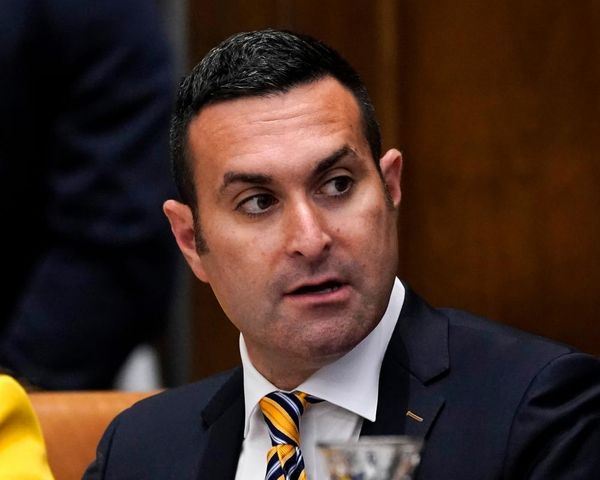
Ben-Gvir is the ultra-nationalist leader of the Jewish Power party, part of the new hard-right coalition led by Benjamin Netanyahu’s Likud which formed a government last week. He has convictions for incitement to racism and supporting an outlawed ultra-nationalist terrorist organisation. “His entire political career has been about provocation,” Oliver said. You can read more about him in this profile by Bethan McKernan from October.
There had been conflicting reports about a visit to the site before it happened, with claims that it had been delayed after Ben-Gvir met with Netanyahu quickly followed by a statement from Netanyahu’s office saying that he had not vetoed the idea because “capitulating in the face of threats would be a reward for terror and legitimize actions against Israel”.
“Ben-Gvir has deliberately done this immediately after entering government because he wants to claim it as Israel’s alone,” Oliver said. Speaking during his visit, Ben-Gvir said: “There won’t be racial discrimination in a government in which I am a member. Jews will ascend to the Temple Mount.” He added that threats of reprisals “must be dealt with with an iron fist”.
***
What is Ben-Gvir’s relationship with Netanyahu?
“It’s a tense relationship,” said Oliver. “It’s clear that Netanyahu doesn’t like Ben-Gvir. He doesn’t like anyone not in his party, and not under his control, and he won’t like Ben-Gvir calling the shots on something like this. But he is in a weak political position, because of several corruption cases against him, and he has had to make a deal.”
But there’s a crucial distinction: that antipathy does not appear to be based on any sharp divide in the two men’s ultimate ambitions. “They both want full control over Israel and the Palestinian territories, and certainly Jerusalem. Netanyahu likes to present himself to the public as someone who can guarantee their security, and radical firebrands like Ben-Gvir don’t seem to be along those lines – but on the broad-brush ideological stuff, they are aligned.”
***
What else can we expect from Ben-Gvir in the months ahead?
Ben-Gvir had sought the public security ministry from the beginning of negotiations, and eventually secured it with a new title (national security minister) and a beefed-up mandate with oversight of the police.
That points to another of his key ambitions and another likely source of increased tension: legislation that could grant Israel Defense Forces soldiers and police officers immunity from investigation or trial for alleged crimes committed even outside of their working duties (£).
He has called for the loosening of rules governing the use of live ammunition by security forces, allowing them to shoot someone who is simply holding a stone or firebomb instead of having to wait until it is thrown. He also said that such measures should be based on whether the threat is rooted in “hatred of Israel or [a desire to] harm the State of Israel or not”, suggesting that Israeli settlers would not be subject to the same provisions as Palestinians.
Former defence minister Benny Gantz said such proposals suggested that Ben-Gvir and his allies were trying to create “private armies”. And there has been some concern in the Israeli security establishment that removing domestic judicial oversight could lead to soldiers and police officers facing trial at the international criminal court in the Hague.
“There will be elements within the police and army that don’t want this,” Oliver said. “But we should be clear that they have been cracking down hard for a long time. With the status quo, there are already calls for them to be more accountable for their actions.”
***
What might be the consequences of this visit?

In this December piece, Bethan McKernan wrote that 2022 was a “quasi-intifada” (or uprising): “the bloodiest year on record in the West Bank and Jerusalem since the end of the second intifada in 2005”, with 150 Palestinians killed and 30 Israelis. Now, “a combination of worsening security and political factors … means a return to full-blown fighting between Israel and the Palestinians is more likely now than it has been in years”.
Any escalation in hostilities in the coming weeks, then, could not be attributed to Ben-Gvir’s stunt alone – but it is fuel to a smouldering fire. “Tensions are already extremely high, and there are many who are worried about what happens next,” Oliver said. “Hamas has described this in specific terms as a red line. But at the same time, Israel’s control of the occupied West Bank is far greater than it was in 2005. That makes it very hard to see something on that scale happening again.”
As for the politics: incendiary though Ben-Gvir’s actions are, they do not undermine the fundamental basis of the new coalition as more ideologically coherent than its recent predecessors, and therefore more likely to be stable. One crucial aspect of that proposition is the Israeli public’s move to the right.
“Over many years, the left has been decimated, and in particular the left that questioned the occupation or the way Palestinians are treated,” Oliver said. “The majority of Israelis certainly believe that Jerusalem fully belongs to them.” However extreme Ben-Gvir might be, “Israel has been on this path for a long time,” Oliver added. “This is the logical endpoint of an evolution that has been going on for years.”
What else we’ve been reading

If one of your New Year’s resolutions is deleting restaurant delivery apps and getting back into the kitchen, then a good place to start could be reading Helen Hawkes’ guide on how to be a better cook in 2023. Nimo
It’s also the right time of year for this piece by Joel Snape, who enumerates 10 familiar beliefs about health and fitness and lets you know whether they have any real basis. Bad news: five a day is a bare minimum, not a dizzying achievement. Archie
Four years of far-right politics and environmental destruction in Brazil came to an end on Monday when Luiz Inácio Lula da Silva was sworn in for an unprecedented third term. Andre Pagliarini looks at the challenges that lie ahead for the new president. Nimo
The remarkable failure of the Republican party to elect a new speaker is evidence of “the mindless hostility of a political party that’s lost any legitimate reason for being”, writes Robert Reich – and evidence of the influence of its “anti-democratic” base. Archie
I loved this piece by Kris Swales on his enduring, decades-old CD collection. “Running an eye across my collection is like flicking through a shoebox filled with love letters and postcards from my past: the exhilarating highs, the soul-crushing lows, sprinklings of the drudgery in between,” writes Swales. Nimo
Sport
Darts | Michael Smith won a remarkable World Darts Championship final against Michael van Gerwen by seven sets to four, finally taking the biggest prize in the sport after two defeats in previous finals. Previously known as a fine player who fell short at the final hurdle, he is now world No 1.
Premier League | Brighton beat Everton 4-1 to put pressure on Frank Lampard and prompt chants of “sack the board” at Goodison Park. Meanwhile, Arsenal and Newcastle drew 0-0, Fulham beat Leicester 1-0, and Manchester United beat Bournemouth 3-0.
Athletics | You might remember the viral moment: Jake Wightman won gold in the 1500m at the world championships last year, and his dad was there to commentate on it. In this interview with Donald McRae, Wightman reflects on his relationship with his father, the relentlessness of his schedule, and his dream of Olympic gold.
The front pages

“Doctors condemn ‘delusional’ PM after he denies crisis in the NHS” – our Guardian print lead this Wednesday morning. The Daily Mirror has “Tory hospital crisis – THEY broke our NHS” – with pictures of Conservative PMs Cameron, May, Johnson, Truss and Sunak. The Times has “Compulsory maths until 18 for every schoolchild”, while the Telegraph says “Maths at the heart of PM’s vision for Britain”.
“Let’s not return to face mask ‘madness’” implores the Daily Mail after the senior health official Susan Hopkins said people with a cold or the flu should wear one if they must go out. “UK hunts for China’s next Covid variant” says the i, explaining that health officials will test up to 2,000 Chinese nationals arriving at Heathrow per day. “Hope at last train strike misery will end” – the Daily Express says that a deal may be “within touching distance”. The top story in today’s Financial Times is “Tesla shares slide after slowdown in demand as Apple’s value loses $1tn”. “Knife raiders threatened to stab Cav in front of kids” – the Sun reports on the robbery of Mark Cavendish and Peta Todd at their home.
Today in Focus

Can you breathe your way to feeling better?
The Guardian’s parliamentary sketch writer, John Crace, and breath coach Rebecca Dennis describe how they have used breathing techniques to help their mental health
Cartoon of the day | Martin Rowson

The Upside
A bit of good news to remind you that the world’s not all bad

Florence Lugemwa is a trumpeter and DJ based in Uganda. She grew up listening and dancing to her father’s DJ sets and playing in her school’s marching band. In 2019 she was discovered by a Portuguese producer, Jonathan Saldanha, and has since played trumpet with the acclaimed band HHY and the Kampala Unit, moving out of Kampala’s underground electronic music scene and on to the global stage. Lugemwa decided to help give back to her community by teaching a group of 20 children how to use trombones, trumpets and drums. Many of the children are from the Katogo slums, where parents find it difficult to pay for basic necessities such as meals and stationary.
The band has given the children new experiences: 12 year-old Joseph said that playing, “takes me into another world”, while Michael, 16, recalled travelling to play in a festival 50 miles from his home city.
• The main photo caption was amended on 4 January 2023 because it mistook the Dome of the Rock shrine for the al-Aqsa mosque itself.
Sign up here for a weekly roundup of The Upside, sent to you every Sunday
Bored at work?
And finally, the Guardian’s crosswords to keep you entertained throughout the day – with plenty more on the Guardian’s Puzzles app for iOS and Android. Until tomorrow.