Top story: ‘Give workers a say in boardroom pay’
Hello – it’s Warren Murray bringing the big news to your inbox.
Pay for chief executives at Britain’s largest listed companies rose more than six times faster than wages in the wider workforce last year. The average boss’s pay packet hit £3.9m. A worker on a median salary of £23,474 would have to work 167 years to earn that.
Chief executive pay at FTSE 100 businesses surged 11% while average worker earnings failed to keep pace with inflation, rising just 1.7%, according to the High Pay Centre’s annual review. The report comes after years of workers’ pay being squeezed by weak pay growth and rising prices. The mean figure for female bosses was £2.8m – less than half the £5.9m average for men – and men got more than women in eight out of 10 companies and organisations that reported figures under government rules
Frances O’Grady, the general secretary of the Trades Union Congress, said: “Workers should get seats on boardroom pay committees to bring a bit of common sense to pay decisions. And the government should put the minimum wage up to £10 an hour to give more workers a fairer share of the wealth they create.” Meanwhile, unions have rebuffed a call from the transport secretary to cap train fare rises if rail workers agree to cap their pay claims accordingly. “As you will be aware, one of the industry’s largest costs is pay,” Chris Grayling wrote to rail unions. The RMT said rail staff would not pay for “the greed of the private train operating companies”.
* * *
How could this happen? – The question being asked in the city of Genoa and across Italy after an 80-metre long stretch of motorway bridge snapped off and plunged nearly 100 metres down, taking about 30 vehicles with it. At least 26 people have been confirmed dead after more bodies were pulled out overnight, while more than a dozen people are described as having injuries that are mostly serious. These pictures show how the Morandi bridge collapsed into an industrial area of the port city during a sudden and violent storm on Tuesday.
Alberto Lercari, a bus driver, told Corriere della Sera: “I heard a roar. People ran away coming towards me. It was horrible.” The bridge – inaugurated in 1967 and described as having a “very unusual design” – is just over 1km long. At the time of the collapse its foundation were being worked on, the highways operator said. Andrea Montefusco, an engineering expert at Luiss University in Rome, said: “It [the bridge] was a sort of jewel in Italian engineering, because at that time it was built with new engineering techniques.” In 2016, Professor Antonio Brencich, an expert in reinforced concrete construction at the University of Genoa, called the span “a failure of engineering … That bridge is wrong. Sooner or later it will have to be replaced.”
* * *
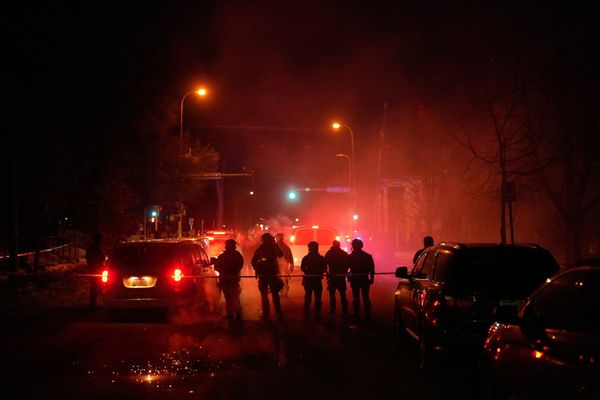
Westminster attack – A man has been held on suspicion of terrorism offences after a car was driven into pedestrians and cyclists before crashing outside parliament in Westminster. The Guardian understands he is Salih Khater, 29, who lives in the Sparkbrook area of Birmingham and is of Sudanese origin. Armed police swooped on a silver Ford Fiesta that had crashed into security barriers on St Margaret Street at about 7.40am on Tuesday. One person was treated at the scene while two others were seen in hospital then discharged. Downing Street said 13 Islamist plots and four by far-right extremists had been foiled in the past 18 months, while counter-terror police had 676 live investigations at the end of June.
* * *
Midweek catch-up – Your sit-rep on the main stories …
> After Ben Stokes was acquitted of affray, the gay couple he said he saved from attack have spoken out: “Sorry about all the drama we landed you in, but a lot of appreciation.” The cricketer still needs to clean up his act, argues Vic Marks.
> Jeremy Corbyn has attacked “false and misleading” claims over his attendance at a memorial in Tunisia, during which a wreath was laid for one of the group that carried out the Munich Olympics massacre in 1972.
> The charity Classics for All has distanced itself from its patron Boris Johnson over his burqa column. The group said it “works with many Muslim pupils … We do not endorse or support Boris Johnson’s statement or comments.”
> The Trump administration says it can’t rule out there being a tape of him using the N-word. On Monday Trump wrote: “I don’t have that word in my vocabulary and never have.” Yesterday he called Omarosa a “dog”.
> British expatriates in Europe have launched a legal challenge to Brexit, arguing the referendum result is invalid because the leave campaign has been found to have breached electoral spending rules.
* * *
‘The Jared Kushner of Turkey’ – Recep Tayyip Erdoğan has said Turkey will boycott electronic products from the US in response to sanctions imposed over the detention of an American evangelical pastor. The Turkish president railed against what he called a larger and deeper operation aimed at “using the economy as a weapon against us”.

This morning, Martin Chulov explains how Erdoğan has entrusted his son-in-law Berat Albayrak with wide powers as the country’s finance minister. “Albayrak is to Erdoğan what Jared Kushner is to Trump,” writes Chulov. “The title matters less than his proximity to the centre of power.” Albayrak, 40, is due to address foreign investors about the lira crisis on Thursday.
* * *
‘Mum, I was tricked’ – A suspect on trial for murder of Kim Jong-nam, brother of the North Korean dictator, told her mother beforehand that she had won a TV role playing tricks on people. Kim was smeared with VX nerve agent and died in Kuala Lumpur airport, Malaysia. Siti’s defence is that she was coached to believing she was taking part in a hidden camera prank. “Finally she was on TV,” says Siti’s mother, Benah, in an interview with the Guardian. “But not how I expected … She never intended to kill anyone. She is my daughter and I believe her.”
* * *
Stork in the road – On Monday a baby was born during a traffic jam on the M25. Here’s what to do if you ever find yourself in a situation like that. Maybe print it out and stick it in the glovebox …
Lunchtime read: ‘Millennia of human activity’
The shrivelled crops and scorched gardens of summer 2018 have revealed a treasure trove for archaeologists: outlines visible from the air of scores of archaeological sites, from neolithic monuments of 5,000 years ago to a long-demolished Tudor hall, ancient field boundaries, lost villages, burial mounds and military structures.

“This has been one of my busiest summers in 20 years of flying,” said Damian Grady, aerial reconnaissance manager for Historic England. What is believed to be a Roman farm, with buildings, fields and paddocks, has showed up at Bicton in Devon; at Stogumber in Somerset four bronze and iron age farms have been spotted. Here are pictures of the patterns from the past and reconstructions of what might have stood there. And speaking of remarkable things under the ground – check out Oliver Wainwrights’s wonderfully vivid architectural review of London’s new Crossrail stations.
Sport
England’s rugby union team have been dealt a double injury setback before the new season with Anthony Watson a serious doubt for the start of next year’s Six Nations and Jonathan Joseph ruled out of November’s autumn internationals. In rugby league, the leading Super League clubs remain committed to replacing the Super 8s play-off structurewith a more conventional one-up, one-down system next year, despite resistance from a number of clubs outside the top flight.
Brendan Rodgers claimed his central defender Dedryck Boyata had been fit to play despite missing Celtic’s defeat to AEK Athens that put them out of the Champions League. Robin Bastiman has been banned from racing for three years and told he should be “deeply ashamed” after a disciplinary panel of the British Horseracing Authority found he had injected a horse with a substance containing cobalt on a day it was due to race. And Fernando Alonso will leave McLaren and “move on” from Formula 1 at the end of the season “after 17 wonderful years in this amazing sport”.
Business
The lira may be the sick man of the foreign exchange markets but the pound isn’t far behind. It fell to $1.2704, its lowest mark since last July as investors reacted to underwhelming wage growth in the UK economy. Against the euro it was flat at €1.121. Homebase is moving to close 42 of its stores – and in what might be the final footnote to the Bunnings rebranding fiasco, the Australian parent group has recorded a 58% drop in profits thanks to its disastrous UK foray.
The papers
The Guardian’s lead story is “Top pay rises by 11% as workers’ wages fail to match inflation”. Apart from the Guardian and the FT (“Homebase to shut 42 stores and slash jobs in effort to stay afloat” – here is the full list of stores), every other newspaper leads with the story of the attack on Westminster.

The Times’ headline is “Terror returns to Westminster”, the Telegraph has “Terror suspect staked out scene before botched ‘copycat’ attack”, the Sun goes with “Terrorist in a fiesta” and the Mirror says “They will never win”. The Mail links the attack to investigations into terrorism activities – “700 live terror probes” – while the Express (“Honour them”) and the i (“Running towards danger”) focus on the efforts of police responding to the attack.
Sign up
The Guardian morning briefing is delivered to thousands of inboxes bright and early every weekday. If you are not already receiving it by email, make sure to subscribe.
For more news: www.theguardian.com