Pens down, papers closed – your time is up!
With a wiping of the metaphorical brow, the hour is over!
The debate is still rolling and will be for some time we suspect, so head over to #gdnteenfeminism if you want to keep reading.
Here on Guardian Children’s Books it’s well past our bedtime so books, blankets and hot chocs all round! A huge thank you to all our participants – authors, teen readers and everyone else; feminists and non-feminists alike, you all made the debate happen and we hope that sometime the world will be a better place for thinking about the issues raised here tonight.
@thurrockjoshua @GdnChildrensBks I'd like to see more Twitter chats about it. Love seeing everyone's opinions. #Gdnteenfeminism
— Amber (Book Blogger) (@MileLongBookS) March 8, 2015
And to pre-empt any criticisms of leftie-liberal bias, apparently there IS an International Men’s Day – 19 November. So there you go. Perhaps we’ll be right back here in 8 months… Til then, bye!
And that's it!
The clock has tolled, the hour is upon us and our time is up.
What about this as a note to end on…?
#Gdnteenfeminism Books are so powerful, because they let you become other people. When you've BEEN Katniss, how can you be anti-feminist?!
— SF Said (@whatSFSaid) March 8, 2015
Or this…
Don't worry about getting feminism WRONG. This isn't about being perfect, it's about trying to find a way to live equally. #Gdnteenfeminism
— Holly Smale (@HolSmale) March 8, 2015
Or this…
#Gdnteenfeminism take your place, lean in or as I like to say brain in - do it even if you're scared, it's your right to be there, claim it
— Arabella Weir (@ArabellaWeir) March 8, 2015
So many inspiring sentiments.
Lots of talk about whether being feminist means you shouldn’t care about how you look. Holly Smale (ex model) is on record thus:
You should love and celebrate however you look because it is PART OF YOU. Instead of aspiring to be like someone else. #Gdnteenfeminism
— Holly Smale (@HolSmale) March 8, 2015
This is the ethos of the Guardian Children’s Books site in less than 140 short and sweet characters.
@stupidgirl45 We can learn from teens. My daughter has banned the word "bossy" in relation to girls in our house! #Gdnteenfeminism
— Helen Grant (@helengrantsays) March 8, 2015
There are only 5 short minutes left of this fascinating discussion which, unfortunately but like all the best, is going to leave far more questions unanswered than problems it solves.
This conversation is, in a nutshull, why feminism needs to be engaging with society:
@holly_bourneYA @CeejaytheAuthor @BlameBookshelf Girls shouldn't value themselves according to how pretty they are. #Gdnteenfeminism
— Holly Smale (@HolSmale) March 8, 2015
@CeejaytheAuthor @holly_bourneYA @BlameBookshelf Because looks are a) chance b) impermanent c) not a reflection of who a person is.
— Holly Smale (@HolSmale) March 8, 2015
@holly_bourneYA @CeejaytheAuthor @BlameBookshelf SNAPS!! #Gdnteenfeminism
— Holly Smale (@HolSmale) March 8, 2015
In the words of the inimitable James Dawson,
We sincerely hope Lauren exonerates the Guardian from her admittedly all too justifiable condemnation!
http://t.co/eaTi8mWPiN one of the reasons why feminism is so important; mainstream media imposes inequality #gdnteenfeminism
— laurenjane (@laurenjanereads) March 8, 2015
The conversation is multiplying in – well, multiple directions!
Having SO MUCH FUN - come join in on #Gdnteenfeminism ---- it's not too late!
— Holly Smale (@HolSmale) March 8, 2015
We have nothing further to add to this. Proof, if any more were needed, that while we may not agree about the answers this debate must be had.
@BlameBookshelf Disturbing. Dangerous. #Gdnteenfeminism
— Megan Wayland (@BookAddictdGirl) March 8, 2015
Why thank you! The accolades come pouring in! Bow, courtesy, confetti, swoon!
Teen girls voicing their opinions on #feminism? This might be my all-time favorite hashtag. #gdnteenfeminism
— Stacey O'Neale (@StaceyONeale) March 8, 2015
And we mustn’t forget, if feminism is all about breaking down judgemental stereotypes then we mustn’t simply impose new ones in their place.
.@_ella_claire_ You CAN. Feminists can love what the hell they want to. That's what feminism is. #Gdnteenfeminism
— Holly Smale (@HolSmale) March 8, 2015
What’s the most important issue facing women in this day and age?
@emilyvelveteen Interesting. But I think the battleground changes. In the 20's in was votes. Then 70's (till now) it's pay. #Gdnteenfeminism
— Sarwat Chadda (@sarwatchadda) March 8, 2015
It’s pay but also so much more than that: #everydaysexism, sexual assault, boardroom representation to name but three… With so much to take on, maybe it’s no wonder we’re all struggling to get to grips with it!
Perhaps one of the gatekeepers of our civilisation can blaze a trail for others? After all, we were talking about the crucial importance of fairytales earlier (se 19.02 and 19.04). Maybe a new generation is coming through?
Girls want strong, capable heroines who have their own adventures. Disney is finally getting it. #Gdnteenfeminism pic.twitter.com/viaaY1EhoF
— Holly Smale (@HolSmale) March 8, 2015
Remember, you can get involved in the debate at anytime before 8pm.
Head to Twitter and post using #Gdnteenfeminism, or send a question to us at childrens.books@theguardian.com. If you want to address a particular participant then make sure to ask them directly.
Holly Smale @Holsmale
Louise O’Neill @oneilllo
Siobhan Curham @SiobhanCurham
Sarwat Chadda @Sarwatchadda
SF Said @whatSFSaid
Arabella Weir @ArabellaWeir
Anita Naik @AnitaNaik
There are more words we need to think a little more carefully about than just feminism:
@kieraobrien @oneilllo @_jamesdawson Ho hum. And every girl character who isn't an actual doormat is called 'feisty'. Ugh. #Gdnteenfeminism
— Letterbox Library (@LetterboxLib) March 8, 2015
@sarwatchadda exactly! Tell boy toddlers they look pretty too & girl toddlers they're brave. Let's mix up the adjectives! #Gdnteenfeminism
— Holly Bourne (@holly_bourneYA) March 8, 2015
As if the discussion needed complicating further, this is an excellent and necessary point to raise:
What about the concept that gender is not binary? How does that apply to feminism #Gdnteenfeminism Equality for all genders/sexuality no?
— Becky (@stupidgirl45) March 8, 2015
Particularly when it starts to affect even self-consciously feminist teenagers. It’s something that causes suffering to so many young people. And regardless of political orientation everyone has to agree that that just cannot be right.
@BlameBookshelf @HolSmale It makes me really sad that we need to feel pretty or attractive to others to validate ourselves. #Gdnteenfeminism
— EmilyD (@ems_worth) March 8, 2015
@BlameBookshelf @HolSmale I wish we could find a way for teens to know it's not all about what others think. #Gdnteenfeminism
— EmilyD (@ems_worth) March 8, 2015
Maybe we should start listening to young people’s voices? That certainly brings everything into perspective.
And this is the thing we need to really hammer home about feminism. It isn’t actually really just about girls.
@timbrell07books Also very damaging as this tells boys that girls' interests / lives of no relevance to them #Gdnteenfeminism!
— Letterbox Library (@LetterboxLib) March 8, 2015
Yet while the wider issue may be as difficult to disentangle as a ball of string caught in a hedge of thorns, there are specific things we can do to make headway:
@timbrell07books we need to get publishers to stop with their girl and boy book branding for starters.... #Gdnteenfeminism
— Siobhan Curham (@SiobhanCurham) March 8, 2015
@HolSmale @BlameBookshelf YES. Stop saying to girl toddlers "you look so pretty in that dress" #Gdnteenfeminism
— Holly Bourne (@holly_bourneYA) March 8, 2015
Another problem with defining the term. But for the better!
@Charli_TAW if you are female & have an opinion you are a feminist - even if your opinion is that you aren't a feminist #Gdnteenfeminism
— Non Pratt (@NonPratt) March 8, 2015
Contributors young and young-in-spirit are noticing the same trend.
@Grumblenook @tr0ublemayer #Gdnteenfeminism There seemed to be more feminist discourse in the 80s, when I was at uni, than the early 2000s.
— SF Said (@whatSFSaid) March 8, 2015
But perhaps there’s light at the end of the tunnel…
@Grumblenook #Gdnteenfeminism It's been good to see a resurgence in the past few years. I think things like this chat show how far it's come
— SF Said (@whatSFSaid) March 8, 2015
Never a community to dodge the difficult questions, putting feminism into context is crucial. After all, if young people aren’t engaging with politics at all, why should gender politics be any different?
How can feminist characters help combat apathy when it comes to challenging status quo? #Gdnteenfeminism
— Charlotte Morris (@charlieinabook) March 8, 2015
And this is another important facet if we’re talking about changing cultural perceptions of gender.
@whatSFSaid @HolSmale Hence imptance of access to libraries & open curricula that get outside status quo! #Gdnteenfeminism
— Sophie Mayer (@tr0ublemayer) March 8, 2015
Studying feminist lit is SO important, reading The Handmaids Tale and The Bloody Chamber at college was so enlightening #Gdnteenfeminism
— Laura (@AssassinGrisha) March 8, 2015
We’re now moving on to discuss the role of the internet in all this: as potential liberator but also site of so much discrimination. You’re getting your money’s worth here folks!
@samatlounge While the mainstream media won’t offer more diverse role models, we need to do it online! #Gdnteenfeminism
— James Dawson (@_jamesdawson) March 8, 2015
Hmm. That’s now beginning to look like a hugely unoriginal thought. Copyright Emma Watson.
Anyone! Emma Watson said that the word feminism shouldn't be a thing because it's the movement that counts. Is this true? #Gdnteenfeminism
— Joshua A. Povey (@thurrockjoshua) March 8, 2015
Is this the answer? Should we be thinking about feminism as a “thing” any more? Shouldn’t we just all believe in equality by default?
@AnitaNaik the mindset needs to be feminist is the default position rather than a fringe role. #Gdnteenfeminism
— Sarwat Chadda (@sarwatchadda) March 8, 2015
@sarwatchadda We need better education around what the word FEMINIST means to empower a new generation of campaigners. #Gdnteenfeminism
— James Dawson (@_jamesdawson) March 8, 2015
It’s certainly true that the word ‘feminism’ is taking some hits, which maybe don’t have all that much to do with the real-world problems it’s trying to confront. Is this symptomatic of a wider need to redefine it for the twenty-first century?
What we are all agreed on so far, though, (and this is great for all our bookworms!), is the importance of fiction and the arts more generally:
Totally agree @oneilllo - we all need empowering role models in fiction. Characters that make us feel we can do anything. #Gdnteenfeminism
— Anita Naik (@AnitaNaik) March 8, 2015
Holly Smale perhaps errs on the side of compromise.
@Grumblenook @GdnChildrensBks @ArabellaWeir @oneillo Which is something we need to change sharpish. #Gdnteenfeminism
— Holly Smale (@HolSmale) March 8, 2015
And it’s a question that’s got more than one of our site members puzzled:
Why do you think boys (especially teenagers) are so scared of calling themselves feminists? #Gdnteenfeminism
— Ella Slater (@_ella_claire_) March 8, 2015
Louise O’Neill has a possible answer though:
@Grumblenook I think they see it as feminine and young men are conditioned to broieve that anything feminine is negative #Gdnteenfeminism
— Louise O' Neill (@oneilllo) March 8, 2015
Now we’re stepping into more controversial territory:
@BlameBookshelf while it's important to include men, it's MORE important to encourage young women to become feminists #Gdnteenfeminism
— Louise O' Neill (@oneilllo) March 8, 2015
What do you think? Can feminism succeed without male support in some form or another?
And SF responds:
@Freddymadefilms #Gdnteenfeminism Hi Freddy, thank you! I was brought up by a single mum, with many strong & brilliant female relations...
— SF Said (@whatSFSaid) March 8, 2015
@Freddymadefilms #Gdnteenfeminism ...so for me, there's never been any question about gender equality! I want all my books to reflect this.
— SF Said (@whatSFSaid) March 8, 2015
Holly responds:
@thurrockjoshua We need to make sure our fiction is giving the right messages, because these are the dreams kids develop. #Gdnteenfeminism
— Holly Smale (@HolSmale) March 8, 2015
And the questions are now coming in thick and fast (and from two boys – excellent to see):
#Gdnteenfeminism hi @whatSFSaid whats your view on feminism, and also, bixa was a really cool female character for me, what do you think?
— Freddy Drabble (@Freddymadefilms) March 8, 2015
As promised, Joshua is first to take the bait:
@HolSmale You wrote about the fairytale fantasy but this is all some children know, so what role does fiction play? #Gdnteenfeminism
— Joshua A. Povey (@thurrockjoshua) March 8, 2015
And we’re off!
Can we all agree or will it get feisty? Let’s find out…
And let’s hope that while we may all have our differences of opinion, we can still hold a rational, thoughtful and measured debate about what is an important issue.
I'm looking forward to the #Gdnteenfeminism chat. Remember the message of Bill & Ted: Be excellent to each other
— Holly Bourne (@holly_bourneYA) March 8, 2015
Questions to #gdnteenfeminism or childrens.books@theguardian.com pretty please!
Right, time to start #Gdnteenfeminism! I'm getting ready to dive right in with my questions, so Twitter better prepare! @GdnChildrensBks
— Joshua A. Povey (@thurrockjoshua) March 8, 2015
We’re prepared!
A point Anita Naik has in fact just made herself.
To the person who just direct messaged me misandry is not feminism. You can have your say on this any more at #Gdnteenfeminism in 15minutes
— Anita Naik (@AnitaNaik) March 8, 2015
Here’s something to get the little grey cells stirring…
Early question on email from TwilightVi #Gdnteenfeminism for @HolSmale I'm only 9 but want to be a feminist. What's your advice for me?
— GdnChildrensBooks (@GdnChildrensBks) March 8, 2015
And Holly has hit back in inspirational mode:
@GdnChildrensBks Believe that you are as valuable, as capable, as worthy as any boy, and you can do and achieve anything you want.
— Holly Smale (@HolSmale) March 8, 2015
See, feminism isn’t all about boy-bashing. In fact, it isn’t at all about that.
Everyone's welcome to join the #Gdnteenfeminism chat 7pm tonight! Please tell your friends & spread the word! @GdnChildrensBks #HeForShe
— SF Said (@whatSFSaid) March 8, 2015
There’s still plenty of time to add your own questions. Simply head to Twitter and post now using #Gdnteenfeminism, or send them to us at childrens.books@theguardian.com. If you want to address a particular participant then make sure to ask them directly. Or just toss an idea out there and see what happens!
Holly Smale @Holsmale
Louise O’Neill @oneilllo
Siobhan Curham @SiobhanCurham
Sarwat Chadda @Sarwatchadda
SF Said @whatSFSaid
Arabella Weir @ArabellaWeir
Anita Naik @AnitaNaik
Just 20 minutes now till showtime!
A little light relief before the tough questions start rolling in. After all, even the most cerebral and emotive of topics can be elevated still further by the occasion of a quiz. So feminism in fiction? No problem! Can you get 10 out of 10?
Growing up as a little girl in Nigeria, I had very supportive parents who told me I could do whatever I wanted to. I dreamt of doing many things: flying to space, becoming the first female President of Nigeria, writing books and becoming a ballet dancer. However, I knew that because I was a girl, there were limits to what I could do. Nobody came out and explicitly told me this, it was just something you knew. As a girl, there were certain things you couldn’t do.
I like to call them the “untold rules” of society.
I remember telling my teacher when I was about nine years old that I wanted to be a news reporter. Her response shocked me. “So who will cook dinner for your husband and take care of your children?” I certainly wasn’t thinking about marriage and children at age nine. I was just dreaming, exploring what I might do later in life – like all kids do. When I went home that evening, I sat and thought about the many instances in which I had experienced sexism. (Of course, I had no idea this was sexism, but I knew that this was certainly because I was a girl). The more comments I remembered, the angrier I got…
Read more from teen Children’s books site member and FGM campaigner June Eric-Udorie here.
And for something a little more up to date, the highs and lows of gender stereotyping in the media in 2015…
Before the debate gets fast and furious, here’s a (brief) chronology of key events in the women’s movement over the last 150 years. Because, in the words of Guardian editor C.P. Scott, “comment is free, but facts are sacred”.
1867 The London Society for Women’s Suffrage founded a campaign for female suffrage.
1870 The Married Women’s Property Act allows married women to own their own property. Previously, when women married, any property they held (including their children) transferred to their husbands. This act allowed women to keep their own property for the first time, irrespective of whether they are married, divorced, single or widowed.
1888 The Matchstick girls’ strike: 1,400 women at Bryant & May matchstick factory go on strike in protest at low wages and dangerous conditions. It’s a crucial event not only in the history of women’s rights, but also the Trade Union movement.
1903 The Women’s Social and Political Union (otherwise known as the Suffragettes) is founded in Manchester by Emmeline Pankhurst, her daughters Christabel and Sylvia, and Annie Kearney. Over the next few years their activities – including arson, trespass and lobbying politicians – gets a lot of publicity.
1912 The ‘Cat and Mouse’ Act, allowing the government to temporarily let female prisoners who were hunger striking for the vote go – until they were fit enough to be imprisoned again, that is…
1918 Women over 30 are granted the right to vote and women are allowed to stand as MPs.
1923 The Matrimonial Causes Act makes grounds for divorce the same for women and men.
1928 All women get the same voting rights as men – the first election they could vote in was 1929 (the ‘Flapper’ election), which resulted in a hung parliament.
1956 The Sexual Offences Act defines rape under specific criteria, such as no consent.
1958 Women are allowed to sit in the House of Lords for the first time.
1967 The Abortion Act decriminalises abortion in Britain on certain grounds and the contraceptive pill is made available through Family Planning Clinics (it’s available on the NHS in 1974), both giving women hitherto unprecedented control over their own bodies.
1968 Women working at the Ford car factory in Dagenham strike over equal pay, bringing production to a standstill in all UK Ford plants. Their protest led directly to the passing of the Equal Pay Act (1970)
1975 The Sex Discrimination Act makes it illegal to discriminate against women in work, education and training.
1977 International Women’s Day is formalised as an annual event by the UN General Assembly. And that’s why we’re all gathered here on this fine evening!
1979 Margaret Thatcher is elected the UK’s first (and thus far only) female Prime Minister.
1999 The House of Lords declares that women who fear gender persecution should be recognised as refugees.
Dramatis Personae
Here are the authors extraordinaire willing to come out of hibernation (on a Sunday evening no less) for the betterment of mankind...
Louise O’Neill, author of feminist dystopia Only Ever Yours and this blog on her journey to feminism, @oneilllo
‘Sometimes we become so accustomed to the world we live in that we fail to see the problems in it’, she says. Read more here…
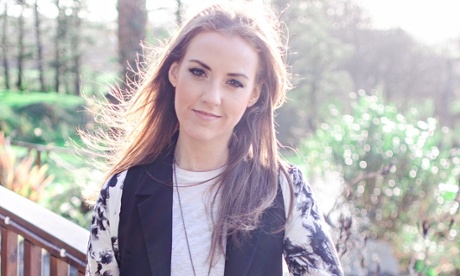
Holly Smale, ex-model and Geek Girl creator, @Holsmale
‘It’s dangerous to think that because feminism is familiar it means we’ve “done it”’, she says. Read more here…
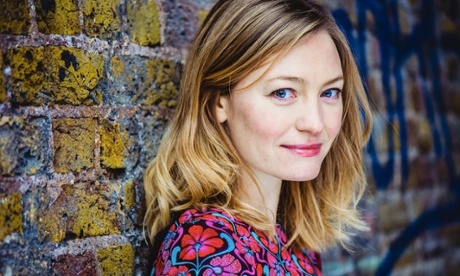
Arabella Weir, comedian, actress, writer and generally fantastic Jackie-of-all-trades who’s just written her first book for teenagers, The Rise and Rise of Tabitha Baird (David Tennant’s a fan!), @ArabellaWeir
Join the club! http://t.co/6TckJKh0xv pic.twitter.com/8rhTH6GZl1
— Arabella Weir (@ArabellaWeir) October 5, 2014
Anita Naik, agony aunt and author of How to be a Girl, @AnitaNaik
‘When girls as young as seven say they want perfect skin and teeth and slim bodies you know something is very wrong’, she says. Read more here…
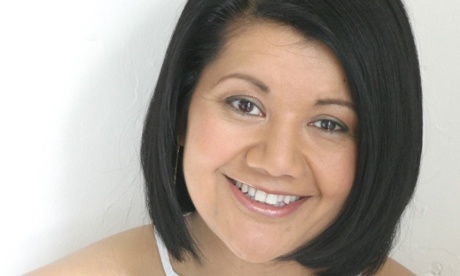
Siobham Curham, author of True Face, Zoella ghostwriter, and inventor - we think - of the word “fake-booking”, @SiobhanCurham
SF Said, award-winning author Phoenix and Varjak Paw and, yes, a MAN! @whatSFSaid
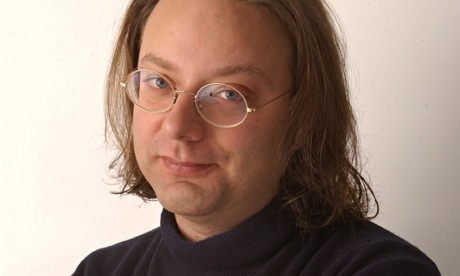
Sarwat Chadda, another MAN but, infinitely more importantly, penner of the Ash Mistry series, @Sarwatchadda
We hope to see plenty more join in as the evening progresses and, of course, your good selves!
Do we need feminism anymore?
That, at least, seems to be the question on many people’s lips at the moment. After all, this is the twenty first century: women can vote; women have equal rights and equal opportunities (supposedly); women can stand as MPs, be elected to the House of Lords and, who knows, we may even have a female President of the US if Hillary Clinton wins in 2016. The most powerful politician in Europe right now is female (Angela Merkel for those of you scratching your heads). What else do we want feminism for?
The trouble is, campaigns like #everydaysexism continue to highlight the discrimination women suffer on a daily basis on the streets of so-called developed nations, never mind appalling recent domestic abuse statistics, the 203 girls still missing in Nigeria after being kidnapped by Boko Haram, or the millions suffering silently in countries across the world where women’s rights are not enshrined in law.
So why are Guardian Children’s Books having this debate?
Today is International Women’s Day, an event formally set up by the UN 38 years ago to celebrate the achievements of women and feminism, and this year’s theme is Make It Happen. The question we want to pose today is, Make What Happen?
What does feminism mean – or what should it mean – in our modern world? Is feminism finished and, if so, what should take its place? What worries you about the plight of young women today and what do you think can be done? And (being a books site after all) what role do you think the arts need to play in tackling the issue? Of the top 100 grossing films in 2013 only 15% of lead characters were female; in children’s books in 2011, it was 31%…
All these questions and more are just some of the things you can ask us, as the youth of today and the leaders of tomorrow. We’ve a dedicated panel lined up ready to furnish you with answers and save the world!
How can I Make It Happen tonight? There are two ways to get involved tonight. Just plunge straight in with your questions, demands and grumbles on Twitter using #Gdnteenfeminism. If you’re not on Twitter then you can still join in by emailing childrens.books@theguardian.com with the same. Remember to keep any questions short as they will still need to be tweeted by us, so aim for around 140 characters and head up your email “Teen feminism Q&A”.
You can watch all the action live on Twitter and on this blog too, where there will also be loads of extra stuff going up throughout the evening.
So get your questions ready! Kick off is at 7pm.