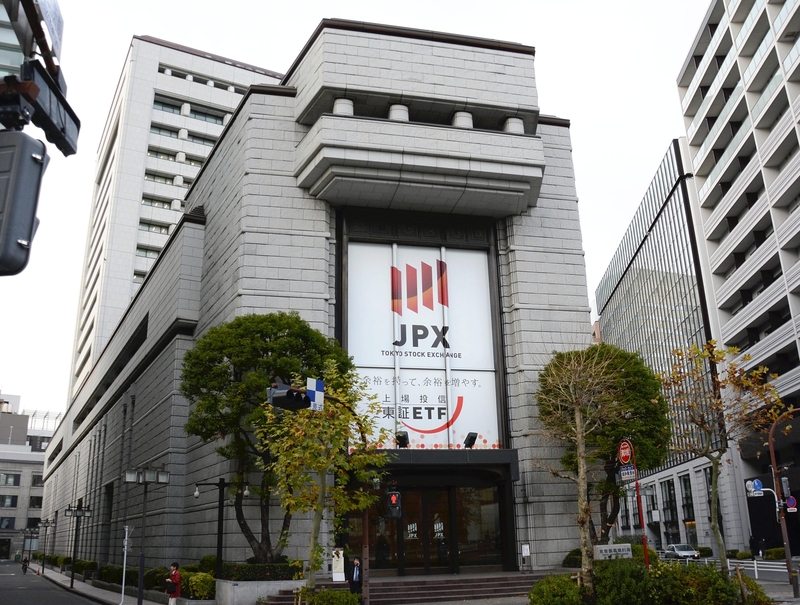
In a move aimed at preventing confusion, the Tokyo Stock Exchange has allowed companies to postpone their earnings reports if they cannot conduct audits of their Chinese subsidiaries due to the spread of the new coronavirus.
Listed companies are required to disclose a summary of accounts -- which is equivalent to a preliminary report under TSE rules -- within 45 days of the settlement date. In order to facilitate expedited reports, they are encouraged to complete submissions within 30 days for full-year results. Companies are also asked to state the reason for a delay if they have to submit their reports 50 days or later.
Meanwhile, the Financial Services Agency has announced that it would allow listed companies and some large companies to apply for an extension of the submission deadline for their asset securities report and quarterly report, which are mandatory under the Financial Instruments and Exchange Law. Companies concerned are required to disclose their securities report within three months of the end of the fiscal year, and listed companies must disclose their quarterly financial reports within 45 days of their quarterly settlement.
Currently, the time for the announcements of the April-December 2019 financial statements is approaching, but it seems that no company has postponed their reports under the new measures. Still, some companies may file applications for postponement if the spread of the flu-like virus continues for a long time and companies find it difficult to keep track of their earnings at the points of accounting dates for fiscal years ending in February or March.
The latest measures are unusual, because financial results are a crucial source of information for investors to determine the performance of a company, and "timely and appropriate disclosure creates the foundation of sound financial markets" under the TSE listing regulations.
A company will be delisted if the required documents are not submitted within a month after the deadline. For this reason, companies tend to disclose information on time unless there are significant circumstances.
In the past, companies affected by major disasters such as the Great East Japan Earthquake, the 2016 Kumamoto Earthquake and heavy rains in western Japan in 2018 were allowed to extend their deadline.
Read more from The Japan News at https://japannews.yomiuri.co.jp/