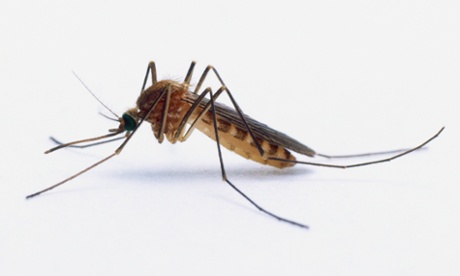
A type of mosquito, Culex modestus, has recently been discovered in Kent. This mosquito is capable of carrying the deadly West Nile virus, but there are too few of the mosquitoes to be much of a threat so far. However, health experts writing in The Lancet warn that this and other serious diseases carried by mosquitoes are spreading further north through Europe as the climate warms. More rainfall and higher temperatures in Britain could also help establish the Asian tiger mosquito, which carries dengue and chikunguny viruses, and even malaria could appear in Britain within the next few decades.
However, malaria is not new to this country. For centuries it was the scourge of marshy areas and Geoffrey Chaucer gave an early description of the ague, as malaria was known, in the Nun’s Priest’s Tale. But the old type of malaria was different from the modern-day variety, because the malarial parasite and its mosquito could withstand cool climates, although in hot summers the disease could be fearful and inflicted a terrible toll on people living in marshy areas.
The disease began to decline from the 1840s onwards as marshes were increasingly drained for farming, housing was improved, and quinine became widely used as an anti-malarial drug. But the last case of indigenous malaria was recorded as late as 1953 in Stockwell, London.
And there are still five species of mosquito surviving in marshes, especially in Kent and Essex, capable of transmitting both the temperate and tropical strains of malaria.