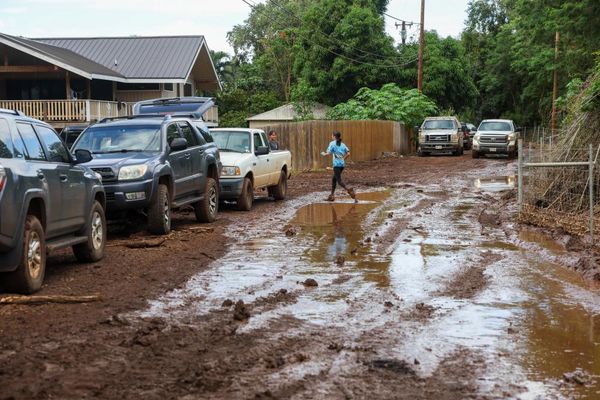
Soon the rain falling on the south of the country after two years of drought will stop being absorbed into the ground and turn the soil to mud. In the north this has already happened and worse.
It might be useful then, to prepare for conversations with strangers about the terrible weather, to brush up on your vocabulary for describing mud.
In her informative and entertaining book Wilding, about turning a West Sussex farm back to nature, Isabella Tree says there are 30 local dialect words for mud.
It is an area where the clay is deep and, once the rain begins in the autumn, presents some serious hazards for farmers and anyone else who ventures into the countryside.
Some of the useful terms are: clodgy, a description of a muddy field path after heavy rain; gawm – sticky foul-smelling mud – and gubber, a black mud of rotting organic matter.
The sound of the words helpfully conjures up the type of mud it describes. Slob or slub for thick mud; smeery, wet and sticky surface mud; stodge, thick pudding mud; and swank, a bog.
Isabella says until hard surfaced roads were invented people took to rivers, canals and the sea in winter rather than risk travelling across the land. The mud made farming almost impossible.