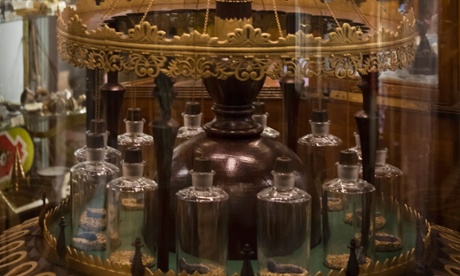
Heath Robinson would have been pleased have invented something as weird and wonderful as Dr George Merryweather’s Tempest Prognosticator. This appropriately named Whitby doctor, using the knowledge that medical leeches become agitated when a storm threatens, built what he originally called an “Atmospheric Electromagnetic Telegraph, conducted by Animal Instinct.”
Twelve leeches were placed in separate pint jars in an inch of water. Whalebone was loosely placed in a brass tube in the neck of each jar, which in turn was connected to a hammer. When a storm was approaching the leeches climbed up their jars, dislodged the whalebone and released the hammers, ringing the warning bell several times.
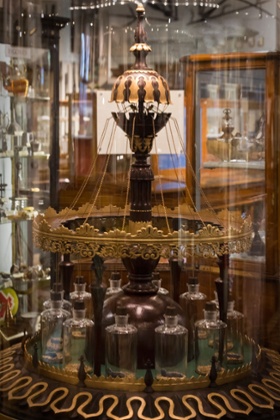
It is hard to believe that a contraption so complex would work but shipping insurance giants Lloyd’s of London took it seriously, commissioned tests, and proved that it did. The completed apparatus was an ornate affair with a circle of jars containing the leeches and a central bell on which the hammers could fall. It was displayed at the Great Exhibition of 1851 with a volume of explanatory notes.
Dr Merryweather designed several different versions and was optimistic that soon his “Whitby pigmy temples” would be displayed in many living rooms or at least used by governments and shipping companies all around the coast.
Despite the obvious need for storm warnings not a single one of his devices was sold. Perhaps it was the thought of keeping hungry leeches in the living room that put customers off or the new, equally reliable, if less entertaining, mercury barometers.