In 1914, when most lifeboat crews still rowed their boats and regarded powered craft with suspicion, a shipwreck changed the service for ever.
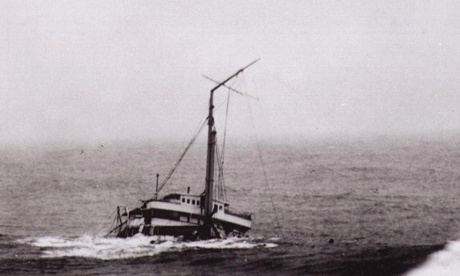
The hospital ship, Rohilla, bound from Queensferry on the Firth of Forth for Dunkirk to pick up first world war wounded, hit an offshore reef near Whitby on 30 October. To try to save the 229 on board the captain, David Neilson, drove his ship as far ashore as he could only to hit more rocks breaking the ship in two.
The seas were so mountainous that only by carrying a wooden lifeboat over the sea wall and launching it from the beach could the Whitby crew row out to reach the stricken vessel. Five women slipped down a rope ladder into the boat, among them Titanic survivor Mary Roberts, followed by five male medical staff. The lifeboat brought them ashore before returning to retrieve another 18 from the wreck. They also reached safety but not before the lifeboat was itself holed.
Five other lifeboats rowed by volunteers attempted to reach the remaining survivors during the following day and night, but the continuing gale made it impossible for oarsmen to hold the boat steady close enough to the wreck.
Crewmen of a new motor lifeboat stationed 40 miles north in Tynemouth heard of the emergency and steamed south. Picking up barrels of oil at Whitby and pouring the oil on the sea to calm the waves, they held their boat steady with the engine long enough to pluck the remaining 50 survivors from the wreck. The era of motor lifeboat had arrived.