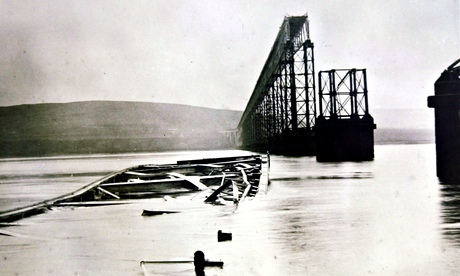
The Tay Bridge disaster of 28 December 1879, subject of a famously bad poem by William McGonagall, may have been caused by tornadoes.
The wind was blowing hard that night, perhaps as much as a Force 11 gale, bringing down chimney pots and roof slates. The iron girders of the Tay Bridge, opened in June 1878, should have been strong enough to withstand any winds. But a half-mile span of the bridge collapsed just as a train was crossing. The train plunged into the Tay, killing all 75 people on board.
A court of inquiry ruled that the collapse was due to an “insufficiency of the cross bracing and its fastenings” to withstand the gale.
However, the inquiry did not hear the testimony of one witness, engineer WB Thomson, who reported seeing “two luminous columns of mist or spray”, perhaps 100 metres tall, travelling across the river. The spray from one column struck a nearby house with hissing sound, leaving the windows caked with salt. A second witness, William Robertson, also described the columns.
Researchers at tornado research organisation Torro believe these columns were waterspouts – tornadoes over water made visible by the water droplets they carry. They believe the impact of one or more tornadoes brought down the bridge after it had been weakened by the wind.
After the disaster rules were introduced requiring new bridges to be built stronger. As McGonagall observed: “For the stronger we our houses do build / The less chance we have of being killed.”