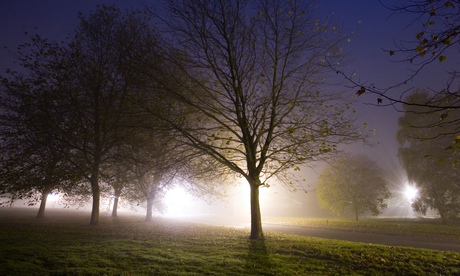
As the days get shorter and the weather worsens, birds need to eat a lot of food in the little time available to survive the cold nights. Garden bird tables are a useful aid here, but an additional strategy seems to be to carry on feeding after dark by the light of street lamps.
Blackbirds have adopted both methods, and judging only by their numbers it would seem to have been a success.
Provided there is not a frost and the ground is damp, blackbirds can often be seen grabbing worms on lawns and roadside verges at night where there are powerful enough lights, for example at motorway service stations.
Urban blackbirds that adopt this way of feeding would logically seem to have an advantage over their forest dwelling cousins, who need to wait to eat until the sun comes up.
To test the theory scientists from Leipzig University studied 200 blackbirds to check whether this was the case. Their range was from the inner city, outer suburbs and forest dwellers.
While the study showed birds from better-lit areas foraged for longer, there was no apparent survival advantage. A health check of the birds after the study period could not find any physical benefit to those with a longer feeding time.
One rather odd finding was that male blackbirds carried on eating longer than females in urban areas, but both sexes stopped foraging at the same time in the forest.
The conclusion was that the larger male birds also had bigger eyes, giving them slightly better vision to spot food in the twilight world of the street lamp.