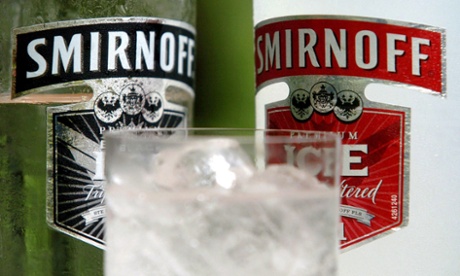
Can a one-paragraph tale out of Brazil add the thick end of £3bn to the value of the UK’s tenth-largest company? Yes. It’s just happened at Diageo. A brief mention in a Brazilian publication of takeover interest by local billionaire Jorge Paulo Lemann and his 3G Capital outfit pushed the Guinness-to-Smirnoff maker’s share price up 7%.
The frothy madness of modern markets at work? Only up a point. The bid story was gloriously thin on detail but it contains two ingredients of all good takeover speculation. First, the would-be bidder has an appetite for deals. Lemann and 3G were the prime movers behind the mega-merger of brewers Anheuser-Busch and Interbrew of Belgium, and also snaffled Heinz.
Second, the would-be target – Diageo – suddenly looks as if it has run out of ways to grow. Under Paul Walsh, chief executive until 2013, Diageo was a supreme marketing machine, consistently selling higher volumes of spirits. This happy knack seems to have been lost in the last year under Ivan Menezes, Walsh’s former chief operating officer. Trading has disappointed for at least three quarters.
Explanations have, of course, be offered. Markets have been tough, especially in Asia, and Menezes has been trying to adopt what he calls a “sell out culture,” in other words not overloading distribution channels with stock. The two-year share graph, however, says investors are not wholly convinced: Diageo hit £20 in 2013 but was £17 before Monday. Nor has the lengthy takeover of United Spirits raised morale; that business seems full of short-term headaches, whatever the long-term appeal.
Analysts can envisage all manner of possible deals involving Lemann and/or AB InBev. But, for Menezes and Diageo, there’s a simple lesson to draw from the credibility afforded the takeover rumour. The best defence against a bid is to run the business well and outsiders think Diageo could run harder.
Deutsche shakeout at last
For official consumption, Anshu Jain and Jürgen Fitschen have behaved decently and commendably by volunteering to step down as co-chief executives of Deutsche Bank.
The rest of the world knows the harder version of events. Deutsche has been infuriating its shareholders for years, clocking up huge fines for past bad behaviour while cutting costs at snail’s pace. A 40% vote against management at last month’s annual meeting illustrated the depth of investors’ loss of confidence.
A pillar of the German financial establishment does not suffer rebellions of that scale unless something has gone seriously wrong. Deutsche’s management, however, reacted to the vote by handing even power to Jain. That decision simply wasn’t credible.
Much credit should go to Hermes, the UK activist fund manager, which has argued loudly that changing Deutsche’s culture would require the ditching of two long-serving chiefs. Its foot-dragging in dealings with regulators was an illustration of the malaise. Consider Monday’s 5% relief rally in Deutsche’s share price a vindication of everything Hermes has been saying.
Last act of an Indonesian farce
Never again, vowed Nat Rothschild as he bowed out of his ill-fated adventure into Indonesian coal that traded for most of its miserable life as Bumi. NR Holdings, his investment vehicle, is accepting the 56p-a-share offer for the renamed Asia Resources Minerals from Asia Coal Energy Ventures. “This will be our first and last investment in Indonesian’s coal sector,” said Rothschild.
At the final hour, he secured a few extra pennies on the take-out price. In every other respect, though, this saga has been an embarrassment from start to finish – for him, for his backers and for the London stock market.
Bumi was imagined as commodities conglomerate, an mini-Xstrata in the making. It would snap up under-appreciated resources in emerging markets and impose western-style corporate governance. Nice idea, but there was a flaw at the outset: the London-listed company only even had a 29% stake in its main Indonesian assets.
When relations with the local Bakrie family broke down amid bitter allegations of mismanagement and worse, Rothschild and Bumi were never able to get their way. Feuds, and an ever-changing cast of Indonesian tycoons, added to the sense of farce. Rothschild fought vested Indonesian interests and lost. A sliding thermal coal price didn’t help either.
Rothschild is rich enough to take the personal hit, possibly £80m. It’s hard, though, to imagine he’ll ever again be able to raise £700m from investors to pursue a foreign adventure, even if it’s miles away from Indonesia.