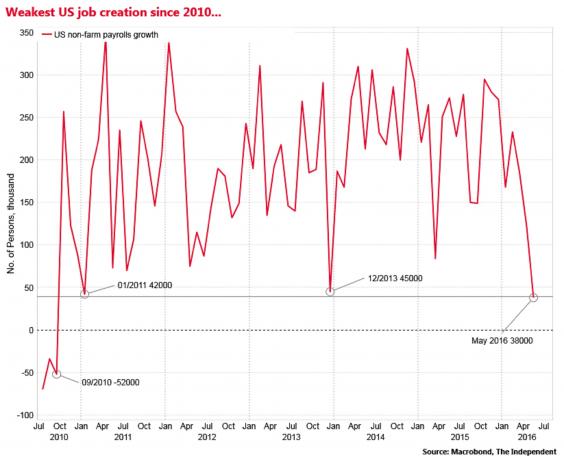
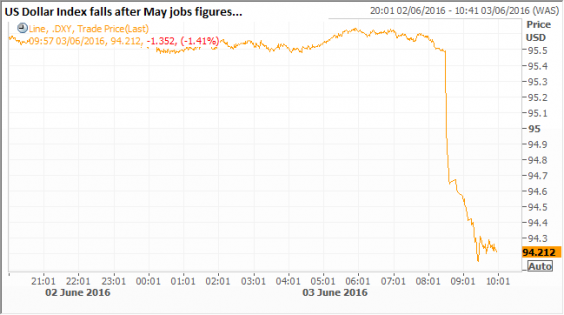
The weakest American job creation figures in six years last month have sent the dollar tumbling and crushed expectations of another interest rate hike by the Federal Reserve this summer.
The world’s largest economy created just 38,000 jobs in May, down from 123,000 the previous month and the smallest monthly increase since September 2010, according to the US Labor Bureau. Wall Street economists had expected another 164,000 so-called “non-farm” jobs to be created.
The dollar index – which measures the value of the greenback against a basket of other countries – immediately plunged almost 1 per cent, as traders instantly pushed back their bets on the timing of the next rate hike by the American central bank.
US 10-year government bond yields fell by around 6 basis points to 1.735 per cent for the same reason.
The Federal Reserve raised rates for the first time in almost a decade last December and expectations had been steadily growing of another hike in either June or July due to a sequence of strong economic data reports, particularly from the labour market.
But financial futures markets now suggest traders have pushed back expectations of the next hike to September. Before the report traders saw a 19 per cent chanced of June hike and a 59 per cent chance of one in July according to CME Group. Now expectations of a June hike have slumped to 4 per cent and to 29 per cent for July.
“June’s definitely off the table. The Fed will definitely want to see a cleaner read on payrolls before taking rates higher again” said Gennadiy Goldberg of TD Securities in New York.
The jobless rate actually fell in the month to 4.7 per cent, down from 5 per cent previously and the lowest since November 2007. But this was mainly due to a decline in the participation rate.
The chair of the Federal Reserve, Janet Yellen, has been guiding markets to expect another rise in rates in recent weeks. She is set to give another update on Monday. “That sound you hear is Janet Yellen furiously re-writing her speech” joked Paul Ashworth of Capital Economics.
A strike by Verizon workers in April and May depressed employment growth by around 34,000 jobs but even without the strike, payrolls would have risen by just 72,000.