The Bank of Thailand has predicted economic growth for the first quarter could fall short of its 3.4% projection as exports during the period were weaker than expected, a senior official says.
"GDP growth for the first quarter could be softer than 3.4%, possibly closer to the second quarter's growth forecast of 3%, which is the lowest outlook for the year," said Don Nakornthab, senior director of economics and policy at the central bank.
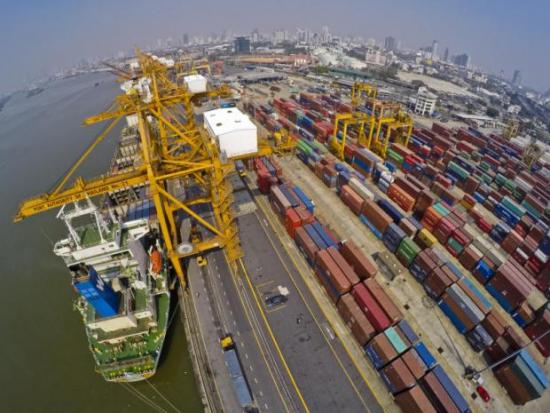
The sluggish economy is largely pressured by exports, which could expand at a slower pace than the central bank's current forecast of 3%, he said. Outbound shipments for the full year are expected to remain in positive territory, Mr Don said.
The balance of payment-based exports in March shrank 4.2% from a year earlier, widening from a contraction of 1.7% in February and contributing to a contraction of 3.6% for the first three months through March.
The National Economic and Social Development Council, the government's think tank, is due to release first-quarter economic growth figures on May 21.
As the government's latest economic stimulus package worth 21.8 billion baht has just won the cabinet's approval, the central bank will take the stimulus into account when it reviews its economic outlook in June.
In March, the Bank of Thailand trimmed its 2019 growth forecast for the second time to 3.8% from 4% amid sluggish export demand. In December, the central bank cut its 2019 economic growth forecast to 4% from 4.2% predicted in September last year.
The economy in March moderated from the previous month, Mr Don said, adding that external demand contracted from both the value of merchandise exports and the number of foreign tourist arrivals.
The value of merchandise exports contracted in most categories, mainly due to softened external demand, which also contributed to the decline in manufacturing production.
The tourism sector grew at a slower pace, partly from the high-base effect of last year, particularly from Chinese tourists.
Domestic demand continued to expand, given that private consumption indicators rose in all spending categories and public spending increased from current expenditure. But private investment indicators contracted slightly.
Standard Chartered Bank Thai is maintaining its forecast for the country's 2019 economic growth at 4%, citing that private consumption remains strong, the rebound of private investment continues and political noise and uncertainty have yet to affect fundamentals.
"The economic impact of the election is difficult to assess as long as the results remain unclear," said Tim Leelahaphan, the bank's economist for Thailand. "While an intensification of political noise is possible, we have yet to see signs that current political developments will adversely affect the economy."
But the bank could downgrade Thailand's 2019 economic outlook in the second half to 3.5% if political uncertainty lingers and the US-China trade spat remains heightened, he said.
Given that unresolved post-election issues could delay the political timeline and dent sentiment, Standard Chartered Bank expects the central bank to stand pat on its policy rate until the second half.
"The Bank of Thailand is likely to stay on the sidelines for now as it waits to see how the political situation will unfold," Mr Tim said. "We expect unanimous decisions to keep rates on hold at 1.75% at the May and June Monetary Policy Committee meetings."
Policy stability expected in the second half will allow the rate setters to resume policy rate normalisation, he said.