I speak from experience: Paris can be a beautiful kind of chaos, each arrondissement reading as its own story. Move west, beyond the périphérique, past Neuilly-sur-Seine and into Les Sablons, and the city begins to open up: more sky, more greenery, more space, and a sometimes welcome slower pace.
The mayor of Paris, Anne Hidalgo, is currently overseeing a vast transformation, with the ambition of becoming one of Europe's greenest capitals by 2030. With 50 per cent of the city's surface set to be planted or permeable, over 170,000 trees introduced, and four new 'urban forests' created, that sounds like a breath of fresh air. And yet, when your home is set in one of the buzzier central neighborhoods, the city doesn't always feel particularly leafy. Even now, that promise can feel just out of reach.
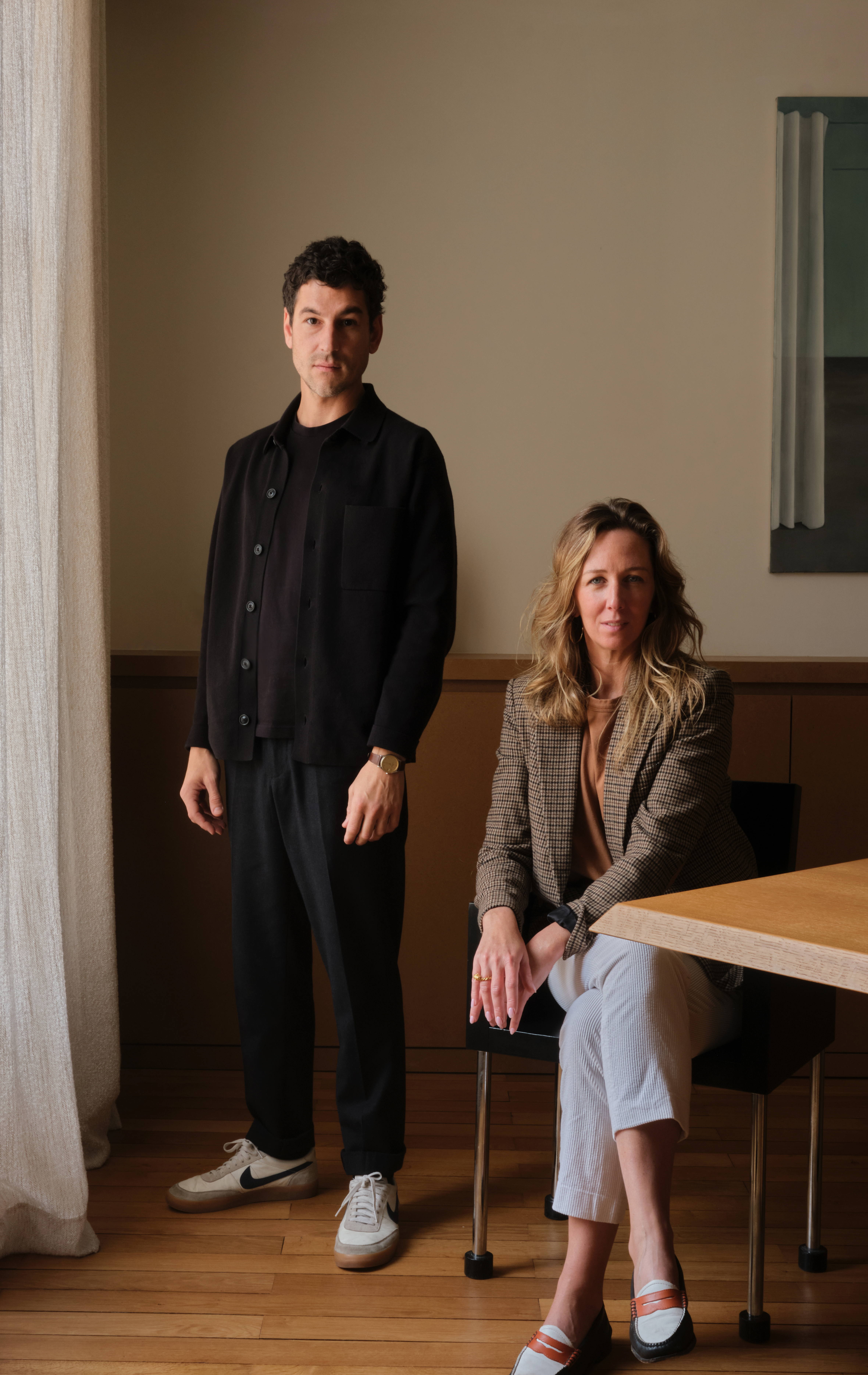
Unsurprisingly, Parisians move a little further out, to places like Les Sablons, where that shift is tangible. "It's still urban, but softened," finds Samantha Hauvette, one half of the design duo Hauvette and Madani, who led the direction of a home for a young couple relocating here.
The 1930s apartment they found now feels as calm as its surroundings, just as the designers intended. How they approached that becomes clear from the outset. "Light is everything," Samantha notes.
These are, in fact, the themes the duo worked with: materiality, subtle punctuations of color in sea-like tones of blue and green, and a mix of design pieces that feel (in their own words) less "designed" and more "collected".
While there is a deliberate layering of pieces from the 1930s, a nod to the era of the house, alongside more contemporary designs, the overall feel never gets too decorative. The home, as a result, feels as though it has come together over time, rather than over the course of a few months.
Lucas Madani sums it up: "a home that's curated, but lived-in, which is very much our signature. What helps, of course, is that we've worked with them before, so there's a level of understanding, and everything flowed quite naturally."
Before they got there, they first had to look at the bones.
"The original layout was highly compartmentalized, as is typical of 1930s Parisian apartments: a succession of enclosed rooms, each with its own function, and very little sense of flow between them," explains Lucas. "That kind of rigidity doesn't suit the way families live today, but it does carry a certain spatial logic and a generosity of volume worth preserving."
The key intervention was to open up the main living and dining areas. "We were deliberate about not going fully open-plan," Samantha adds. "The 1930s bones called for something more measured, with a sense of progression from one space to the next, rather than everything revealed at once."
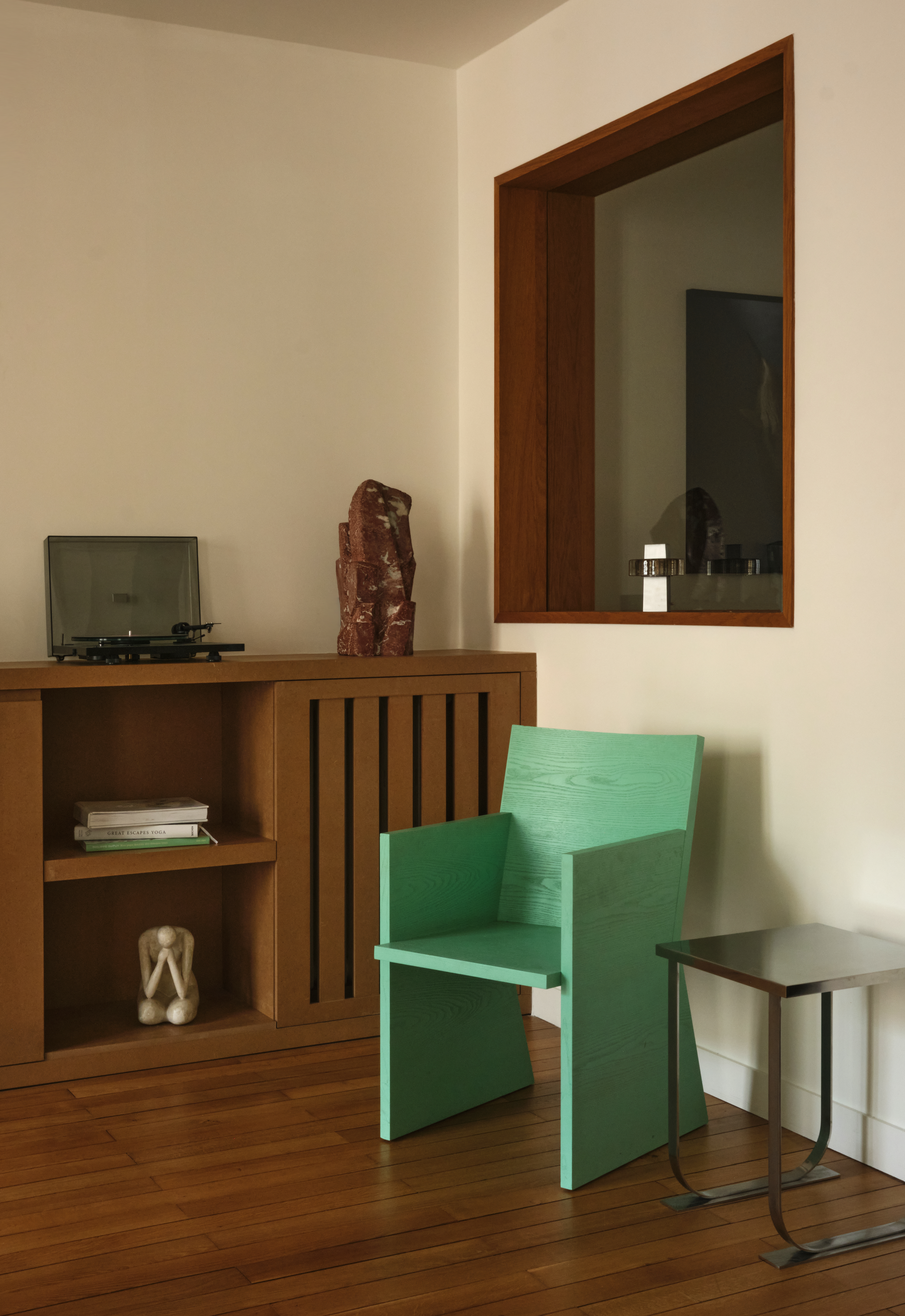
Needless to say, flow was key. Upon entering, the atmosphere shifts gradually. The entrance is understated, leaving room for what follows (one or two surprises, for sure), and from there the living spaces widen and become lighter, a lot more expressive even.
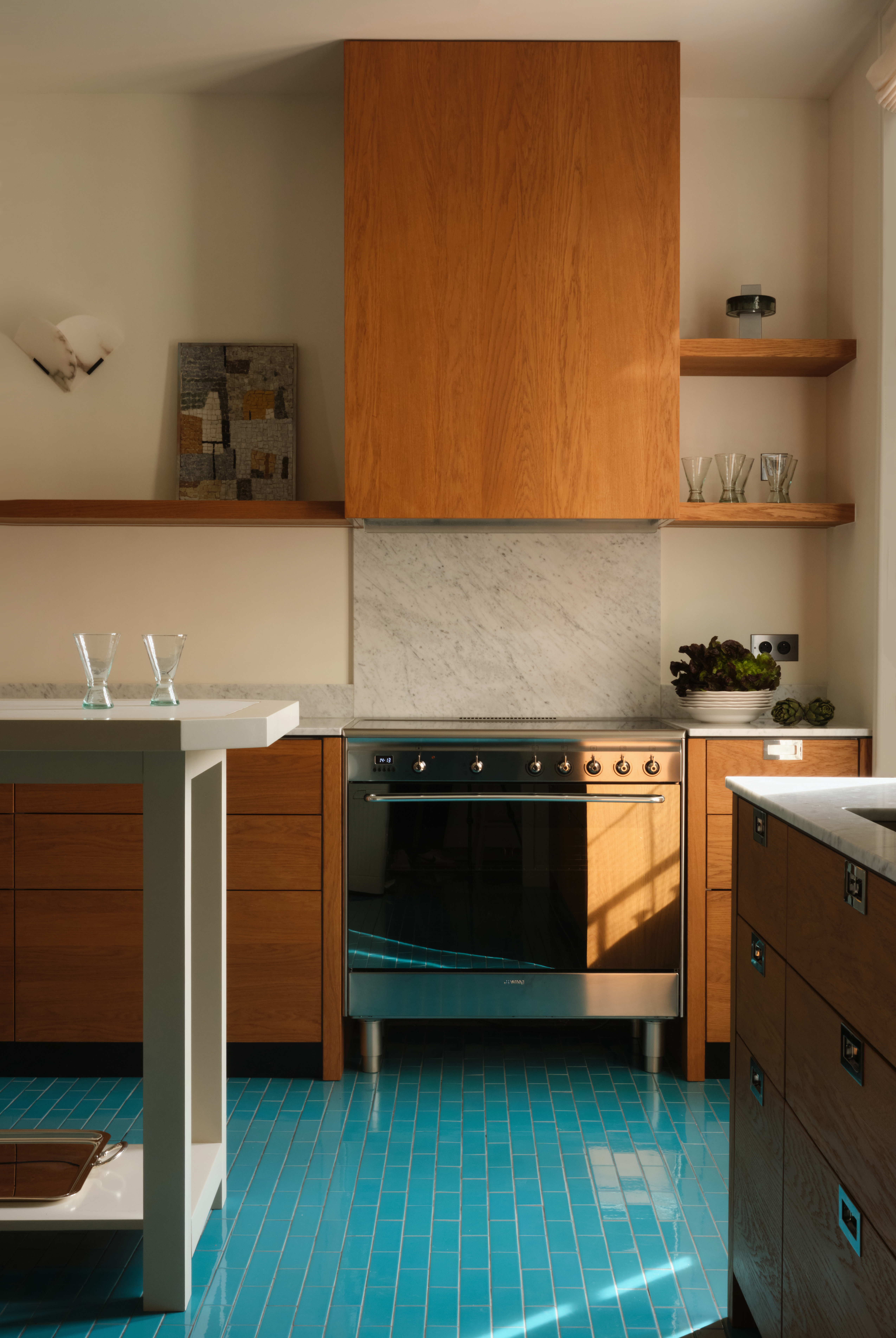
The kitchen, with its bright blue ceramic tiles, shimmering like the bottom of a swimming pool, stands out as a bold gesture.
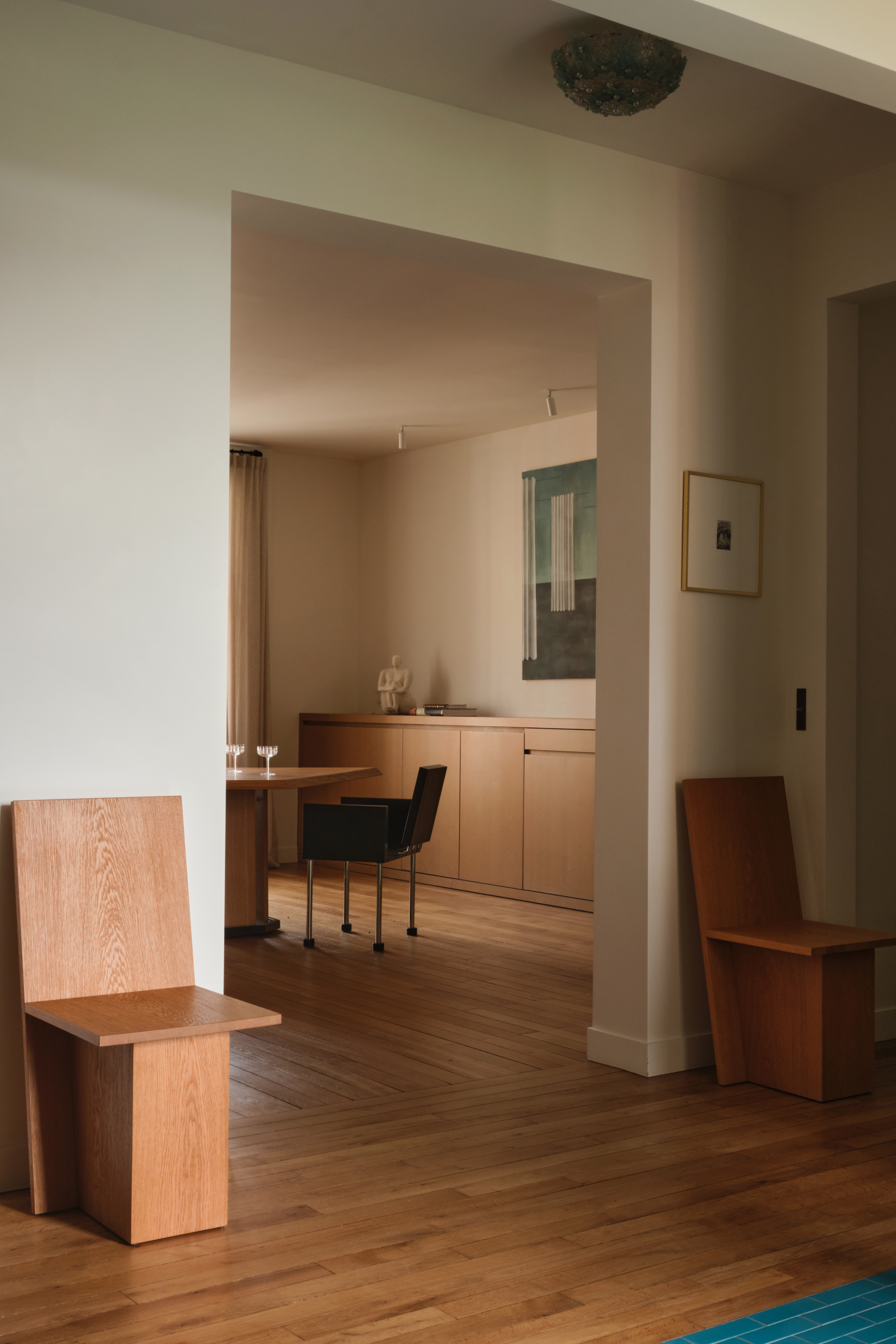
In the dining room, a surreal painting by Mathilde Lestiboudois introduces a soft, sea-toned palette against warm wood, much of it bespoke and designed by Hauvette & Madani. A teak chair by Ettore Sottsass, painted in turquoise, adds another note of color; ton-sur-ton interplay rather than a bold statement.
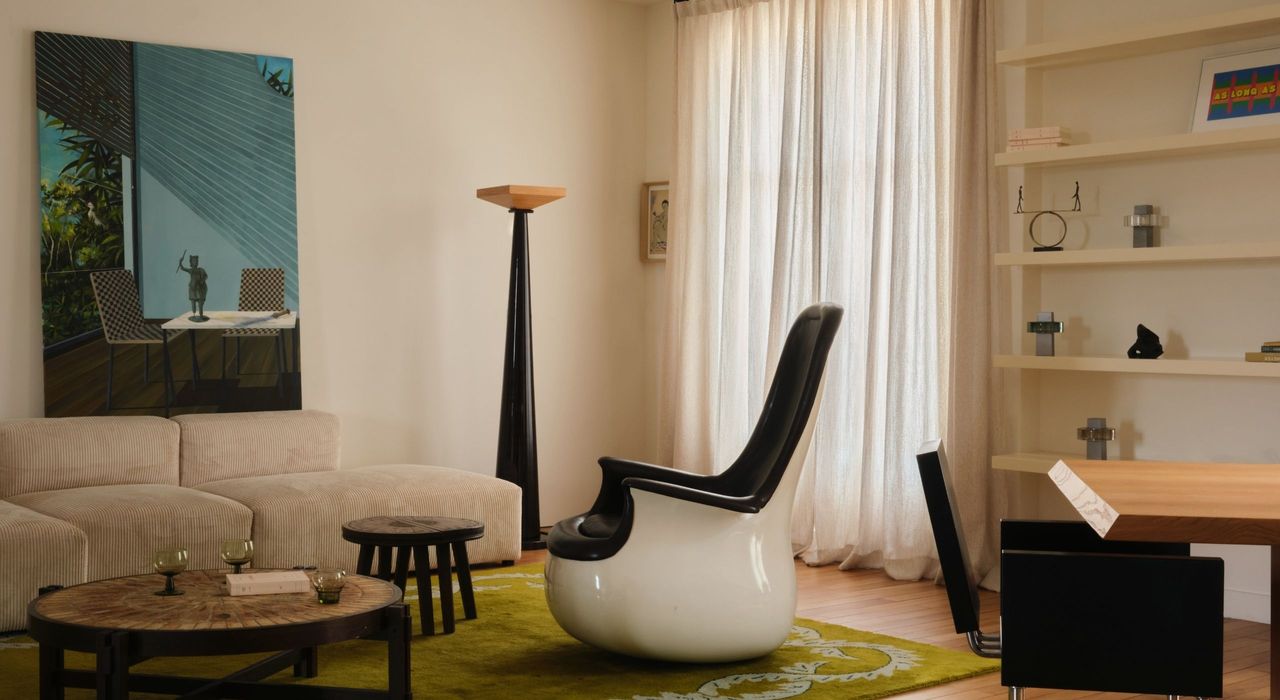
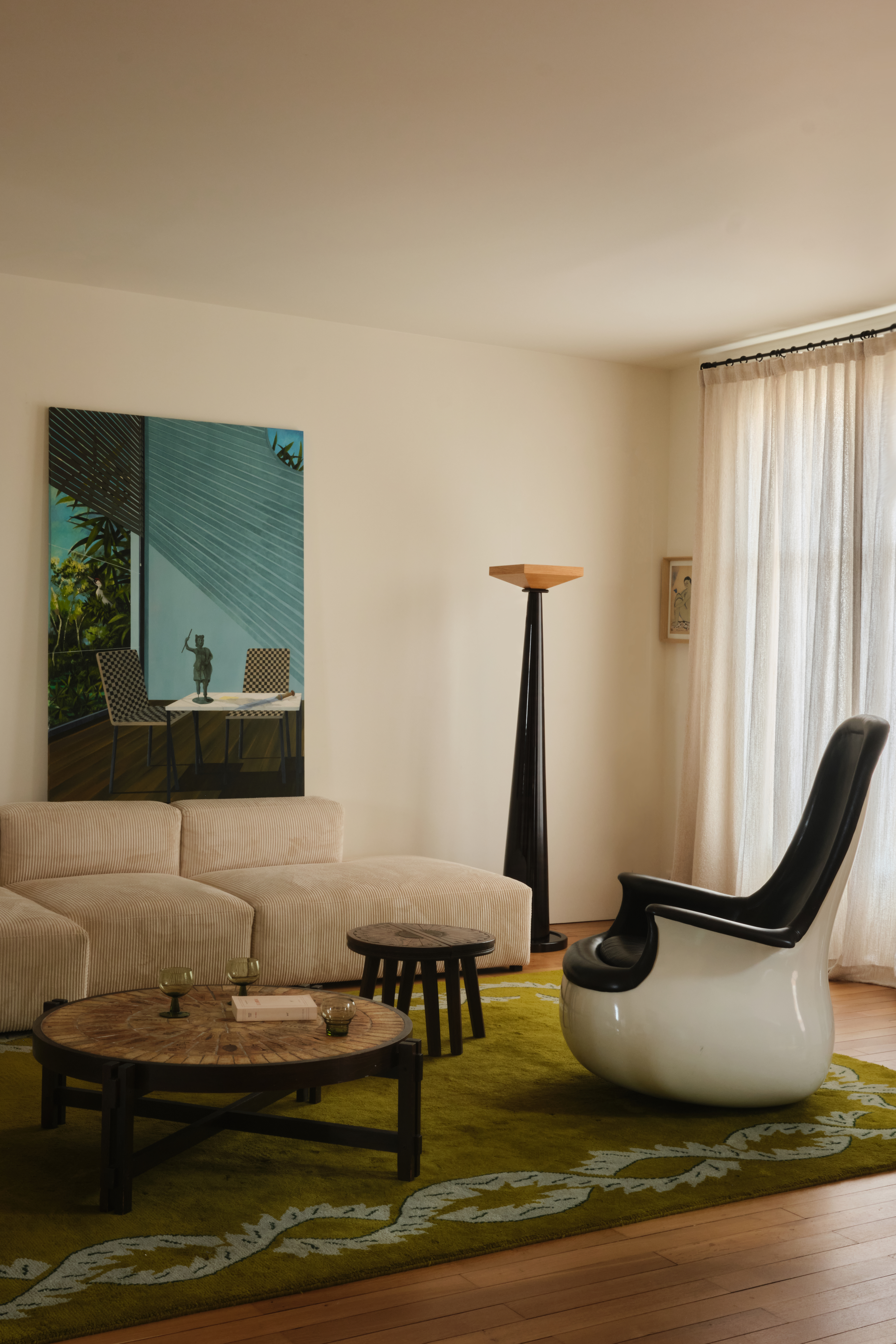
The living room continues this approach. A work by Mickaël Doucet — "his paintings carry an emotional stillness we're so drawn to," notes Samantha Hauvette — in layered blues sits against a pistachio-green rug by Nordic Knots. This brings softness through texture while holding the palette together.
Nearby, a Culbuto chair by Marc Held (1967), in lacquered black and white, reads almost like an enlarged punctuation mark; its rounded base and sharp contrast giving the space a graphic accent.
The devil is in the details. As I recently discussed with an industrial designer friend, much of today's joinery tends to be standardized. Here, custom-built elements run throughout the apartment, acting as both divider and anchor, guiding the movement from one room to the next in a fluid way.
Further in, the private spaces shift in tone, with the bedroom becoming more intimate and enveloping through a darker palette and tactile materials.
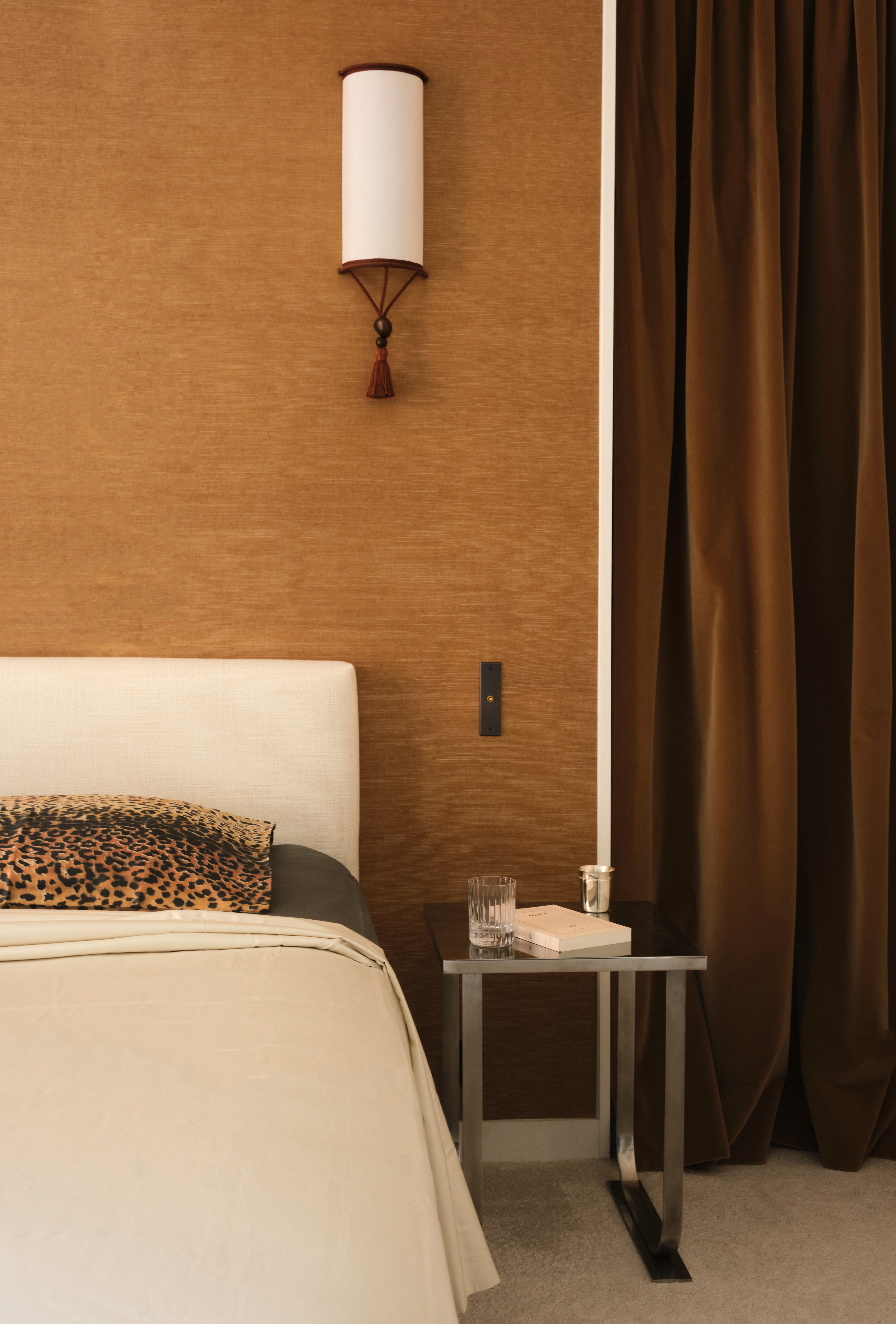
It borders on boudoir: art deco-style wall lights, tobacco tones, and leopard-print cushions set against cream bedding. Curtains fall symmetrically on either side, framing the bed and leading through to the bathrooms beyond. One is more pared-back in feel, while the other stands out with, again, accents of washed blue.
Cinema from the 1980s and 90s played a role in shaping the bedroom. "Not as a direct reference," Samantha explains, "but in the way intimacy is constructed through light, texture, and domestic detail."
More broadly, a habit of visiting exhibitions and spending time with art informs how the spaces are composed and how objects are placed and weighted within a room.
Other references reach further back. Ceramic low tables, sourced from various dealers and chiné in the spirit of Roger Capron's 1970s work. "Those tables bring an artisanal warmth that feels difficult to replicate today," Lucas notes.
There is also the personal. "My grandmother made the white sculptures," Samantha says as a proud smile appears on her face. "They belong in the home in a way that goes beyond aesthetics, carrying memory and affection into the space."
And then there is the present, with contemporary art woven throughout. "Balancing contemporary and vintage is less about contrast and more about dialogue," adds Samantha.
"Vintage pieces bring depth and narrative, a sense that a space has been experienced and considered over time, while contemporary elements bring clarity and prevent it from tipping into nostalgia." In the end, it is about being able to live there in the now. Here, that balance has been beautifully struck.