When Chris Cornell took his life at age 52 in May 2017, the music world mourned the death of the Seattle music pioneer and frontman of Soundgarden, which Cornell co-formed with guitarist Kim Thayil and bassist Hiro Yamamoto in 1984.
The tragedy was all the more trenchant since Soundgarden were on tour and working on the follow-up to their 2012 comeback album, King Animal.
“Strange is probably the best way to describe how I felt after Chris passed,” writes guitarist Kim Thayil in his new autobiography, A Screaming Life: Into the Superunknown with Soundgarden and Beyond. “Everything turned dark when the band ended so suddenly, taking with it a creative partnership I hadn’t fully understood until it was gone.
“Losing that left me in a constant, grim melancholy. It was a despondency so deep, it felt almost sublime. I wasn’t just feeling it – I was watching myself feel it.”
Thayil processed Cornell’s death in private and avoided the press for 18 months. When he started talking to promote an MC5 50th Anniversary tour (for which he was playing guitar), he revealed that Soundgarden had started working on the follow-up to King Animal before Cornell died, and that there were unreleased multi-track demos that featured Cornell’s vocals.
Soon after, the band started working on a new album, including a song Thayil wrote tentatively called X-Mas, which he says might have been the last thing Cornell ever recorded.
“I was thrilled, but it was also bittersweet,” Thayil writes. “Hearing Chris’s voice again, singing things I’d never heard before, was both joyful and emotional. It was like he was speaking to me from the past, reminding me of our work together. There was another surprise, too – an unheard alternate version of a song we had previously worked on, musically distinct from what he’d shared with us earlier. It was amazing.”
To plug the book, Thayil sat down with Guitar World and talked about the fertile Seattle music scene, how he altered his approach to guitar throughout the band’s career, his unconventional leads, the sources of tension that led to Soundgarden’s breakup in 1997, and the status of the band’s swan song.
You were categorized as a metal band before “grunge” became part of the vernacular. Did you feel like a fish out of water?
Yeah, because we were navigating popular culture and rock themes, but we were giving them context in a way that didn’t feel like metal. There were political and social aspects to our music that seemed closely aligned with underground punk rock.
After Nirvana’s Nevermind topped the charts, most major labels eliminated their metal departments, dumped their hair bands, and entered a mad dash to sign any loud alternative groups that might belong in the same universe as Nirvana, Pearl Jam, or Alice in Chains.
To be clear, they weren’t dropping Metallica or Megadeth. They were dropping these glam metal bands, but some of them were really damn good and wrote cool songs. It was unfortunate that record companies thought they had to stop promoting them and drop them. It’s also unfortunate that the record labels were motivated by caprice and fads.
What kind of guitar tone were you after when you started out?
Everybody talks about guitar tone now, but it wasn’t much of a topic then. We were just going with a power chord sound. I wanted to be loud. Tone wasn’t an objective.
What was your criteria for the guitars you played in the studio and on tour?
I just had to have a guitar that felt comfortable and did what I wanted. It’s like, ‘I want to play songs like the Ramones, and I want to play songs like Black Sabbath. Can this guitar do that? It can. Okay, cool.’ Being visceral was important to me. I wanted a guitar that felt responsive and a sound that leaped from the amp when I played.
The way I approached the instrument always seemed more important than what actually came out. If I wanted to play a solo that was slashing and manic, I beat up the guitar like I’m filled with that mania.
On the song Hunted Down, on Screaming Life, I wanted to be loose, wild, and feel this careening sound. On other songs, I’d want a more mellow, warm, bluesy sound, so I’d hang onto the notes and play triplets I learned from listening to Rush and Kiss.
Did you have a go-to guitar in Soundgarden?
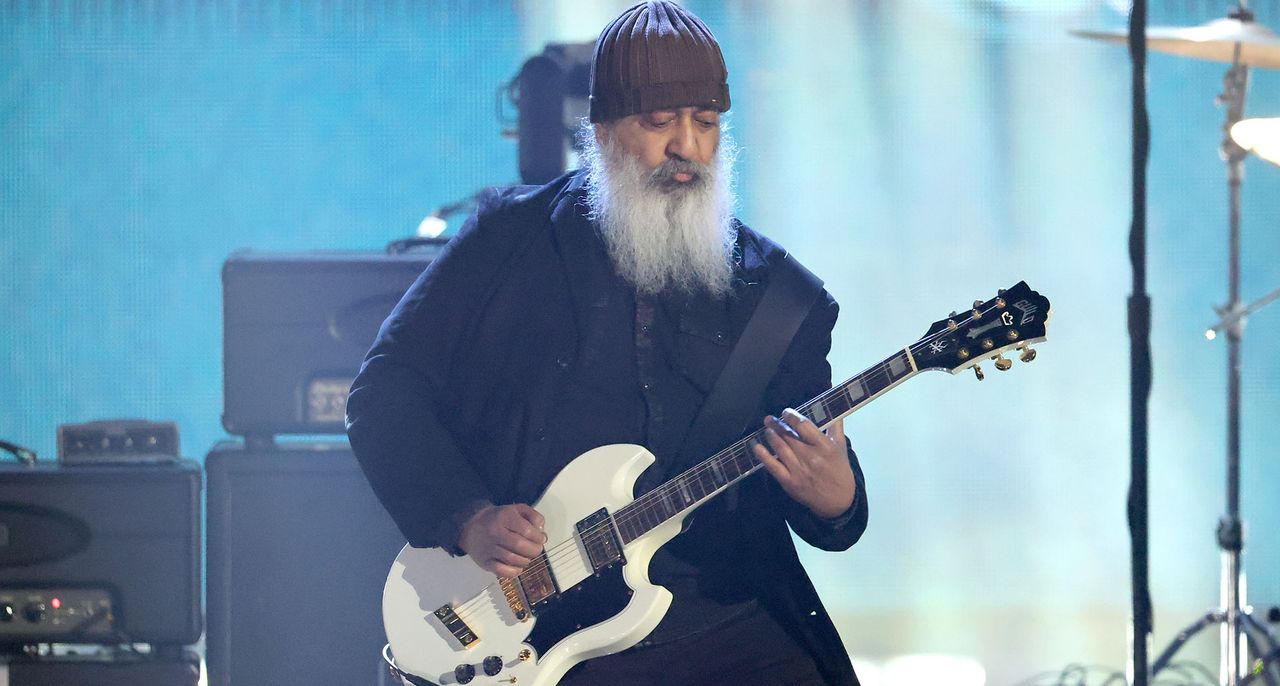
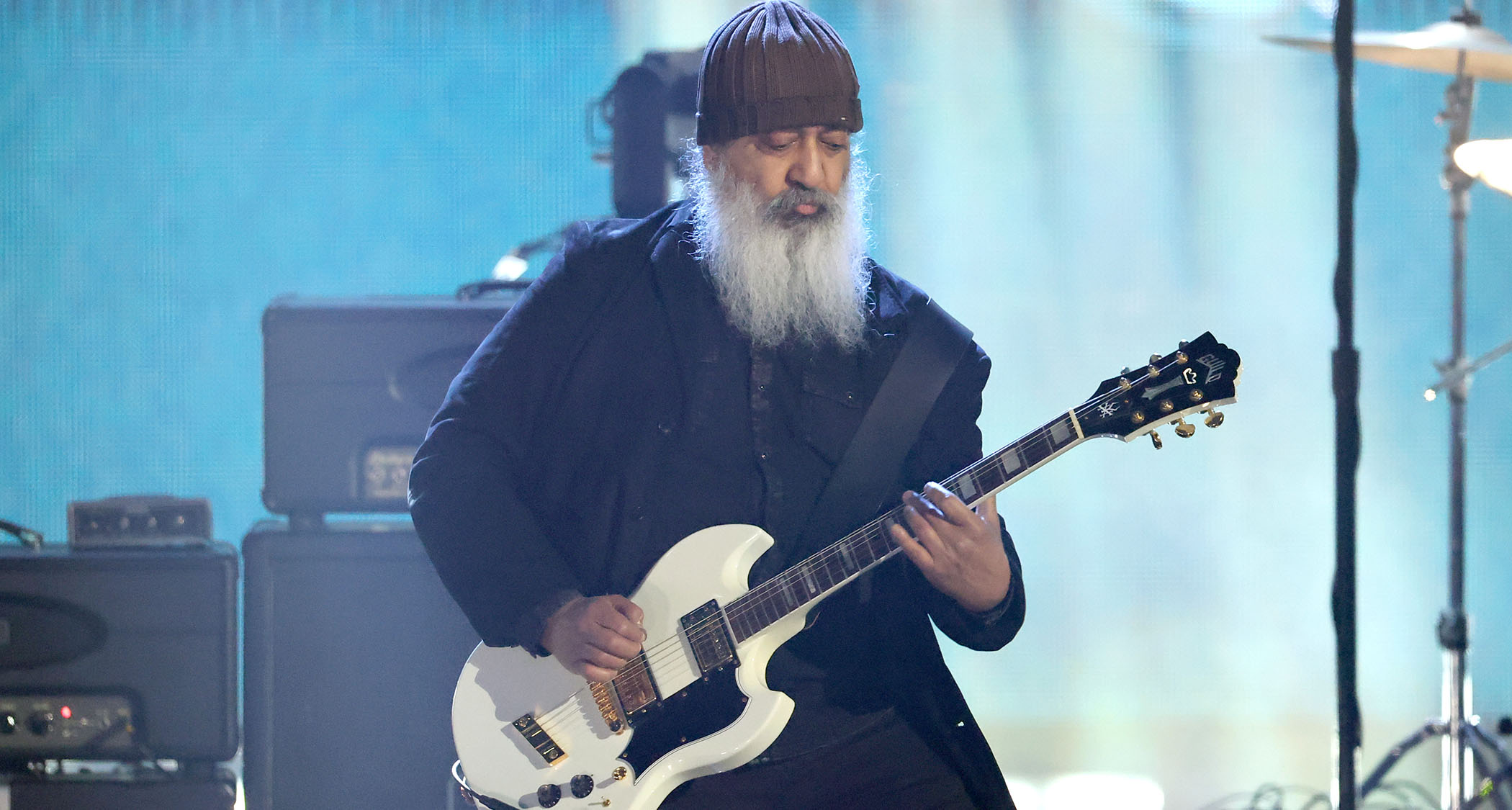
The Guild S-100 was very versatile. I use a lot of other guitars – Gibsons, Fenders, and Gretschs – but that Guild was a big part of the Soundgarden sound, especially for noise.
You often played a sturdy meat-and-potatoes riff and then countered it with an atonal, noisy lick or an interesting effect.
I didn’t want to follow any particular scales, so I played whatever sounded right to me, whether it was crazy or kind of trippy. The pickups on that guitar were somewhat microphonic, so I could blow on the strings and it would feed back. I did that at the beginning of Flower.
But it wasn’t a shrill, out-of-control noise. It was a weird hum. And the way I set my amps and used a chorus pedal gave me feedback that grew slowly and swirled around in a psychedelic way.
Can you trace your arc of evolution as a guitarist?
A lot of it was informed by whatever I was listening to. When I was young, I liked Kiss, Black Sabbath, and Aerosmith, so I learned pentatonic scales. But I didn’t like them. I was like, ‘Oh, that’s only five notes. What about the other two?’
Over time, my playing became a mish-mash of everything I loved, including MC5, Gang of Four, the no-wave compilation No New York, Ramones, Black Sabbath, Sun Ra, Ornette Coleman, Frank Zappa, and Pere Ubu.
Dropped tunings figured largely into your songs as well as those of Nirvana, Alice in Chains, and even Pearl Jam. When did you discover the technique?
I was in my young twenties and hanging out with Buzz Osborne from the Melvins. We started talking about Black Sabbath, and Buzz goes, “You know they did this thing called drop D.”
We said, “What’s that?” And Buzz says, “You tune the E string down to D, and it sounds heavier.” When I got home, I grabbed my guitar, tuned it down, and immediately realized it was much easier to play chords, so I could play faster.
When Ben joined us, he brought in other tunings, and Matt does a drop D in G, which we called “digga digga”
What was the first song you wrote in drop D?
Nothing to Say. I showed it to everyone at practice and explained the drop D sound and they loved it. The next song I did in drop D was Flower, and then Chris wrote Beyond the Wheel.
When [bassist] Ben [Shepherd] joined us, he brought in other tunings, and [drummer] Matt [Cameron] does a drop D in G, which we called “digga digga.”
He wrote Birth Ritual with that. It was cool because we were all songwriters and always tried to turn each other on to new stuff and impress each other. Suddenly, we didn’t feel limited by the intervals in which we tuned the guitar. We could do whatever we wanted.
Chris started out as a drummer and didn’t take the stage with his guitar until after 1989. Did having him onstage change the way you played?
Yeah, and at first I was resistant to it. If I wanted to solo on songs like Incessant Mace or Beyond the Wheel, having just the bass and drums behind me freed me up. But if Chris was playing chords, it framed the parameters in which I could play, which felt limiting.
Also, I liked playing riffs on my bridge pickup and solos on my neck pickup. I liked the warm sound of that, which is the opposite of what most players do. When Chris was also playing guitar, I couldn’t cut through, so I had to move to the bridge pickup.
Was that frustrating?
It was annoying, and he didn’t know it at the time, but when he switched from a Les Paul with humbuckers to a Fender Stratocaster or Telecaster, I had to adjust my playing again because his single-coil pickups were brighter than the Les Paul pickups. That’s when I started using the wah-wah.
In addition to cutting through the mix, the wah pedal added a psychedelic splash to the songs.
It was a good addition to the sound. I wouldn’t do a regular wah-wah sweep because that’s been done to death. I wanted to be noisy, so I’d kick on the distortion and step on the wah-wah. It was screechy and screamy, so now I’ve got this weird feedback and noise, and I can do some slashing stuff.
The detuned string is a little looser, so it has a slightly different sound and little overtones. It sounded heavy and incredible. So, we kept going with that
Did you get an equipment upgrade when you signed with A&M for Loud Love?
We got an endorsement deal with Peavey, and they gave us a bunch of cabinets and amps, which built up our stage gear for tour. A few years after that, we did a deal with Mesa/Boogie. But each time we did a new deal, I’d get new heads and have to learn about their different features.
The Mesa/Boogie Rectifier had settings for “modern,” “classic,” and “standard.” Some were bright and percussive, which would be great if you're playing like Metallica, but I had to scramble to set everything to “standard” or “classic” and try to make the amp sound warmer and more like an old Fender Tweed.
Badmotorfinger (1991) was more musically complex than Louder Than Love, yet Outshined, Rusty Cage and Jesus Christ Pose were some of your biggest hits.
Chris was brilliant at taking what might seem like conventional formats and breaking them up in odd ways. Outshined is mostly in 7/4, but it was built around a great riff and had a memorable vocal line. And Rusty Cage was in drop B.
The detuned string is a little looser, so it has a slightly different sound and little overtones. It sounded heavy and incredible. So, we kept going with that. On Superunknown, The Day I Tried to Live is built on descending half steps, and it’s in 7/4. And Spoonman switches between 7/4 and 4/4.
Was becoming a multi-platinum band a double-edged sword?
No, because being famous was never a goal, and we could always sleep at night knowing our songs were still weird. But being in the position we were in was definitely strange, and you don’t know what it’s going to be like until you’re there.
You described the last album you did before your breakup, 1996’s Down on the Upside, as somewhat similar to the Beatles’ White Album, for which band members came to the table with finished songs that were recorded without much collaboration.
We were always coming in with our own ideas, but when we did that album, some people wanted their songs to sound just like their demos. It was like, “Well, we’re not making four solo albums here, we’re making a Soundgarden record.”
It bothered me a little because I write with Chris and [bassist] Ben [Shepherd] in mind, and I thought they should write with me in mind. That wasn’t happening – partly because of success and partly because of arrogance.
Was Down on the Upside a misstep?
When you’ve got a number of cooks in the kitchen, there’s always going to be a little friction. But I love the album. Every song on the record is there because the band wanted to learn it and perform it.
Were tensions mounting in the band before Ben stormed offstage during a show in Honolulu in 1997?
There were frustrations, but we were still moving forward. There have always been times when one of us might have a bad gig. We all just thought, ‘Okay, now we’ll get back on track and do the next show.’
Some have viewed that moment as the beginning of the end.
The narrative that’s out there is incorrect. It was just a fucked-up show, and it happened to be the last show of the tour. We all thought we’d wait until the next tour and everything would be fine. Then, months later, Chris decided to quit the band.
Is there a general misconception about Soundgarden among people who only know you for Spoonman and Black Hole Sun?
Thematically, Soundgarden dealt with pretty big things. We didn't write about parties or cars, and we didn't write he said/she said love songs. They were slightly grander and more psychedelic. They were about identity and orienting oneself in a creative, spiritual, and social world.
It’s emotionally draining and there are things about it that are sad and melancholic. But at the same time, it’s exciting to finish the work that we started with Chris
You had a tremendous comeback with your reunion tour in 2011 and the studio album that followed, King Animal, in 2012. As you’ve documented in your book, Soundgarden were firing on all cylinders when Chris took his own life on May 18, 2017.
In 2023, Chris’ widow agreed to give you the vocal tracks he recorded between 2015 and 2017 for songs you were all working on. Matt Cameron has said you’ve already got eight songs for a new album. Is it difficult to work with recordings Chris made before he died?
It’s emotionally draining and there are things about it that are sad and melancholic. But at the same time, it’s exciting to finish the work that we started with Chris. It’s a tribute to Soundgarden and a tribute to Chris. To not do this would be a great disservice to everyone, including the fans who knew we were in a writing cycle while we were touring.
Will fans recognize the album as Soundgarden?
I made an aphorism earlier about having too many cooks in the kitchen. Well, now we have one less. But we have these recordings Chris is on, and we all have a strong understanding of Chris’ identity within the band, so we are going to honor that completely, even though Chris isn’t there to throw in his two cents. So, yes, it will definitely sound like Soundgarden and I’m going to sound like me.
Do you have a release date in mind?
It’s too early to say. We’re not making this with any set deadline, and we all have other things we’re doing, so we’re fitting it into our schedules when we can. The whole process is a little sideways and backward. We’re not starting from scratch, we’re rebuilding. It’s forensic.
We’re taking things apart and seeing what we’ve got in there and what we need to add to flesh everything out. And we’re planning to take our time with it.
Has age brought you wisdom or inner peace?
Yeah, and with wisdom can come things like patience. But there was never any real major internal conflict. That wouldn’t have worked. We wouldn’t have made the records we did over a long period if it was no fun.
We probably wouldn’t have even stuck it out through [1987’s] Screaming Life. We did something untraditional because it was fun, not because it was lucrative.
- A Screaming Life is out now via William Morrow.
- This article first appeared in Guitar World . Subscribe and save .