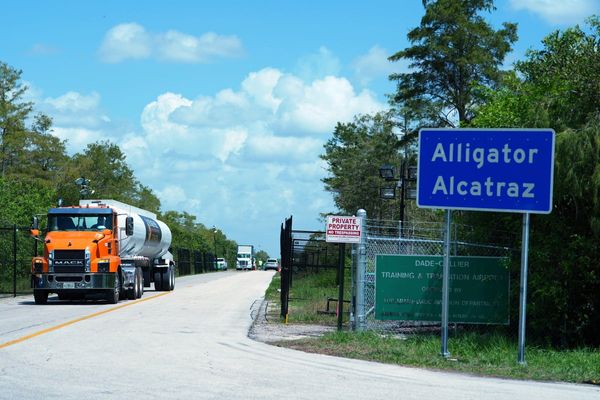
The UK faces a “disaster scenario” of waste being trucked around the country looking for landfill sites if the government does not wake up, says the head of one of the country’s biggest waste and recycling companies.
The impending crisis is caused by a combination of Brexit, a Chinese crackdown on importing recyclable material and the government’s failure to commit to clear policy that would help deliver new waste facilities, says David Palmer-Jones, CEO of Suez.
The UK has, in recent years, exported a lot of non-recyclable waste to Europe – more than 3m tonnes in 2016 – where it is used as fuel to generate heat and electricity in specialist Energy-from-Waste (EfW) power plants. However, the ability for the UK to export waste material may diminish in future if the effects of a hard Brexit restrict this activity.
Palmer-Jones says: “Refuse-derived fuel exports have been the UK’s safety valve, making up the shortfall in the UK’s domestic EfW capacity. If there is no free trade agreement with the European Union, costs associated with waste export activity will increase and this is exacerbated by the sharp fall in the value of sterling since the referendum, leaving the future highly uncertain.”
In parallel to rising waste exports, in the absence of sufficient domestic EfW capacity, the amount of available landfill space in the UK has also fallen dramatically. “The waste management industry has not invested in new landfill for many years because it’s not perceived to be a future solution for the waste treatment. Landfill tax has been incredibly successful in shifting waste material away from landfill, and into EfW facilities, but the associated speed of the decline in landfill has outpaced the delivery of new, alternative, infrastructure, which is what has led to a shortfall. There were thousands of landfill sites in the 1990s but by 2020 there will only be about 50 in the entire country,” says Palmer-Jones.
There will be big regional differences in landfill capacity, with the south east set to be the worst affected area because it has much less capacity than the north of the country and is the biggest regional exporter of waste. “Kent, for example, will have no landfill sites at all by 2021,” the Suez chief adds. “If the export of refuse derived fuel stops, the limited space in the south east will be filled even quicker and we will see ‘landfill tourism’, with waste having to travel across the UK to be dealt with.”
China has also cracked down on imports of certain types of post-consumer recyclable material, such as plastics, which its manufacturing base uses to make new goods. “It all heaps pressure on a system that doesn’t have any spare capacity to deal with it. We are heading for a very difficult time.”
The Department for the Environment and Rural Affairs (Defra) is failing to act in the face of this impending crisis, says Palmer-Jones. “Waste policy is not a priority, partly because Defra has an enormous task in dealing with the impact of Brexit on agriculture.”
“Defra’s 25-year plan has been delayed. The National Infrastructure Plan has been pushed back, the Waste Management Plan has not been updated for many years. We have been talking about this issue for more than five years. It was not a role that we [Suez] wanted, but we seem to have become the guardians of waste planning in the UK.”
Suez has presented its analysis of UK waste treatment capacity in a new report, Mind the Gap 2017-2030 (pdf), which identifies a serious deficit between the amount of waste needing treatment and the EfW capacity available to deal with it. The company says there is a current shortfall of 14m tonnes, although that drops to about 3m tonnes in 2027, as recycling increases and new facilities are built. Still, this 3m tonnes is the equivalent capacity of 10 typical EfW plants, which would require an investment of over £2bn. The report calls on the government to “present a clear ambition for UK recycling and waste policy outside of the EU, backed up with hard policy measures”.
Action is needed now because, as Palmer-Jones says, “you don’t magic up infrastructure. It takes five to seven years to get a waste plant up and running”.
The first step for Defra is to admit that there is a capacity gap, he continues. Defra has consistently suggested there is no problem, despite the industry’s assertions to the contrary. “This is a chance for the new environment secretary, Michael Gove, to listen to the warnings of those at the coal face and encourage his officials to take heed.”
This could even be a great opportunity for the UK, he argues, if it is linked with the government’s planned industrial strategy. “This would enable the UK to better make use of these valuable secondary raw materials and stable renewable energy to support British industry.”
The industry is not asking for billions of pounds in funding, he adds.“We just want clear ambition and clarity from government to determine the balance between future recycling, reuse and EfW infrastructure. Our sector is willing and able to deliver an appropriate mix of infrastructure to support whatever path the government chooses, but the time for direction is now overdue.”
Content on this page is paid for and produced to a brief agreed by Suez, sponsor of the circular economy hub