Former Bethesda developer and Skyrim design lead Bruce Nesmith says he "led the charge" on streamlining some of the systemic elements of The Elder Scrolls 5: Skyrim, like the attribute system that had been in Oblivion, as he wanted an RPG that didn't result in "your head buried in menus, stats and rules".
Speaking with Press Box PR, Nesmith examines the challenge of lowering barriers to entry on long-running RPGs. Compounding complexities, both in worldbuilding and in character-building, can be exciting for longtime players but overwhelming for newcomers.
"Having 52 different races, 112 different magic systems, it's exciting for the people who've been there on the ride from the beginning but it's too challenging for people who are trying to get into it for the first time," he says.
The decision to minimize attributes and some other RPG elements in Skyrim came from a similar place. "I led the charge on that, to be frank," Nesmith says.
"Obviously I had to persuade Todd [Howard] as he is the ultimate arbiter on these things, but I managed to do so," he continues. "I did a lot of the character systems, and one of Todd's philosophies early on in Oblivion, which I took to heart and [is] why I pushed so hard for these things, is that he wanted an interface-less game so ideally you just play the game. You just play it.
"It was about getting the character system out of the player's way. You don't have your head buried in menus, stats and rules. Just enjoy the moment. It is a way to do that. In every version of the Elder Scrolls where I had any say in character systems, that is what I would push for."
Where Oblivion featured more Fallout-like attributes including Strength, Intelligence, Agility, and several others, Skyrim boiled it down to basic resource meters: Health, Magicka, and Stamina. You still had many more skills in Skyrim, but they didn't work like stats on a sheet to be bumped up every level.
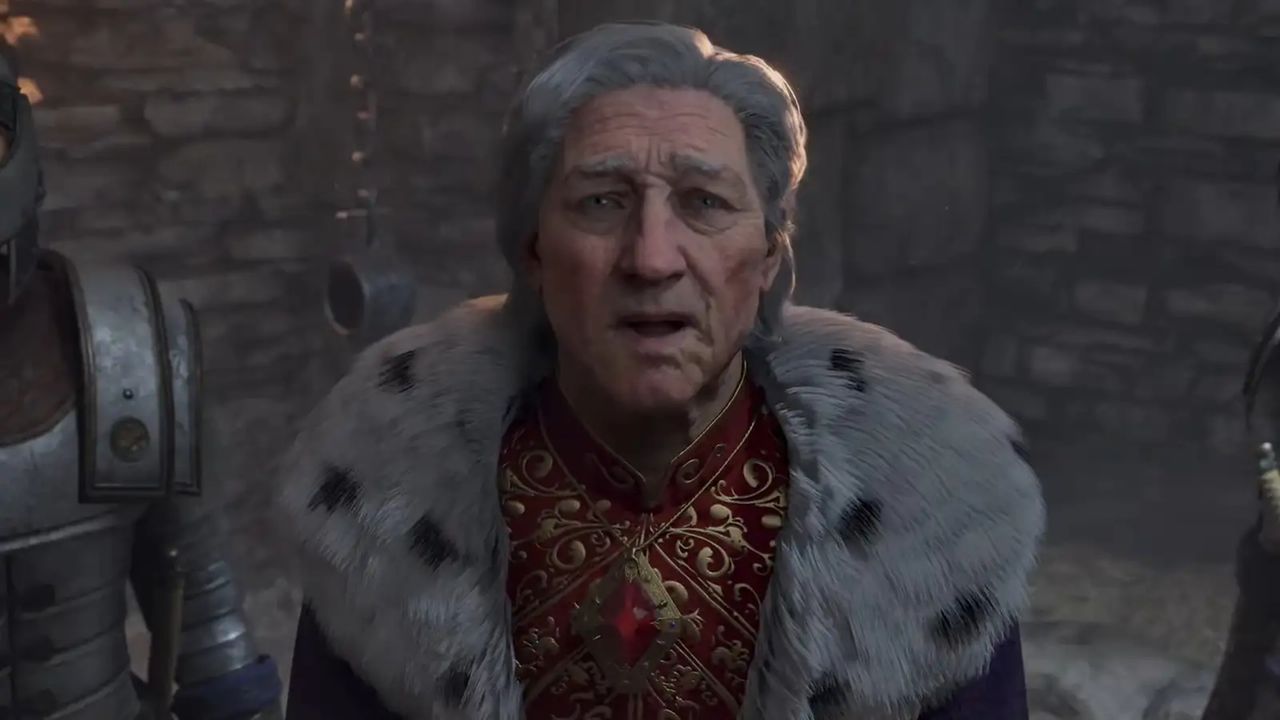
Nesmith isn't against RPGs with more involved stats – in this interview, and elsewhere, he is full of praise for Baldur's Gate 3, which has an awful lot of menus, stats, and rules – but his vision for The Elder Scrolls was of a more straightforward, hands-on, and immersive adventure. (Larian's RPG masterwork, I would say, is observed as much as it is played in a way that Skyrim is not. I think one root question here may be whether stats and rules define the world and interactions, or if they define character progression and power. But I digress.)
"We got rid of attributes in Skyrim and you know who complained? Almost nobody," he adds. "They hardly even noticed it. I love the whole idea that you do something, you get better at it. That's now a hallmark of the Elder Scrolls series because you play the character you want to play and you just get better at playing that character."
You could, without squinting too terribly hard, connect this approach to games in different genres, like Valheim, which follows a similar 'do a thing to get better at doing the thing' system. My mind, unsurprisingly, goes even further back to RuneScape. This approach has been expressed in many different games and in many different ways. Nesmith hones in on the connecting tissue: "You don't have to worry about where you are going to spend your points or how you are going to do this and do that. Just play the game. Let's get the game out of your way."
Moreover, "that's now a hallmark of the Elder Scrolls series because you play the character you want to play and you just get better at playing that character," he says.
An interesting companion trend here is one Todd Howard pointed out in 2023: everything is an RPG now. "I can't look at a game that doesn't have XP and leveling," Howard said at the time, speaking with then-Insomniac Games CEO Ted Price. In that 2023 article, I pointed to Assassin's Creed, once a lean stealth-action icon and now a hefty open-world RPG thing, as a clear example of this, and I'll do it again after Assassin's Creed Shadows.