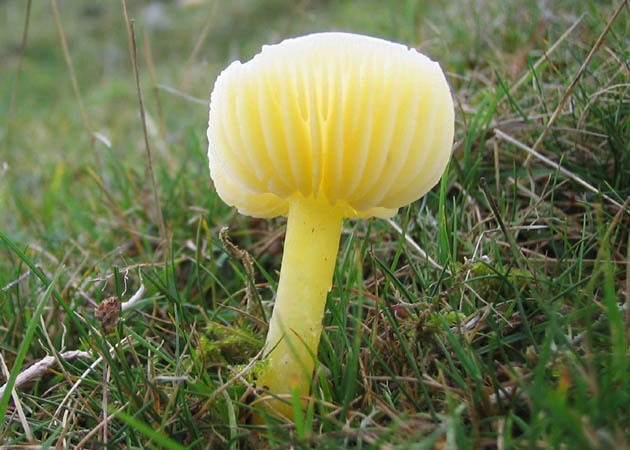
The Citrine waxcap has the lightest yellow cap. It also has creamy-coloured gills. The caps of the Golden and Butter waxcaps tend to be more orange-coloured Photograph: National Trust
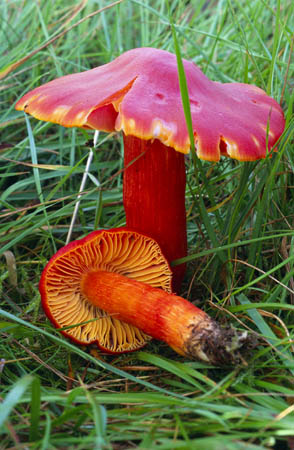
Blood-red cap with orange fibres on a yellow stem. It has a yellow edge to its red gills. It can be confused with the Scarlet waxcap which doesn't have such a deep red cap and the Splendid waxcap which has a deep red cap and stem Photograph: National Trust
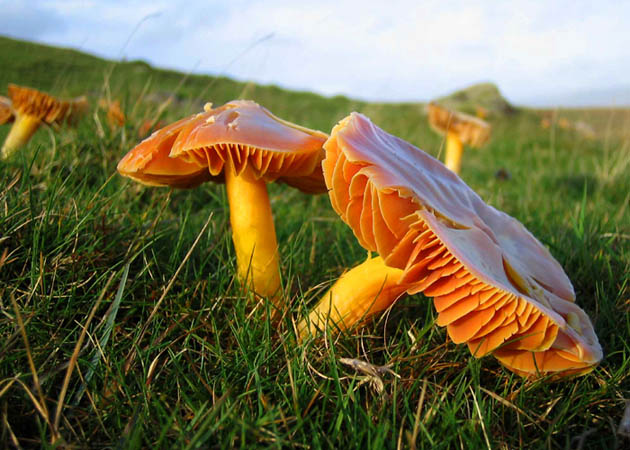
A distinctive orange waxcap. The cap is a pinky-orange, with gills a couple of shades lighter. One of the largest and most common waxcaps Photograph: National Trust
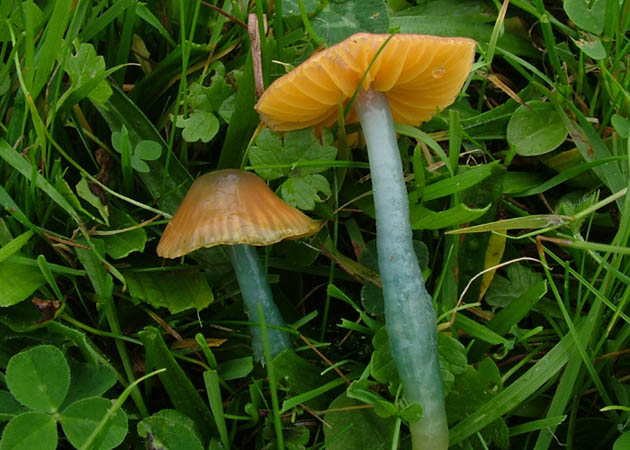
The parrot has a slimy, bell-shaped cap which turns from deep green to yellow-brown with age. It usual has a green hue at the top of the stem Photograph: National Trust
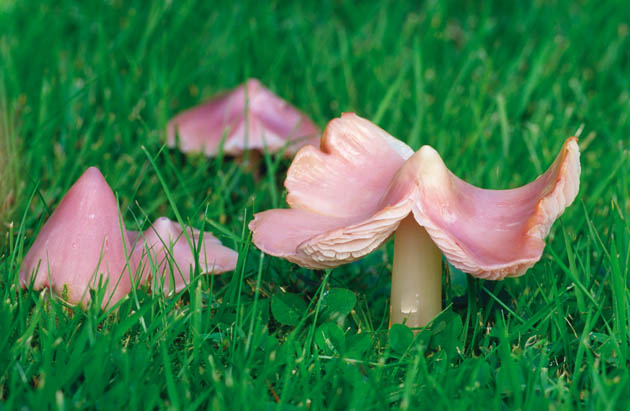
There is only on bright pink waxcap and only one pink fungi in the UK. The cap flattens and splits with age and the edges often flick up like a tutu. Often, where you find a pink waxcap there will be other varieties nearby Photograph: National Trust
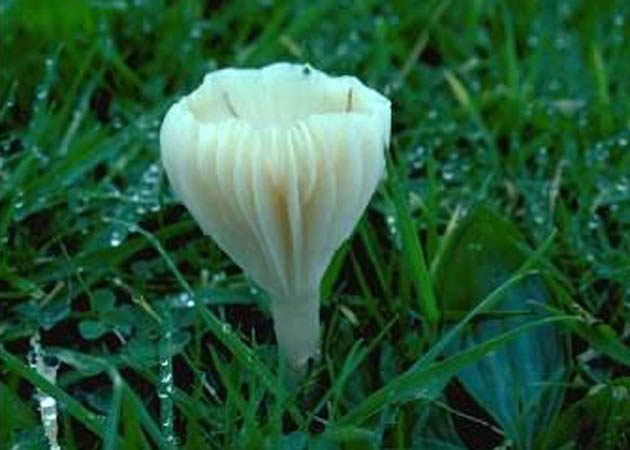
This milk-coloured waxcap is common. Its cap is slimy and, when young, is domed. As the fungi ages the cap flattens and becomes concave Photograph: National Trust
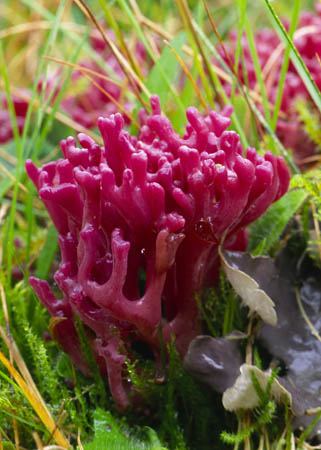
This deep pink fungus has many projections that are branched, but emerge from a single base. It is unmistakable Photograph: National Trust
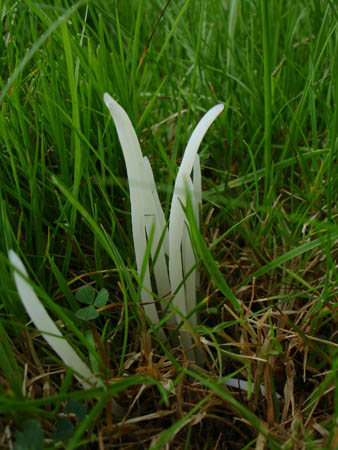
This white fungus has un-branched 'fingers' that are rounded at the tip. They are very brittle Photograph: National Trust