Watercare thought it was doing the right thing to deal with decades of infrastructure underspending. Then Covid got in the way. Now it wants Government to step in.
The mood at Watercare’s final board meeting for 2020 was sombre. It was December 23, but there was little Christmas spirit.
In front of the board was a lose-lose choice.
They could introduce a water price hike they believed was unaffordable, particularly for lower income customers already hit hard by Covid.
Or Watercare could drastically cut back its infrastructure investment programme, leaving leaks unfixed, sewage overflows unabated, wastewater treatment plant consents unmet, and no money available if there was a serious emergency event.
The board chose the latter.
Prices will still go up under the “affordable” option. Aucklanders will pay 7 percent a year more for the next two years and 9.5 percent a year more for the six years after that. The average customer’s bill will double over the next 10 years - from $1069 to $2261.
It just won’t go up as much as it would have done under the "unaffordable" scenario.
But there’s a big downside in taking choice two - almost $1.3 billion of water infrastructure desperately needing building or renewing won’t get built or renewed. Not in the next few years anyway.
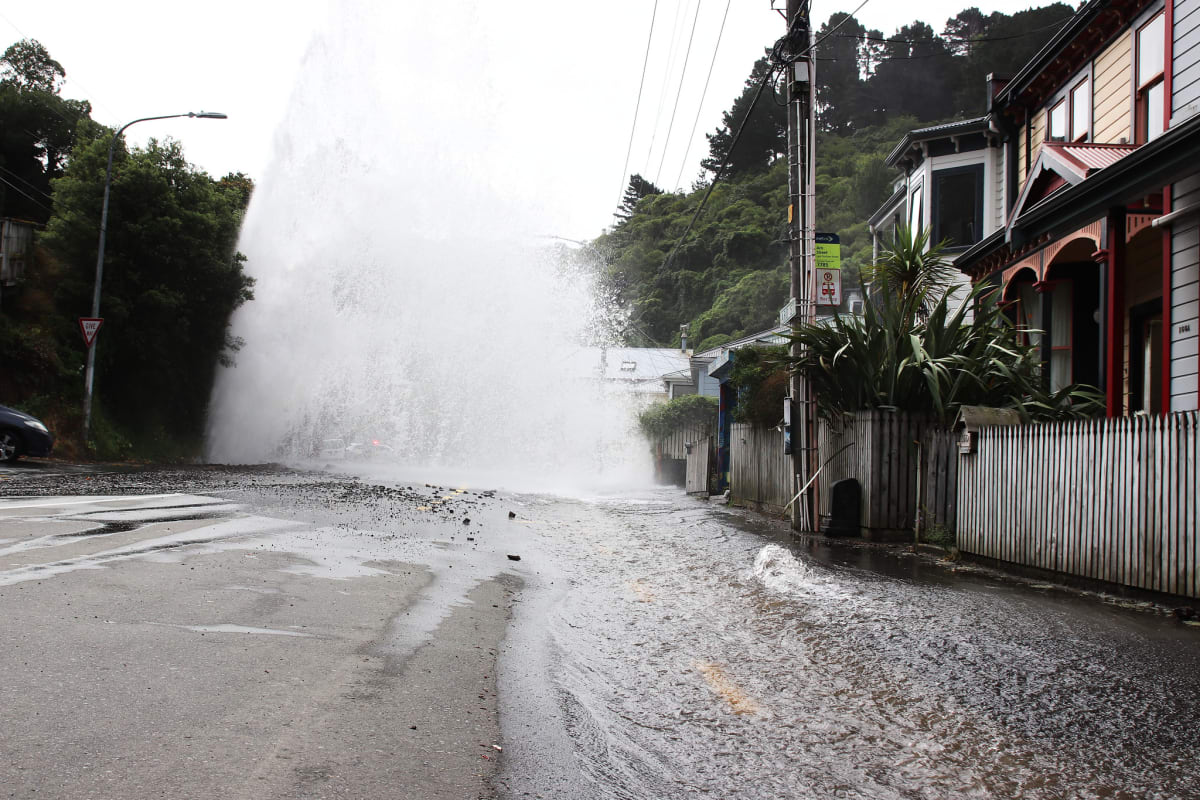
Think Wellington and its burst Aro Street water main. Or the many times Auckland's beaches aren't safe to swim at after storms.
The December 23 Watercare board report lists the projects that will be deferred or downgraded because of lack of funding - the Western Isthmus sewage outflow will be delayed for three years, for example, and the Hunua water main replacement postponed, also for three years. The Huia water treatment plant replacement project is also put off for three years, and leakage detection investment is delayed two to three years. So it goes on.

Then the report outlines the risks those delays pose. It’s not cheerful reading.
For example: “Increased risk of asset failure: increased unplanned maintenance costs, loss of services, increased overflows into the environment [think sewage going into the rivers, streams and the sea], reduced customer trust.”
The report also talks about Watercare not being able to provide infrastructure for new housing developments, including the Government’s Kāinga Ora programme (“community and developer discontent, increase in future costs to meet growth, credibility with central government reduced.")
There are enforced cutbacks to Watercare’s programme to find and repair leaks (“heightened risk under drought conditions”), and there is reduction in resilience of the network, and the need to defer climate change initiatives.
Finally there’s the big one: “No funding available for significant emergency events.”
Which is to say if a big pipe broke, or there was a major issue in a reservoir, or a massive storm came through the city, even an earthquake, there’s no slack to deal with it.
No wonder the mood at the board meeting was a bit grim. Maybe the board members were wondering whether they were going to face Wellington-style water chaos - and the accompanying public backlash.
Just when they’d almost got the drought under control.

And when Watercare was at least trying to work out how to get its infrastructure house in order - after years of Council-sponsored underspending. Last year the CCO (council-controlled organisation) commissioned a Scottish water consultancy to take a hard look at what investment was needed to get its assets up to scratch, and the resulting WICS (Water Industry Commission for Scotland) report put some (very large) numbers around what Watercare needed to spend on “enhancement and growth” of its three waters network between now and 2032.
To be precise: $4.7 billion. That's $1.7 billion more than Watercare had identified in its 2018-2028 long term plan.
Knowing how much is needed is a good start, and something the majority of New Zealand's councils don't know. Watercare is one of the more proactive water authorities in the country, Water New Zealand chief executive Gillian Blythe tells Newsroom.
“Auckland invests more on water infrastructure than some other NZ utilities. On a per capita basis, its spending on infrastructure is in the top half of utilities.”
Just last year, on the back of the WICS report, Watercare revised its spending projections upwards significantly, compared to what it had budgeted for in the 2018-2028 long term plan.

Watercare started to look at how to fund its new plan. And there it hit a major snag: Covid had drained Auckland Council’s coffers. And Auckland Council owns Watercare, and controls its debt.
True, unlike most other water authorities in the country, Watercare stands at arm’s length from the Council in terms of its operations. It raises money from selling water, and spends that money on water assets.
But its assets are still tied up with Council assets - and therefore so is its ability to raise money through debt using those assets.
That’s a problem because Auckland Council is close to the upper limits of its ability to borrow because of Covid’s impact on its revenue. It has self-imposed debt-to-revenue levels which mean there’s no spare capacity on the Council's books for Watercare to borrow to fund its maintenance and growth programme.
Which is why Watercare has had to scale back its planned spending by close to $1.3 billion, or 60 percent over the next four years.

It’s a situation full of irony and bad timing. If Watercare could borrow off the back of its own assets, it likely wouldn’t have any difficulty getting someone to lend it the money.
Meanwhile the Government is in the middle of some big decisions about ownership of the country’s water assets as part of its three waters reform. That reform might very well split Watercare’s assets away from Council within the next few years, leaving the water authority free to raise its own debt.
The trouble is the Government hasn't decided when, or even if, the planned reforms will come into existence - or what they will look like if they do. Even if it happens, it’s probably at least two years down the track, potentially more. It’s a hugely complicated process.
And in the meantime, Watercare wants the money for its pipes and its treatment plants. Preferably now, if not sooner.

The role of Government
Which is why Watercare is asking the Government to come to the party.
It is talking to officials about whether the Crown could provide some sort of indemnity to debt providers that if Watercare couldn’t meet its repayments, the Government would step in.
Then Watercare might be able to raise its own money without using its assets as collateral.
“If there was a different financial structure we could achieve our proposed levels of investment without a significant water price hike,” Watercare’s chief infrastructure officer Steve Webster tells Newsroom.
“There is a solution.”
Discussions are going on between Watercare, the Council and Government, Webster says, and if there is an agreement, Watercare and Council could then put a proposal to ratings agencies for approval.
But the process is slow, he says. “The Government has a lot on.”
Webster says he’d like to see some agreement by the middle of the year so contracts could be finalised and work could start on the deferred projects. If not, he’s worried Auckland’s temporary funding fix will drop off the radar because of the wider three waters reform.
“If it doesn’t happen in the next 12 months, it’s probably not going to happen.”

And that means more leaks and breakages, and more cost to keep old plants going.
Take the Huia treatment plant. It was built in 1928 and is nearing the end of its operational life, Webster says. Watercare plans to replace it, but the revised investment plan sees that being put back three years.
“It will still produce A-grade water, but we’ll be sweating the asset and operating costs will go up.
“There are numerous examples like that across the network.”
Auckland Council’s acting chief financial officer Kevin Ramsay told Newsroom involving Government in a solution to Watercare’s short to medium term funding problems “could work in the interim”.
“Watercare has had conversations to see if there is an appetite and we are waiting to see if it is a viable option,” Ramsay says. “We are willing to participate with central Government to explore options.”
Finance Minister Grant Robertson told Newsroom discussions were ongoing with Watercare and Auckland Council in the context of the three waters programme. But he wasn't committing himself to helping before that.
"At this time there is no plan for any indemnity.”