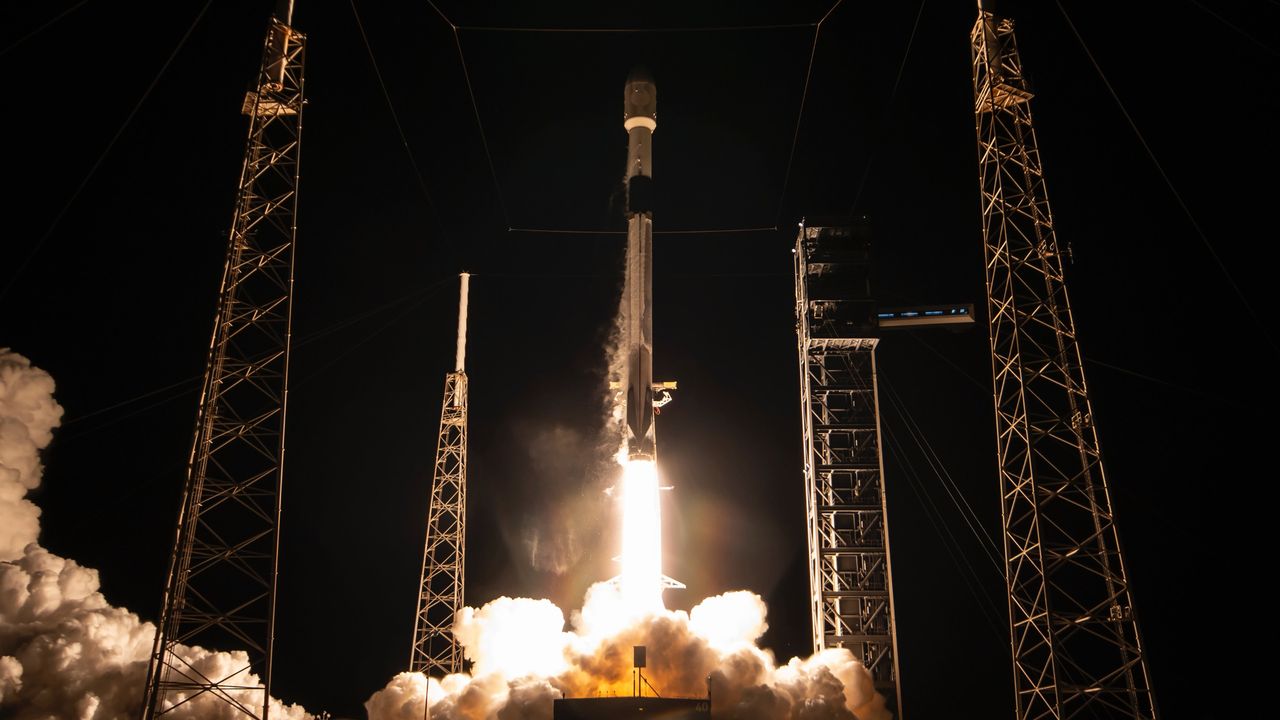
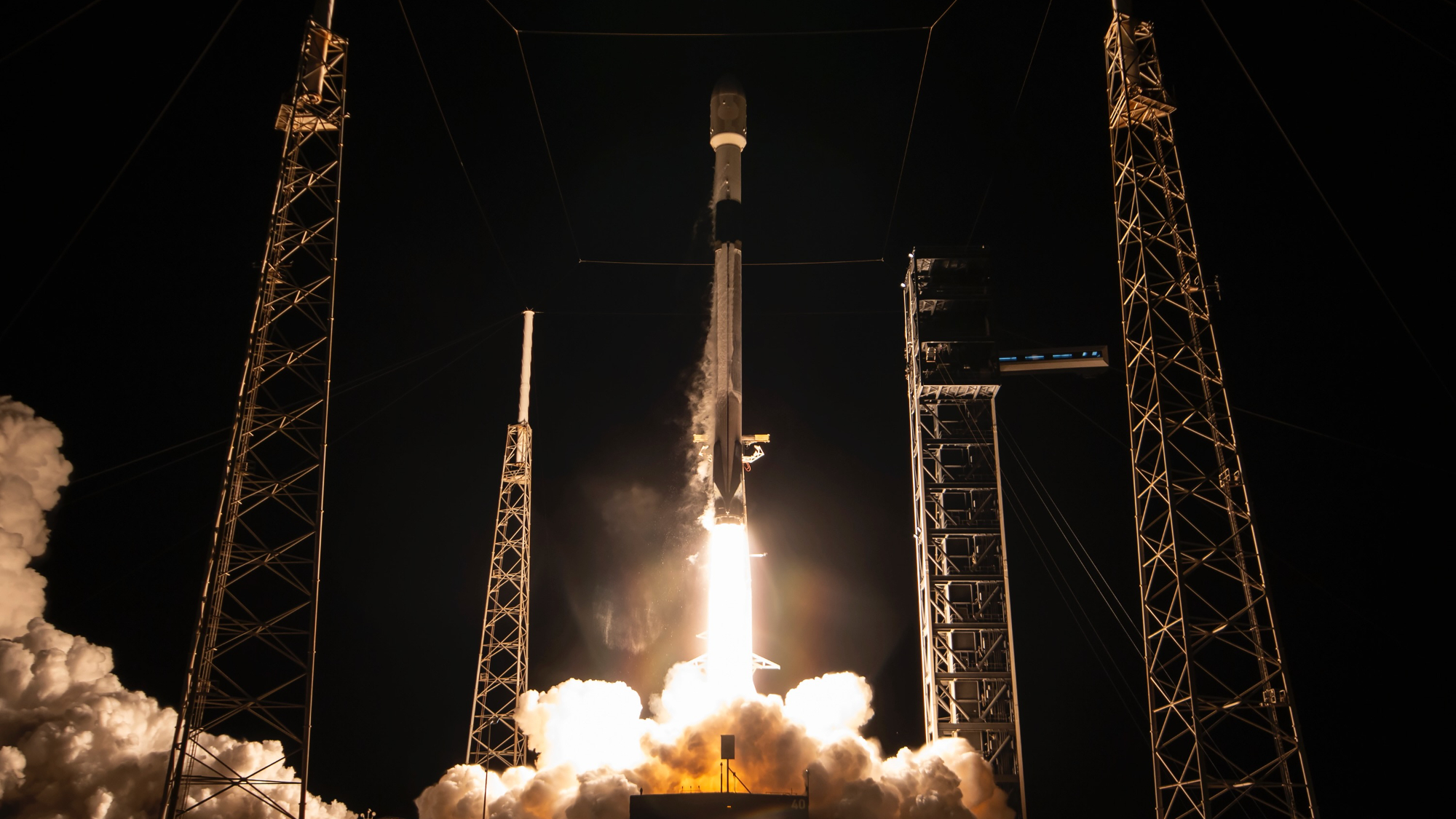
SpaceX launched an advanced, jam-resistant GPS satellite for the U.S. Space Force from Florida on Tuesday night (Jan. 27).
A Falcon 9 rocket carrying the GPS III-SV09 spacecraft lifted off from Cape Canaveral Space Force Station Tuesday at 11:53 p.m. EST (0453 GMT on Jan. 28). SpaceX and the Space Force had been targeting Monday night (Jan. 26), but bad weather pushed things back a day.
The GPS III satellites are built by aerospace giant Lockheed Martin and feature "M-Code" technology, which makes them more resistant to jamming than their predecessors, according to Space Force officials.
The first GPS III vehicle lifted off in December 2018. As its name suggests, GPS III-SV09 was the ninth, out of a planned total of 10, to reach orbit. The final one in the series is expected to go up later this year.
GPS III-SV09 was originally booked to fly on Vulcan Centaur, United Launch Alliance's powerful new rocket. But the Space Force changed that plan.
"For this launch, we traded a GPS III mission from a Vulcan to a Falcon 9, then exchanged a later GPS IIIF mission from a Falcon Heavy to a Vulcan," U.S. Space Force Col. Ryan Hiserote, SYD 80 Commander and National Security Space Launch program manager, said in an emailed statement on Jan. 22.
"Our commitment to keeping things flexible — programmatically and contractually — means that we can pivot when necessary to changing circumstances," he added. "We have a proven ability to adapt the launch manifest to complex and dynamic factors and are continuing to shorten our timelines for delivering critical capabilities to warfighters."
GPS IIIF, by the way, is the next iteration of satellites the U.S. will use for positioning, navigation and timing. (The "F" stands for "follow-on.") The first of these spacecraft is expected to launch in Spring 2027.
GPS III-SV09 was SpaceX's fastest-ever turnaround for a national security mission, according to the company; the satellite was integrated and launched in just 41 days.
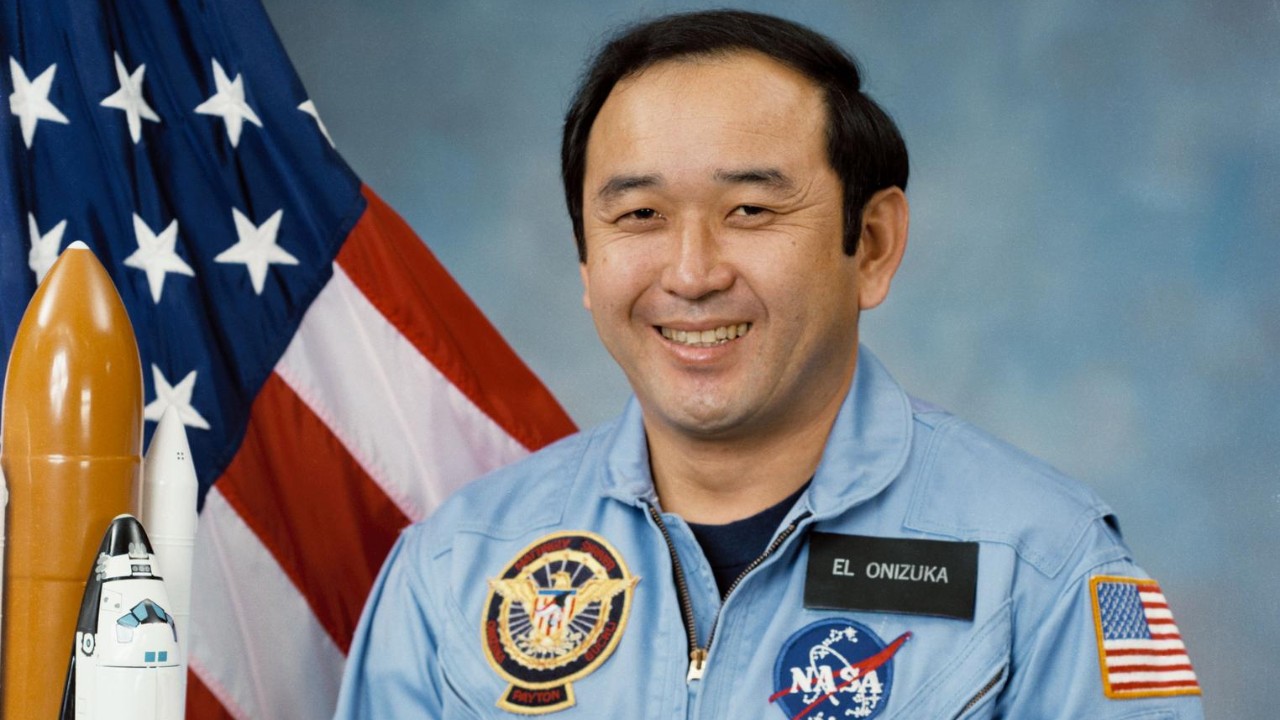
The Space Force named GPS III-SV09 after former U.S. Air Force Col. Ellison Onizuka, one of the seven NASA astronauts who died in the space shuttle Challenger accident on Jan. 28, 1986.
Other former astronauts have been so honored as well. For example, GPS III-SV05 was named after Apollo 11 moonwalker Neil Armstrong, and GPS III-SV07 carries the moniker "Sally Ride," after the first American woman to reach space.
Tuesday's flight was the fifth for this particular Falcon 9's first stage. It returned to Earth as planned about 8.5 minutes after launch, landing vertically on the SpaceX drone ship "A Shortfall of Gravitas" in the Atlantic Ocean.
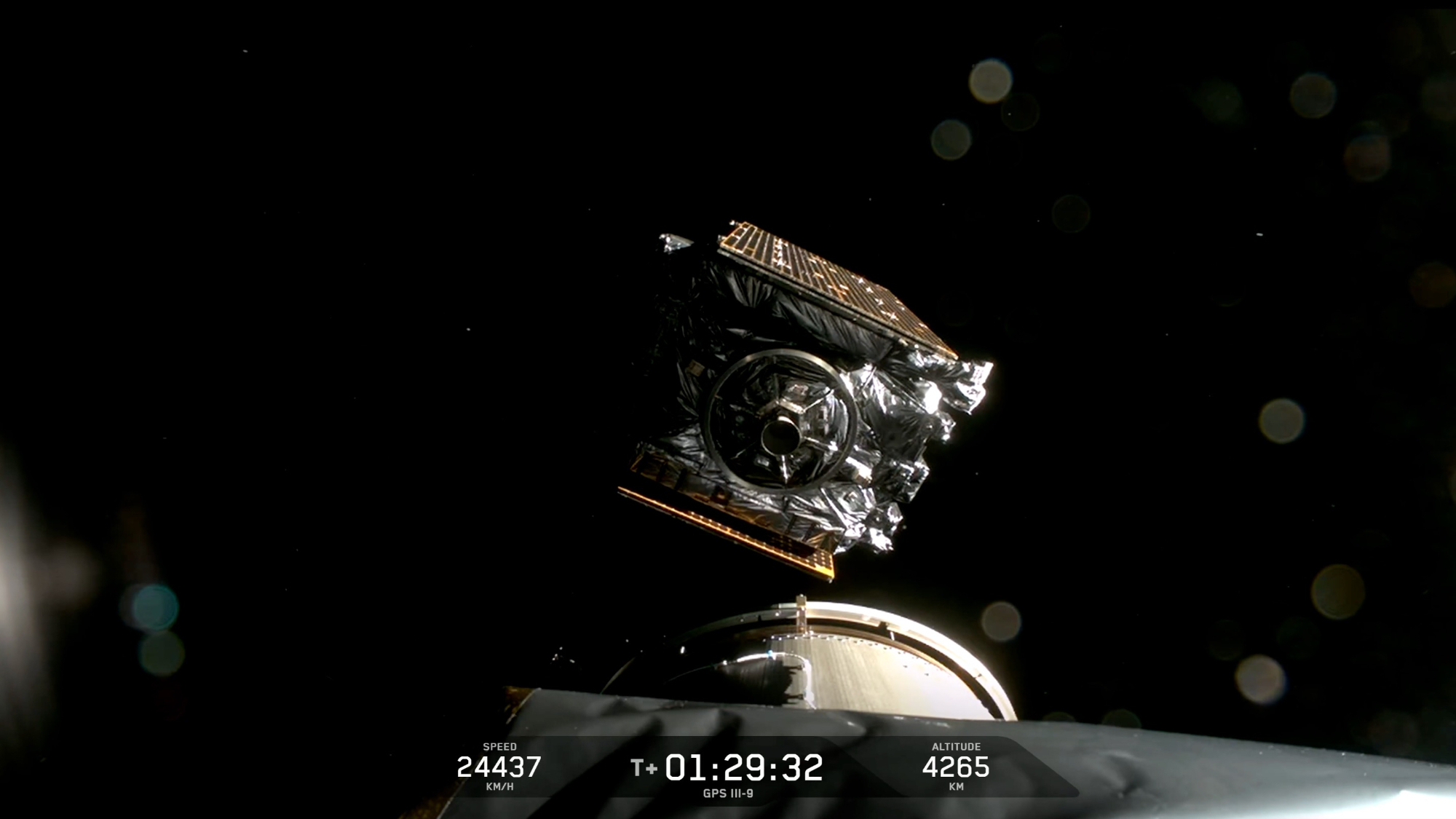
The Falcon 9's upper stage, meanwhile, deployed "Ellison Onizuka" into orbit on schedule, releasing it at an altitude of 2,650 miles (4,265 kilometers) about 90 minutes after liftoff
Editor's note: This story was updated at 1 p.m. ET on Jan. 26 with the new target launch date of Jan. 27. It was updated again at 2:15 a.m. ET on Jan. 28 with news of launch, rocket landing and payload deployment.