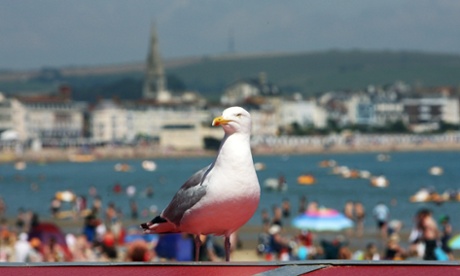
Paul Lewis’s seagull-based accident this week - the pianist injured his hand after tripping thanks to a nesting seagull attacking him in Liverpool - should of course give us pause to consider what to do with those aerial vermin. It’s not enough that they nick our sandwiches and fish and chips on the prom, but apparently seagulls are now ganging up on virtuoso pianists in a concerted attempt to stop that infernal racket of all those piano concertos from happening anywhere near the sea.
“On leaving rehearsals with the orchestra earlier this week, Paul sustained an injury, spraining one of the fingers on his right hand, after a seagull swooped close to his head, causing him to stumble,” explains the Royal Liverpool Philharmonic’s spokeswoman.
Was it mere coincidence that the bird attacked the soloist with such precise timing - just as he left rehearsals with the RLPO - so as to cause the maximum disruption to Lewis, to the orchestra, and to the music-loving public?
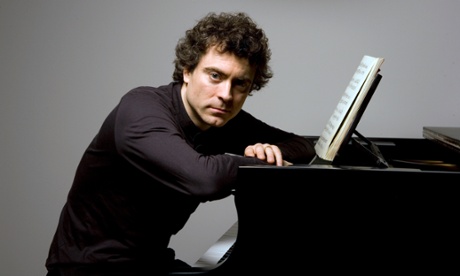
(Flying in the face of all good sense, the RLPO risked yet more avian wrath, and found a last-minute replacement, Finghin Collins, for Lewis’s two concerts - I hope Collins went armed with a whole battery of seagull-deterrent.)
But was Lewis’s accident merely bad luck? No. I suspect a more sinister kind of avian revenge at work. It is entirely within the bounds of possibility that the hive-mind of the global seagull population has become aware of the many occasions that their, and all of their winged, micro-dinosaurial ancestors, have been traduced in music history. For centuries, composers have been infringing the intellectual property of nature’s aviary, by pilfering, nicking, thieving, and abusing their songs. Given freely as their superabundant voices, whether in dawn chorus, mating ritual, or territory-conquering battle-cry, bird-song has become mere musical fodder for the dried-up imaginations of musical humanity.
From the baroque to Beethoven, from Mozart to that ornithological tea-leaf in-chief, Olivier Messiaen, composers have a lot to answer for. Decades, centuries, a whole cultural history of copyright fees, for a start, is owed by this compositional cohort to the birds, let alone the bigger creative questions which suggest that musical originality in the human world is of truly trivial paucity compared to the ceaseless chorus of the world’s birds. Yes, the odd parrot and mimicking lyre-bird has tried to set the record straight by stealing and appropriating human voices. But the birds know that it’s not enough. The seagulls have turned. Watch out, musicians!