
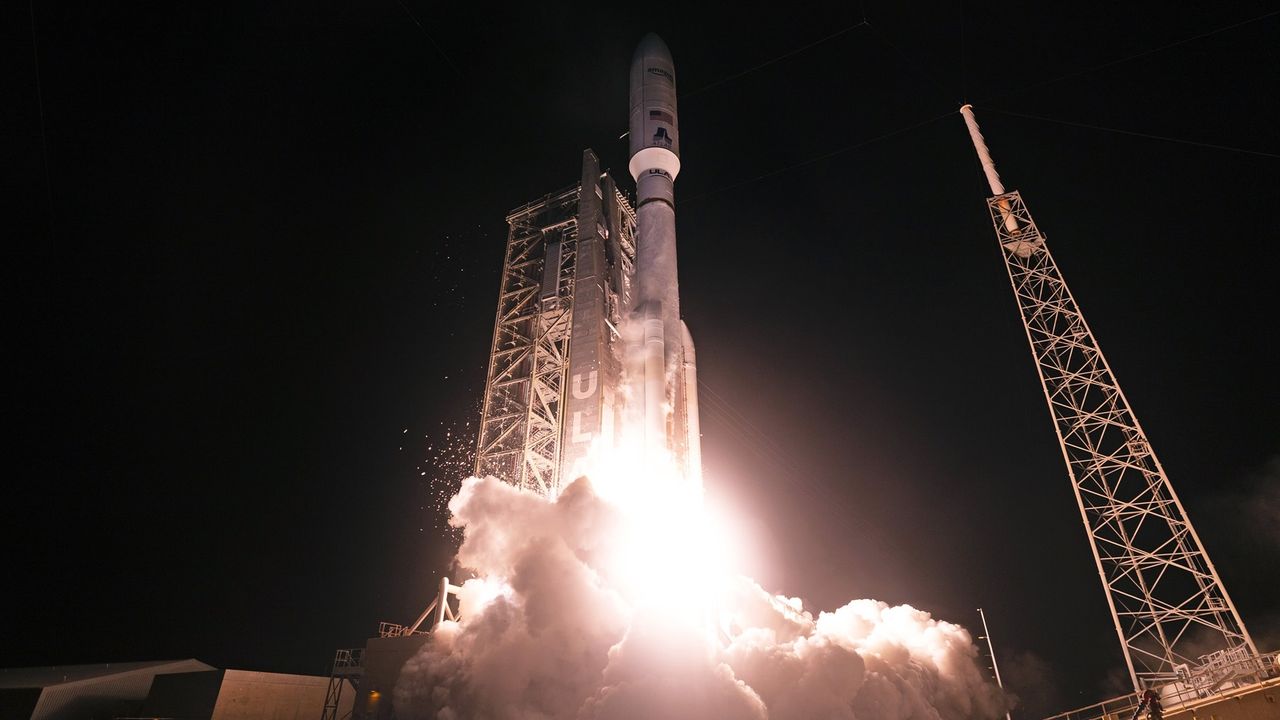
United Launch Alliance (ULA) launched another batch of Amazon's internet satellites to orbit early Thursday morning (July 2).
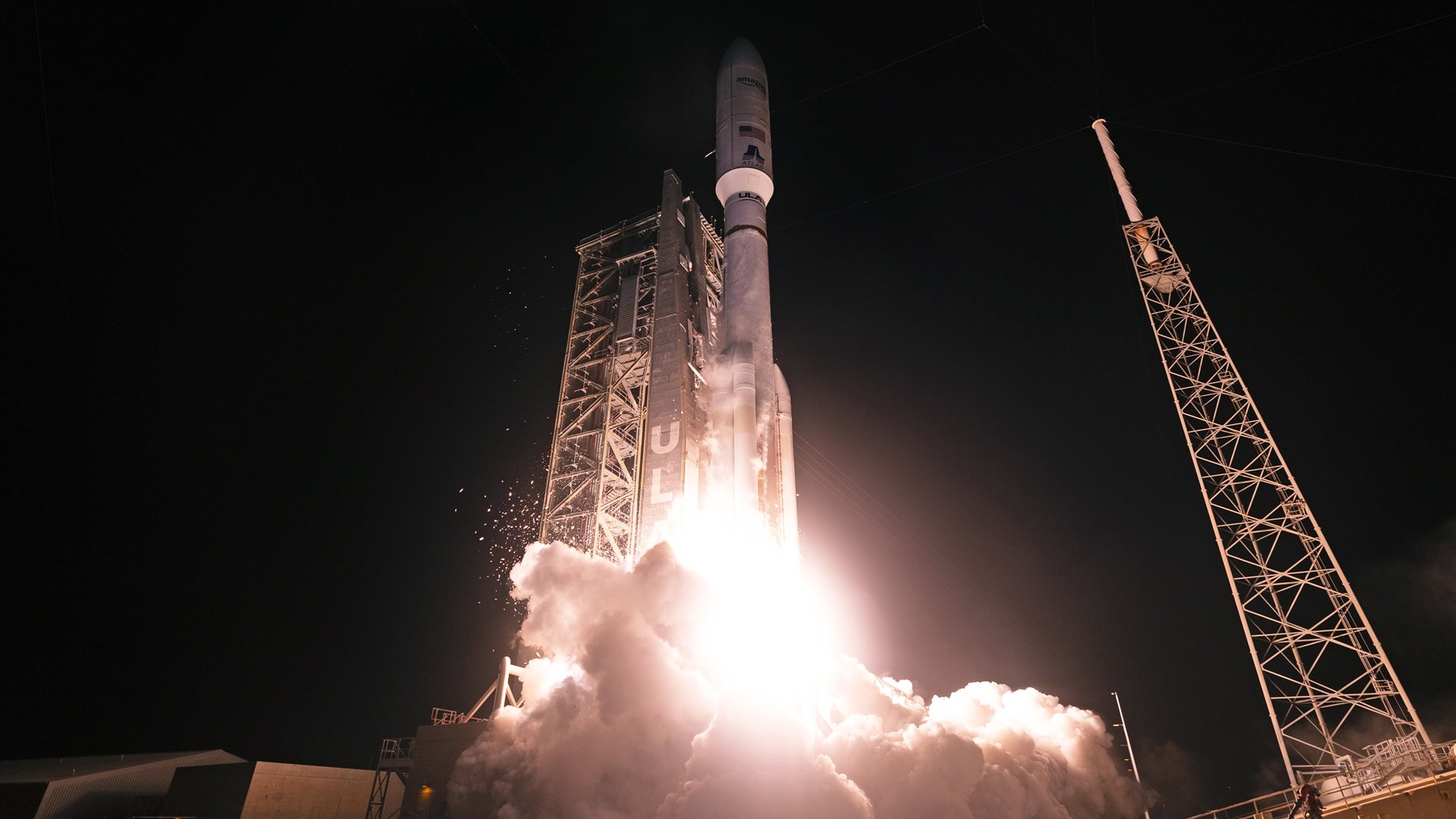
An Atlas V rocket carrying 29 Amazon Leo spacecraft lifted off from Florida's Cape Canaveral Space Force Station on Thursday at 12:30 a.m. EDT (0430 GMT).
All of the satellites were successfully deployed in low Earth orbit (LEO) as planned, ULA announced 70 minutes after liftoff.
Amazon Leo is the Amazon's broadband megaconstellation in LEO (hence the name), which will eventually consist of about 3,200 satellites. It will compete with SpaceX's Starlink network, which has nearly 11,000 satellites at present and is growing all the time.
About 400 Amazon Leo craft have reached orbit on a total of 15 missions to date, atop three different rockets — the Atlas V, SpaceX's Falcon 9 and Arianespace's Ariane 6.
The Atlas V has been the most active of this trio, conducting nine of the liftoffs for the megaconstellation, which was originally known as Project Kuiper. (The first of those Atlas V launches lofted two prototype satellites, not operational craft, which explains why Thursday's mission was called Amazon Leo 8 rather than Amazon Leo 9.)
The Atlas V that flew on Amazon Leo 8 was the 551, the most powerful variant of the rocket. The numbers mean that it sports five solid rocket boosters, a 5-meter-wide (16.5 feet) payload fairing and a Centaur upper stage with a single engine.
The 29 Amazon Leo satellites that went up on Thursday weighed a total of about 18 tons, tying the record for the heaviest load ever launched by an Atlas V. That mark was set on the Amazon Leo 5 mission in early April and has been equaled multiple times since.
Editor's note: This story was updated at 2:50 a.m. ET on July 2 with news of successful launch and satellite deployment.