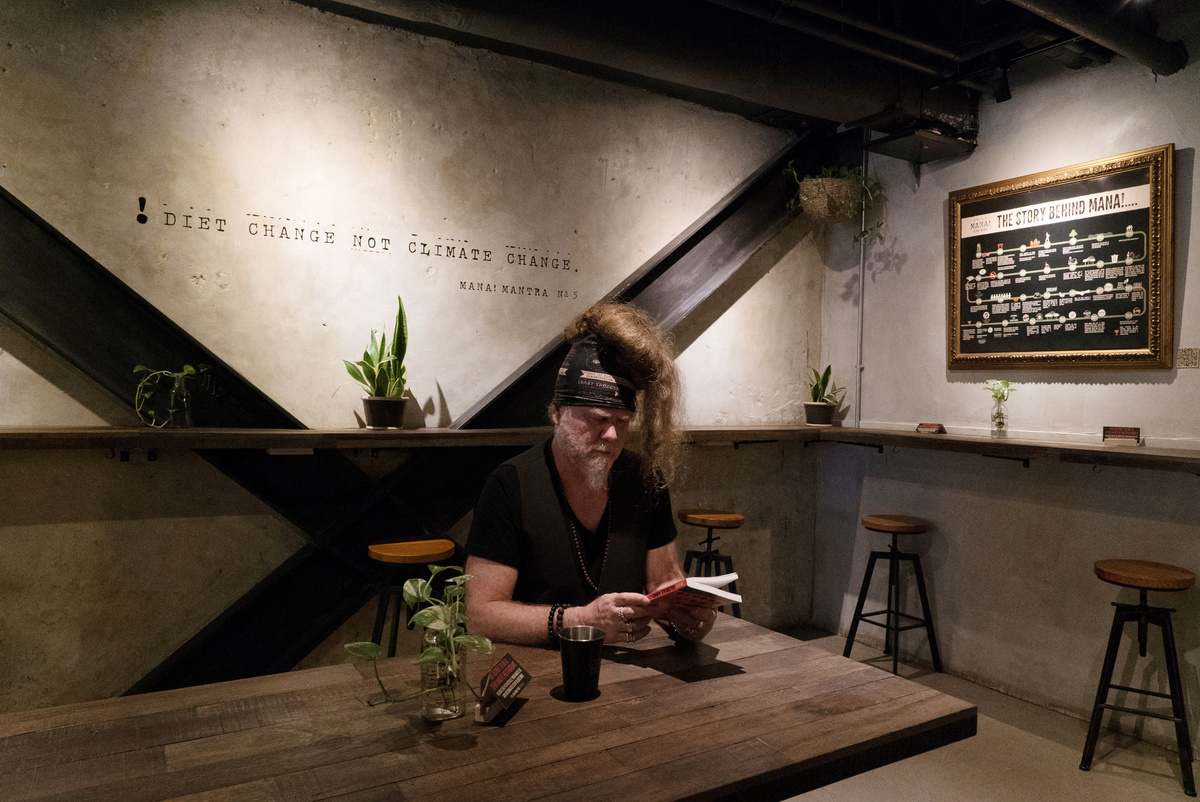
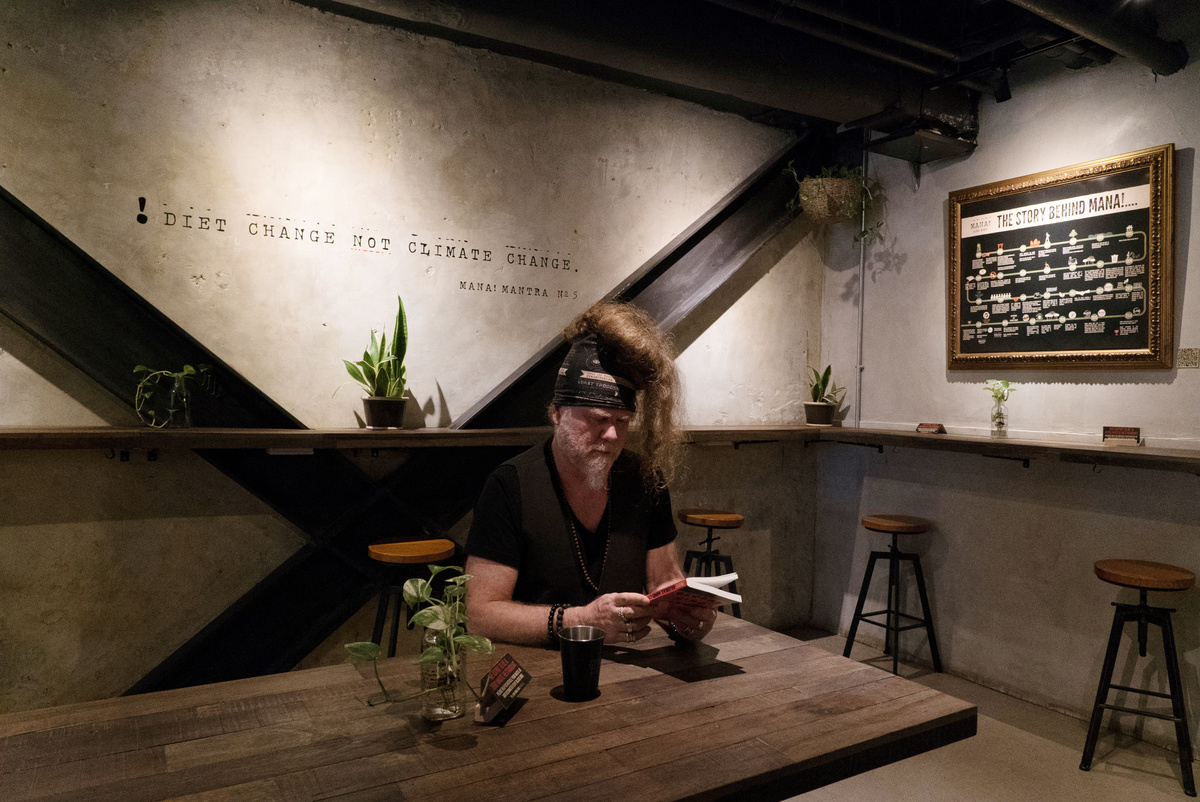
A zero food waste cafe in Hong Kong is trying to tackle the financial hub's escalating trash problem by providing meals that are fully compostable, such as vegetables and herb flatbreads, and packaging that is turned into fertiliser.
MANA!'s eco-friendly business model aims to raise awareness about the global environment and minimise waste flowing into the city's landfills.
Bobsy Gaia, the plant-based cafe's 55-year-old founder, said it was a significant milestone to become 100% compostable with all packaging as of last year.
Hong Kong throws away more than 3,500 tonnes of food each day and the amount of waste from food packaging floods its three landfills. Authorities are expanding the disposal sites but say they will reach maximum capacity in a decade.
Takeaways, mostly in plastic containers, have always been popular in the former British colony because of its hundreds of thousands of compact apartments with tiny or non existent kitchens.
Although restaurants in Hong Kong have remained mostly open despite the coronavirus crisis, takeaways have soared due to diners being hesitant to eat out and health restrictions currently in place that prevent more than four people socialising.
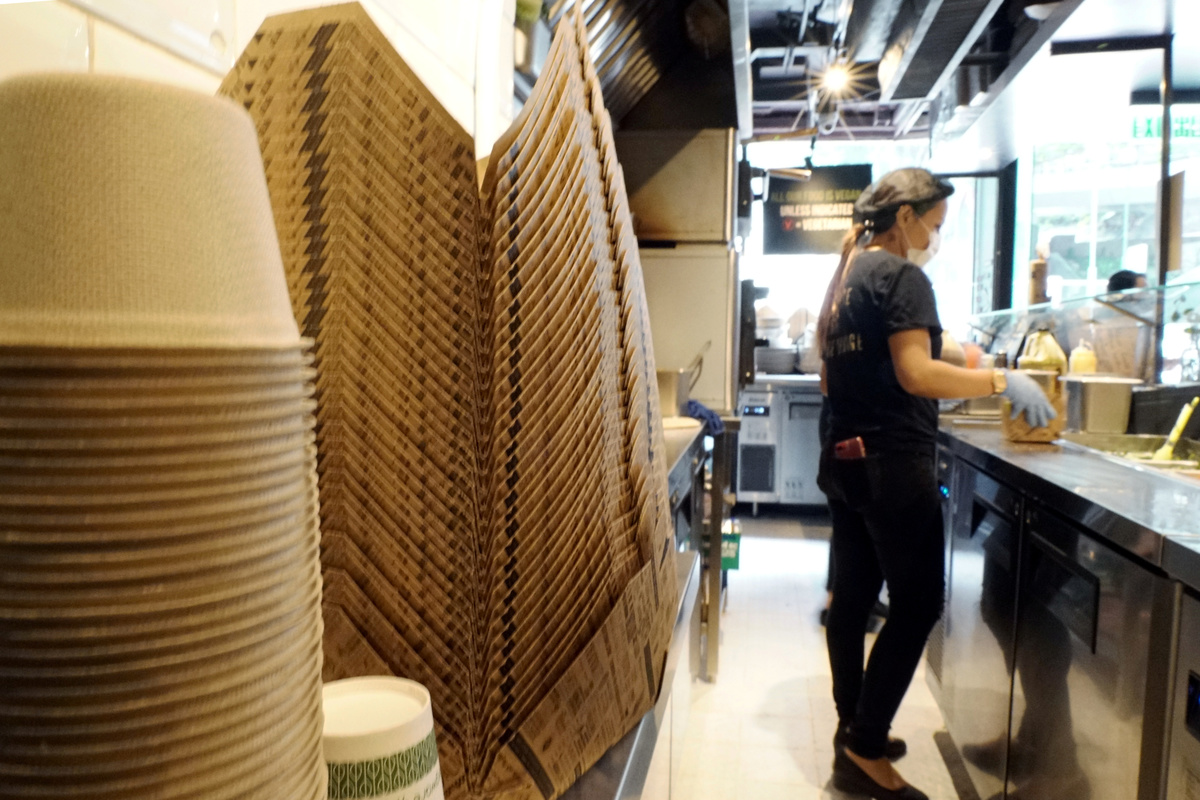
"We, as restaurant operators, must do a lot more ... all businesses, in reducing waste because there is no such place as 'away', everything comes back to haunt us," Gaia said, referring to packaging waste from takeaways.
Beirut-born Gaia, who worked in eco-fashion in Bangkok before moving to Hong Kong in 1992, opened Mana in 2011.
High costs are a massive obstacle that can turn many restaurants off being eco-friendly, Gaia said.
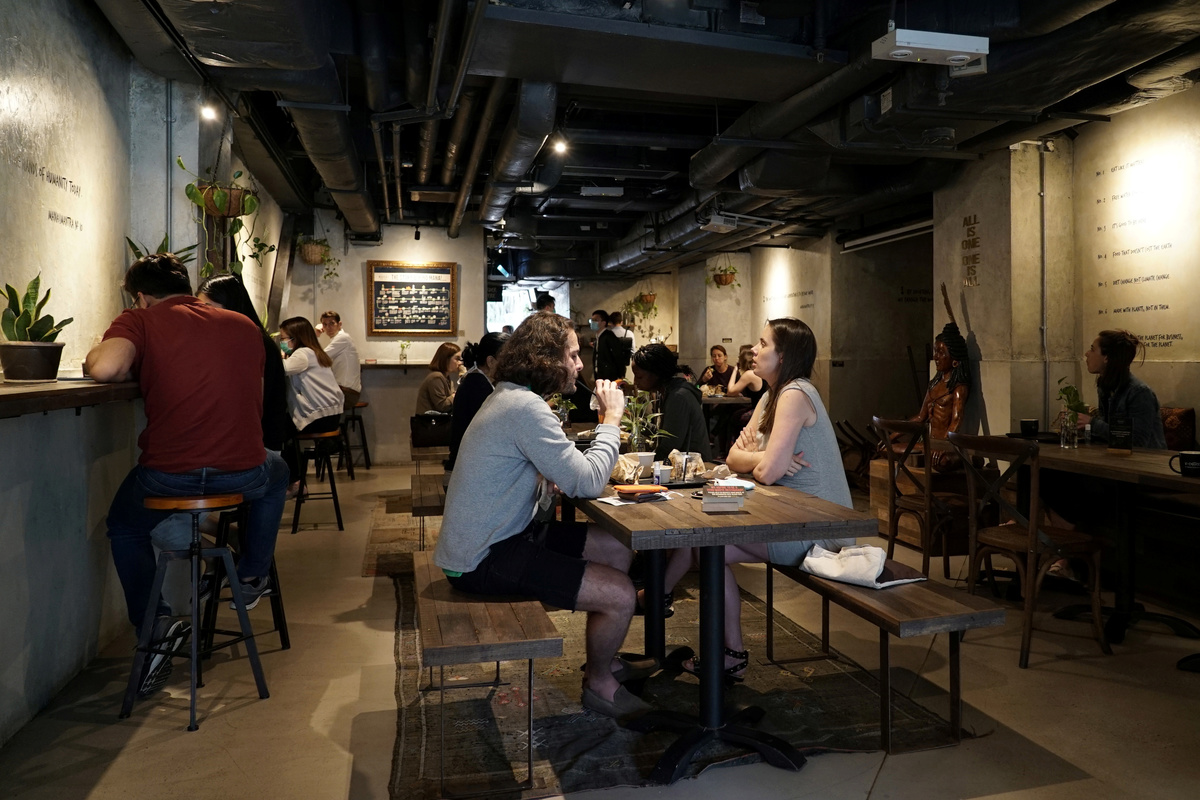
He estimates around 5-10% of revenue is used to ensure Mana maintains zero waste.
The extra investment in capital is worth it, he says, adding that change is coming with a shift in awareness, especially in the younger generation.
Diners in Mana's plant-filled location, decorated with soft wooden panelling and floor cushions, drop their food waste and packaging into compost bins on site.
This is collected and goes through a composting system, which takes about two months before it turns into soil.
"You grow your food again. Food comes back and we eat it, we enjoy it and round and round we go," said Gaia.
(This story has been refiled to drop word 'Cafe' in paragraph two.)
(Reporting by Pak Yiu; writing by Farah Master; Editing by Raju Gopalakrishnan)