Friends have often told me that umeboshi pickled plums surprised them in a bad way when they had them during breakfast at ryokan inns. They confused them for apricots or sometimes even a chocolate dessert, and the strong sourness hit them right away!
I can't stop laughing whenever I hear these stories, because umeboshi are strong, even for someone like me who grew up in Japan. I can easily imagine how they feel.
Umeboshi are one of Japan's typical preserved foods. My mom always put a pickled plum in my rice ball for lunch when I was a child, and used them in various dishes. I have to confess that I was not a big fan of umeboshi when I was a child because of their strong taste, but now I'm obsessed with their wonderful aroma. Pickled plums have a beautiful flavor and so many benefits that there's even a Japanese saying similar to the English one about apples: "A pickled plum a day keeps the doctor away."
Umeboshi are such a versatile preserved food that they can be kept for a few years at room temperature, depending on their salt content -- some are even preserved for 100 years for a truly superior aroma!
The most common way to eat umeboshi is to place them on rice or in rice balls. But I prefer to use them for cooking because their sour flavor, saltiness and special aroma make them perfect as a seasoning. I remove the pit first and chop the umeboshi to make a paste, then mix it with other seasonings for things like simmering fish, making dressings and cooking vegetables.
For sushi, rice is usually seasoned with a mixture of vinegar, salt and sugar. But in this recipe, I mix only umeboshi paste with the rice so that it tastes kind of like sushi rice but with a more flavorful and a refreshing kick. I also add chopped green shiso leaves and the pink buds of myoga -- a plant in the ginger family -- to the rice. I'm content with eating a lot of just this flavorful rice.
If you're a beginner at cooking with umeboshi, a good rule of thumb is to use umeboshi paste as a substitute for vinegar and salt when making things like dressings.
If you like the flavor of umeboshi, try ume-yu. Put one plum in a cup, pour boiling water on it and crush it with a teaspoon. This is my favorite drink in the morning.
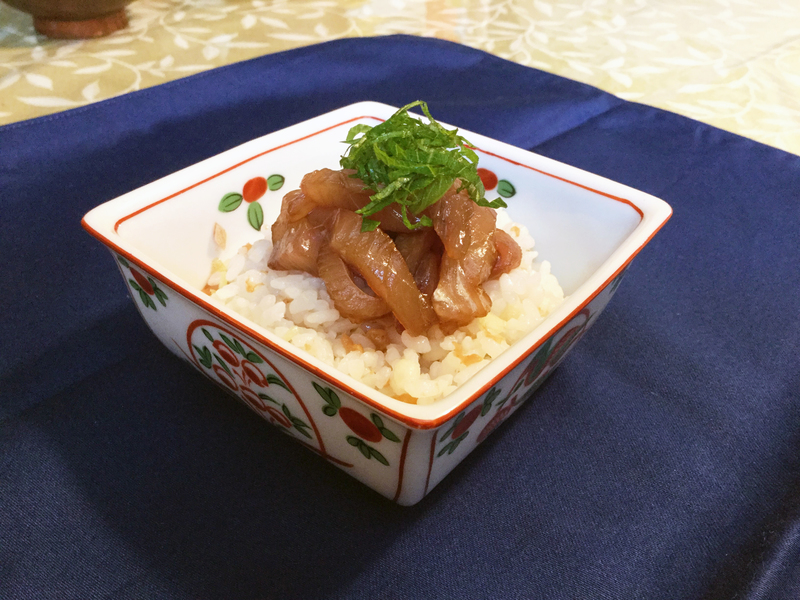
Mari's recipe for rice with umeboshi topped with soy sauce-dipped sashimi
Ingredients (serves 2):
2 bowls of cooked rice (about 300 grams)
1 umeboshi pickled plum, with the pit removed and chopped into a paste
5 green shiso leaves, cut into thin strips
1 myoga ginger bud, chopped
200 grams sashimi-quality fish (white fish is preferable)
1 tbsp soy sauce
1 tbsp mirin
1/2 tbsp sake
2 more green shiso leaves, cut into strips for the topping
Directions:
1. Cut the sashimi into 1-centimeter-wide strips. Place mirin and sake in a cup and then microwave for 30 seconds without a cover. Add soy sauce and mix, then allow to cool. Place the sashimi pieces in the sauce and marinate for 30 minutes, then set aside.
2. Place hot cooked rice in a bowl. Add ume paste, shiso strips and chopped myoga, then mix ingredients lightly with a spatula.
3. Divide the seasoned rice between two serving bowls and put sashimi and remaining shiso strips on top.
To find out more about Japan's attractions, visit http://the-japan-news.com/news/d&d
Read more from The Japan News at https://japannews.yomiuri.co.jp/