
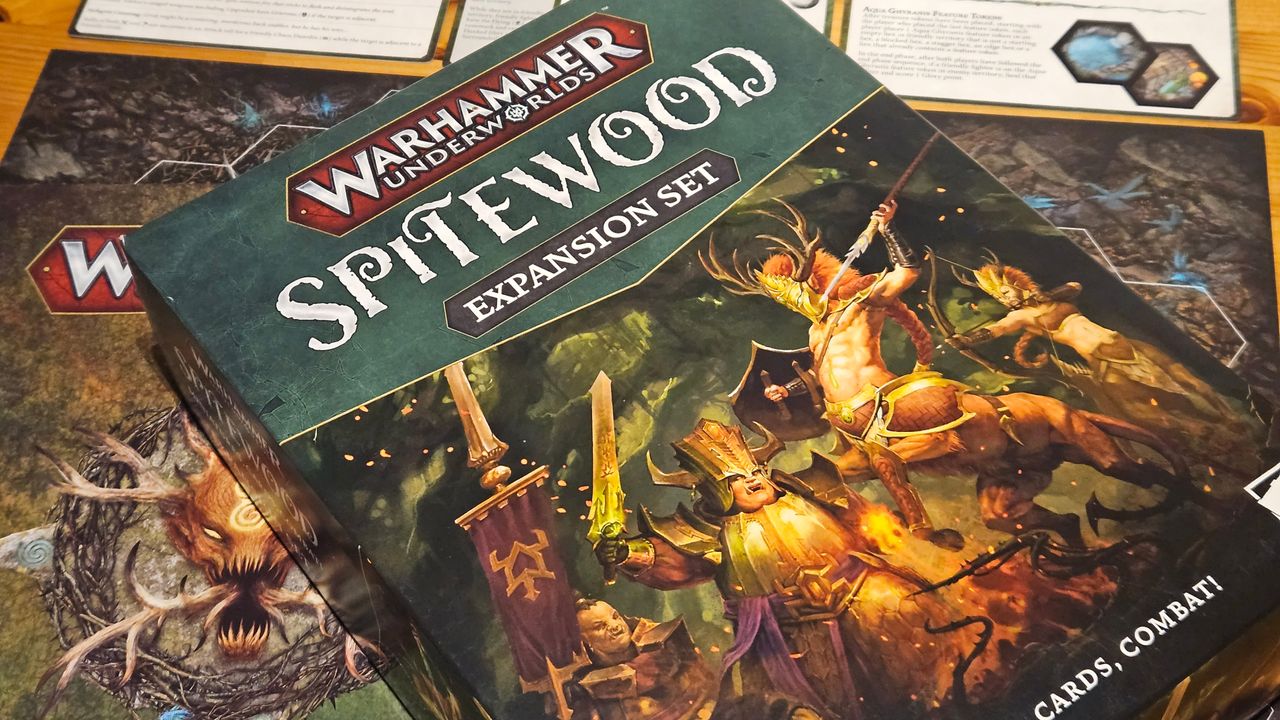
There's a new season of Warhammer Underworlds out in the wilds – and I've spent the last few weeks getting to grips with it. Spitewood moves the action from the fallen city of Embergard to the titular great forest, where the forces of the god Kurnoth fight to defend their home from the bloodthirsty Helsmiths of Hashut.
Yep, Spitewood's big draw is that it brings the Age of Sigmar's latest faction to the Warhammer Underworlds game. It's a significant title for both sides, however, with the Kurnothi also getting some striking new models. The game also introduces a couple of new game mechanics in the form of Aqua Ghyranis and Waystone Hexes, and two new Rivals decks. So let's get into it... does it deserve a place amongst the best board games?
Warhammer Underworlds: Spitewood features & design
- Two new warbands in the Helsmiths and Kurnothi
- Two new Rivals decks
- Aqua Ghyranis and Waystone Hexes change the game – a bit
First up, a bit of history. Warhammer Underworlds was relaunched in late 2024 with Embergard, the second edition box set that gave the rules a slight polish, refreshed the card decks (invalidating previous releases in a way that irked some, but was probably a sensible move to stop the game from becoming hideously unwieldy) and made a few cosmetic tweaks – notably swapping out the art that characterized each card in the game for miniature photography.
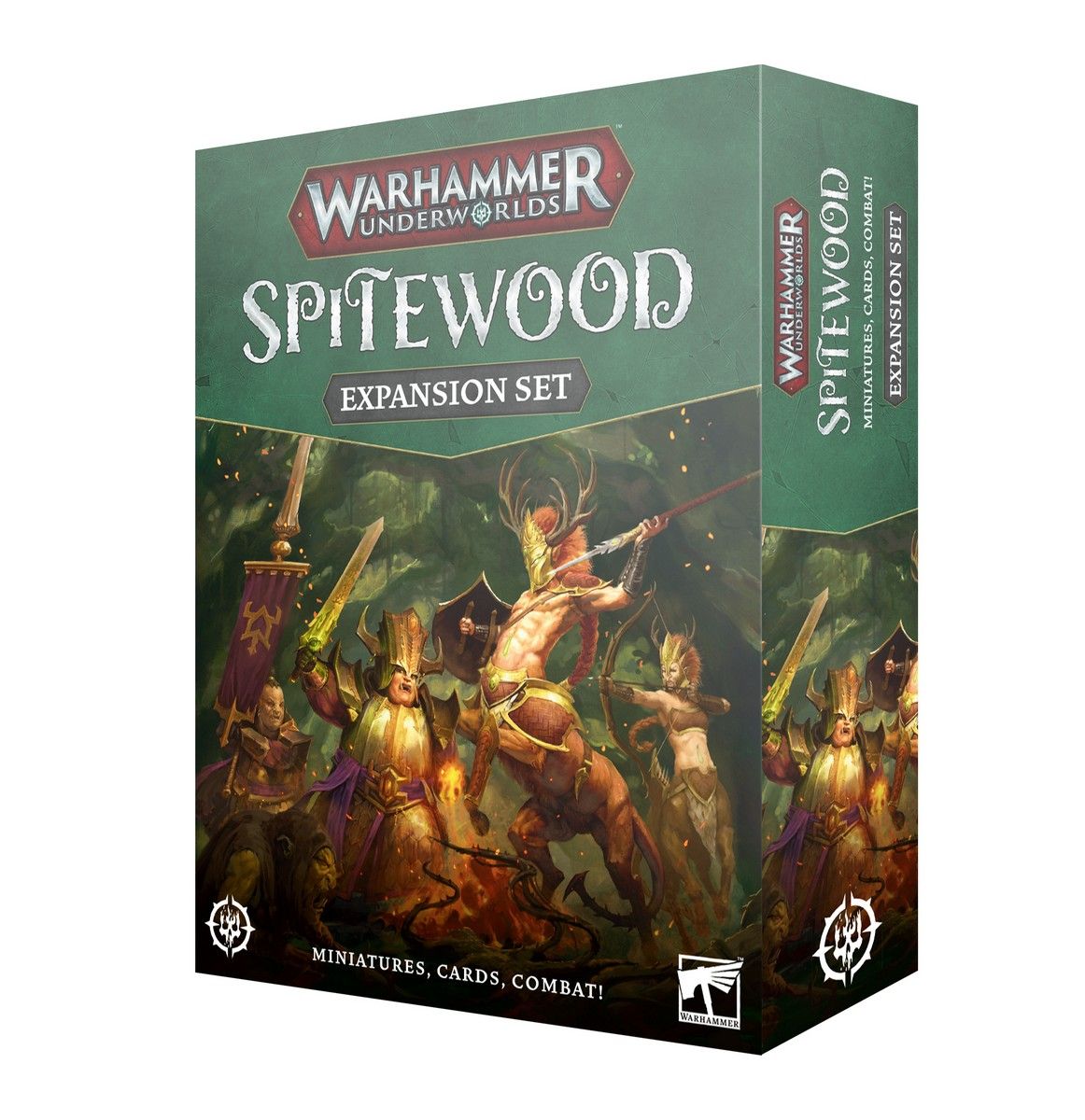
Spitewood takes these tweaks a little further. As with previous season sets you get a new double-sided board (this time representing the great forest of the title), two miniature warbands (The Blood of the Bull and Kurnoth's Heralds), and two new Rivals decks (Deadly Synergy and Hunting Grounds), along with all the required gaming tokens. What you don't get, however, are the core rules and any dice.
Price: $85 / £52
Ages: 12+
Players: 2
Lasts: 45+ mins
Complexity: Moderate
Play if you like: Combat Arena, Age of Sigmar, traditional board games
This isn't as disastrous as it might sound. You can download the core rules for free here. Veteran Underworlds players, meanwhile, probably have hundreds of the requisite dice kicking about at this point. Still, the upshot is that, for the first time ever, an Underworlds season box does not work as a 100% standalone game-in-a-box and that's a bit of a shame, especially as this game has traditionally been aimed at new, Warhammer-curious players.
Presumably this is a cost-savings measure – as is the outer box, which is made of notably flimsier card than the rugged, glossy boxes all of the first edition season sets (and Embergard) came in. It's not the end of the world, but it does leave things feeling a little cheaper than we're used to from this game.
Happily, the actual contents of the box are as high quality as we've come to expect. Let's start with the miniatures – the main reason why we're all here, after all.
Warhammer Underworlds: Spitewood gameplay
- Inspire rules marry story and mechanics together
- Existing players will appreciate more complex cards
- New hexes add variety for veteran players
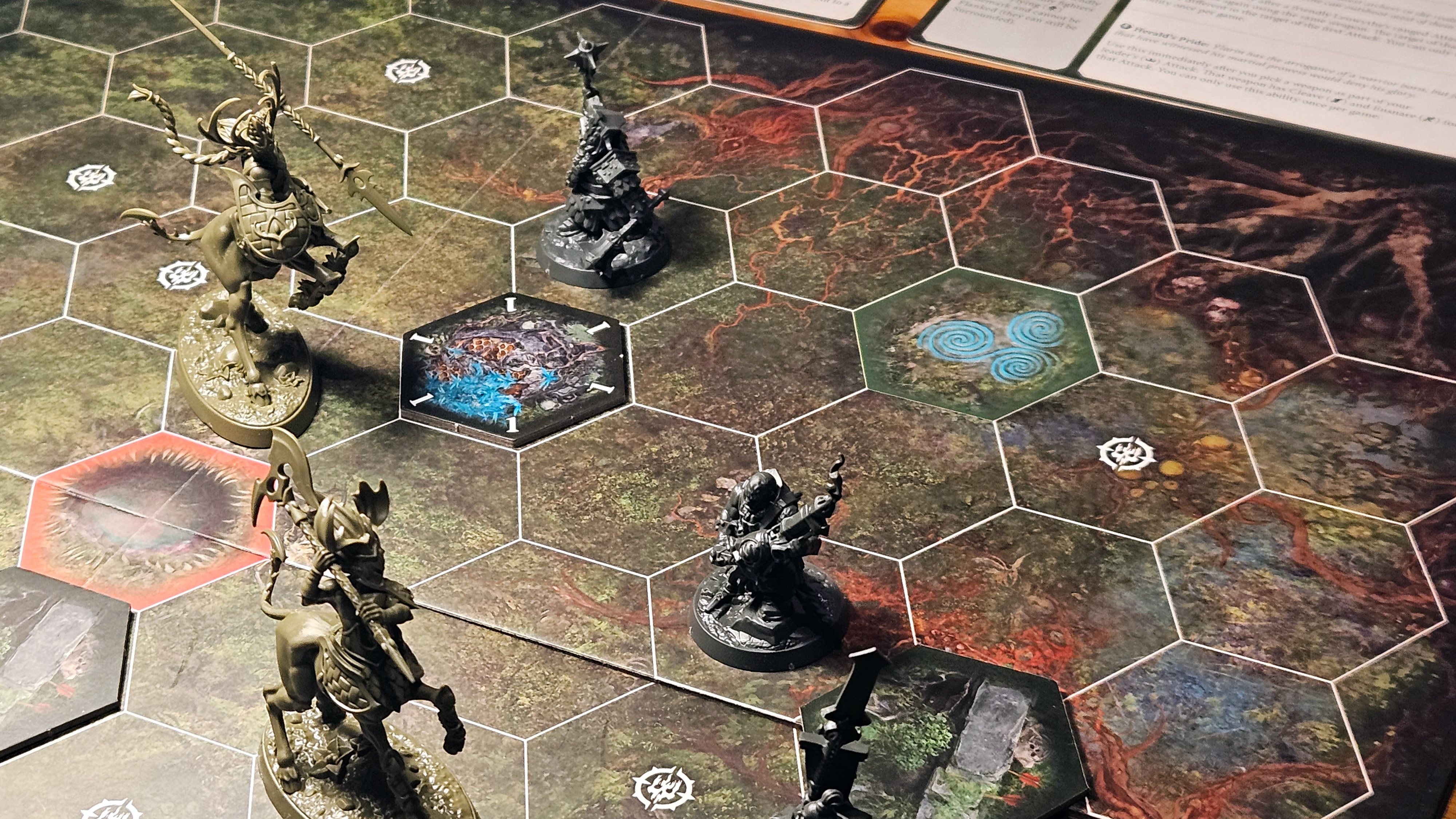
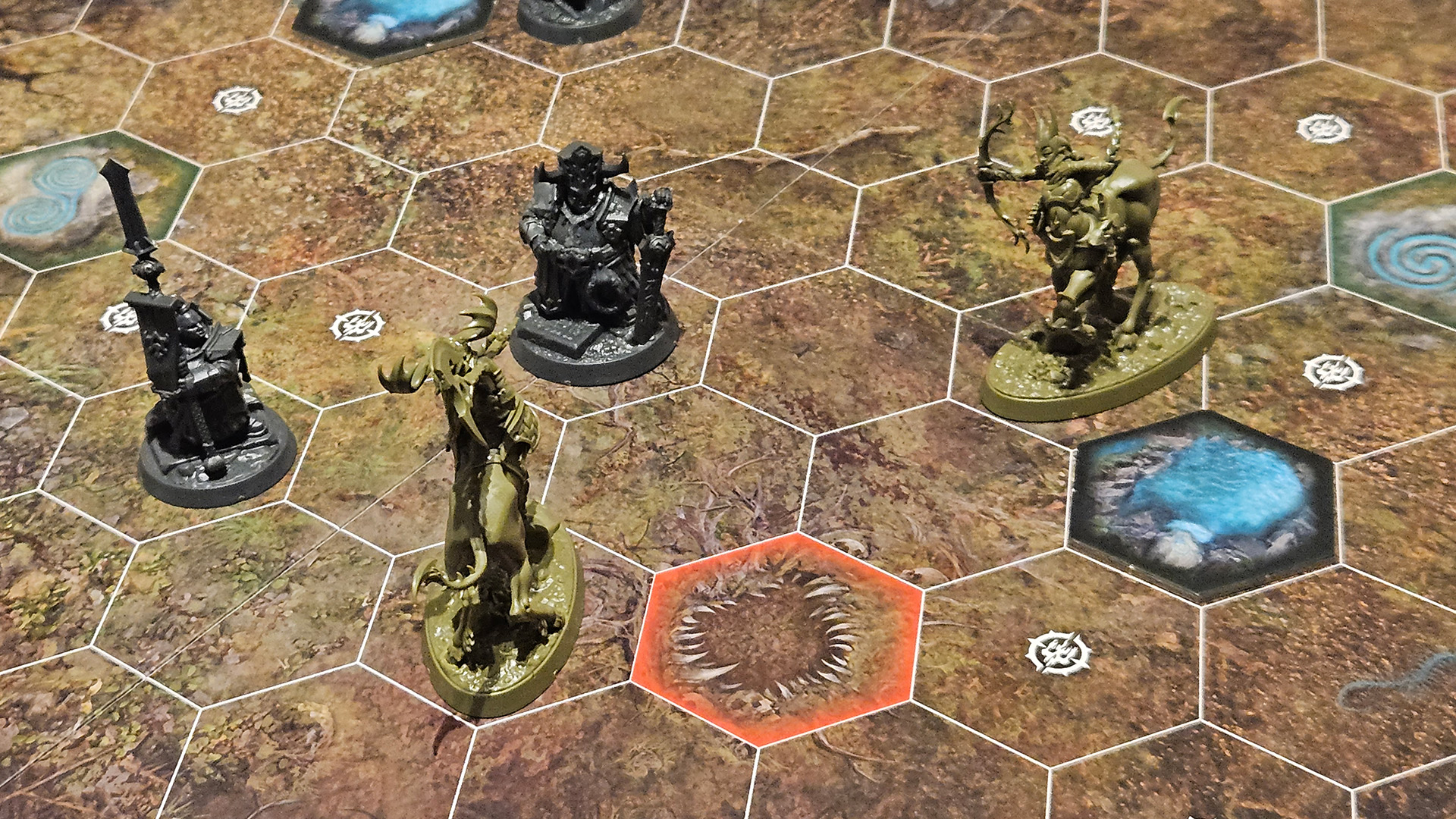
The major new gameplay development in Spitewood comes in the form of two new hexes.
Waystone hexes offer fighters a free Attack or Save re-roll. These are printed in fixed locations on the board.
Aqua Ghyranis hexes are tokens that are placed after treasure tokens have been deployed, with each player taking it in turns to place one. They work as secondary objectives that will give you extra Glory Points.
Now, let's get into the warbands a bit more...
The Blood of the Bull
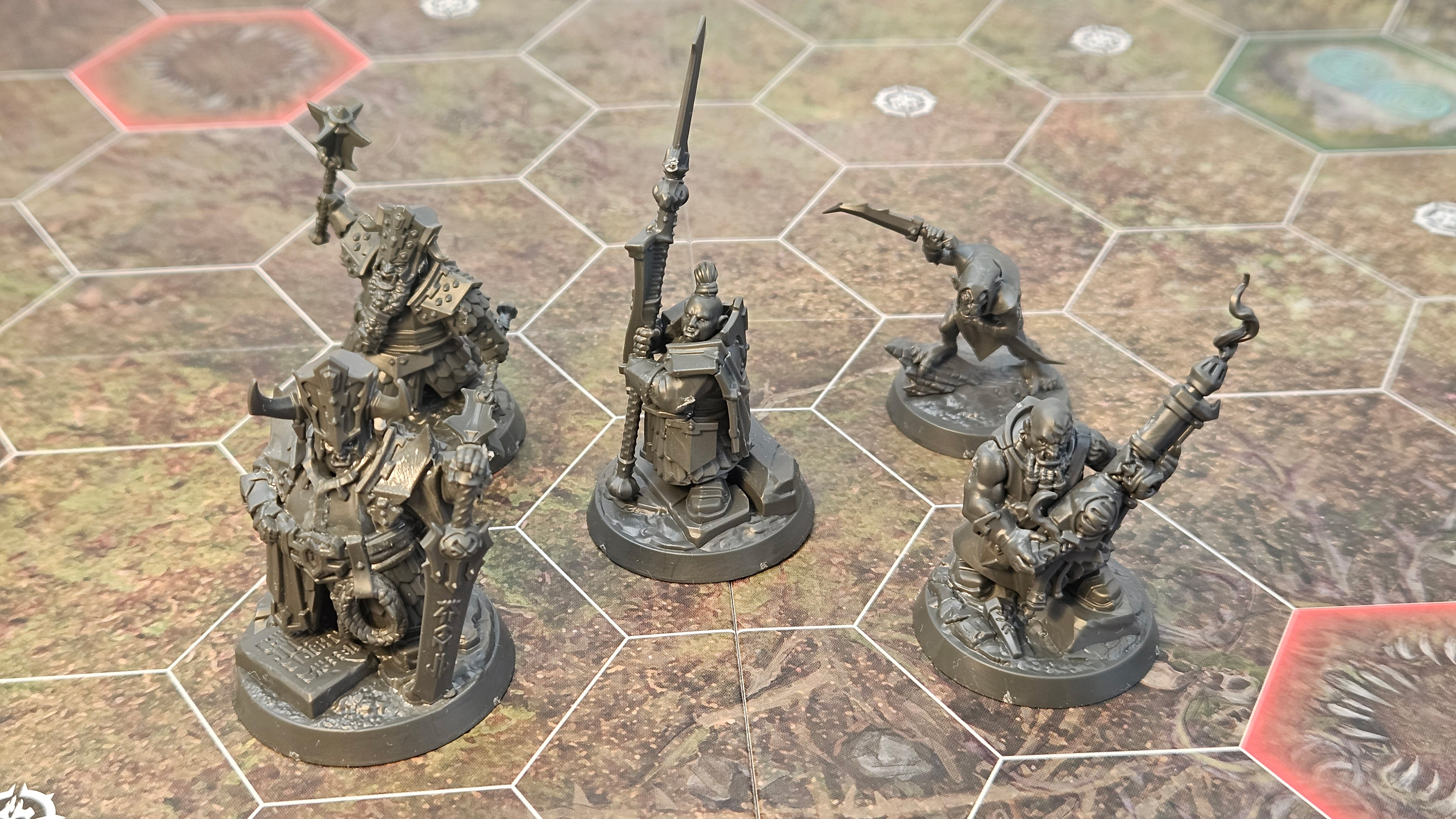
The Blood of the Bull are primarily an offensive force, who usually get the upper hand by working together. On their own each of these fighters is fairly average, but when working in close proximity they can be a potent force.
The defining mechanic of the warband is Daemonforge Dice. You start the game with a single one of these (which aren't represented by actual dice, just pop a token down to keep track) and get a new one each time a friendly model Delves. These can be used to either give a fighter +1 Attack dice, or +1 Save. Daemonforge Dice are lost at the end of each battle round, so make sure to always use them.
The added bonus here is that when you use a Daemonforge Dice, your fighter inspires. It’s a smart mechanic that gives the Helsmiths a reason to be both aggressive and focused on obtaining resources.
Kurnoth's Heralds
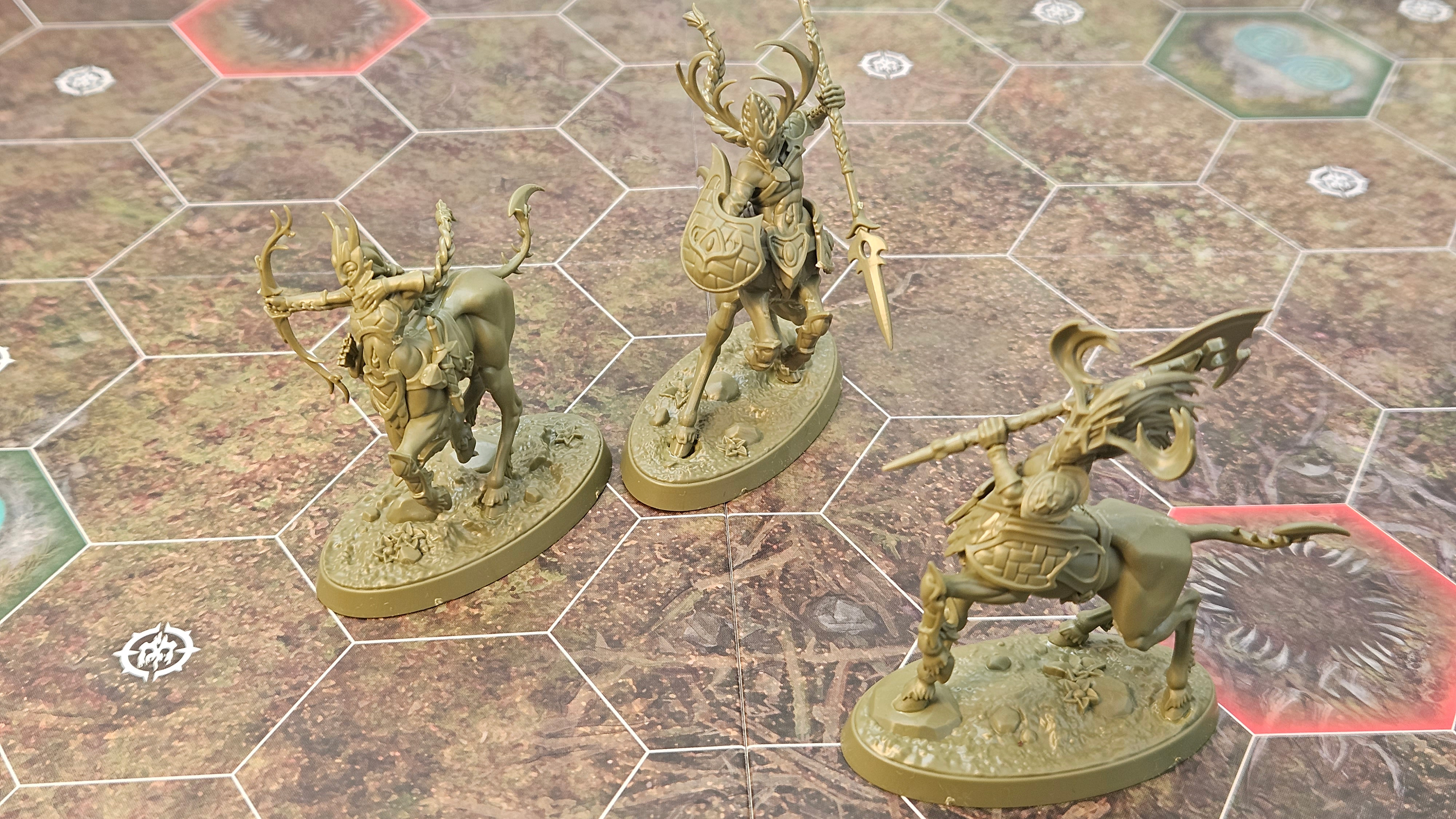
While they are fewer in number than the Helsmiths, they are significantly tougher and faster. All three are blessed with 5 health, with leader Ylarin, Master of the Paths, also packing 1 Shield making him especially hard to take down (the downside, of course, being that if your opponent does take him out, they'll gain 3 Glory). All three also have a movement value of 4 – these are nimble warriors, particularly on their own side of the board. The reason for that is simple: this is largely a defensive warband, as Kurnoth’s Heralds model inspires if it begins an Action step in friendly territory and then makes a successful Attack.
In terms of weapons, Cullon is pretty handy with his axe, which leaps to a deadly 3 damage in his inspired state. Given that most of the Helsmiths only have 3 health, that can make him a really potent Dwarf-killer.
The unit's special rules allow you to push an attacker 2 hexes with The Endless Hunt. Precision Volley lets the only ranged fighter, Lenwhythe, target two enemies one after another, while Herald's Pride boosts Ylarin's weapon with Cleave and Ensnare. All of these can be used once per game.
Rivals decks
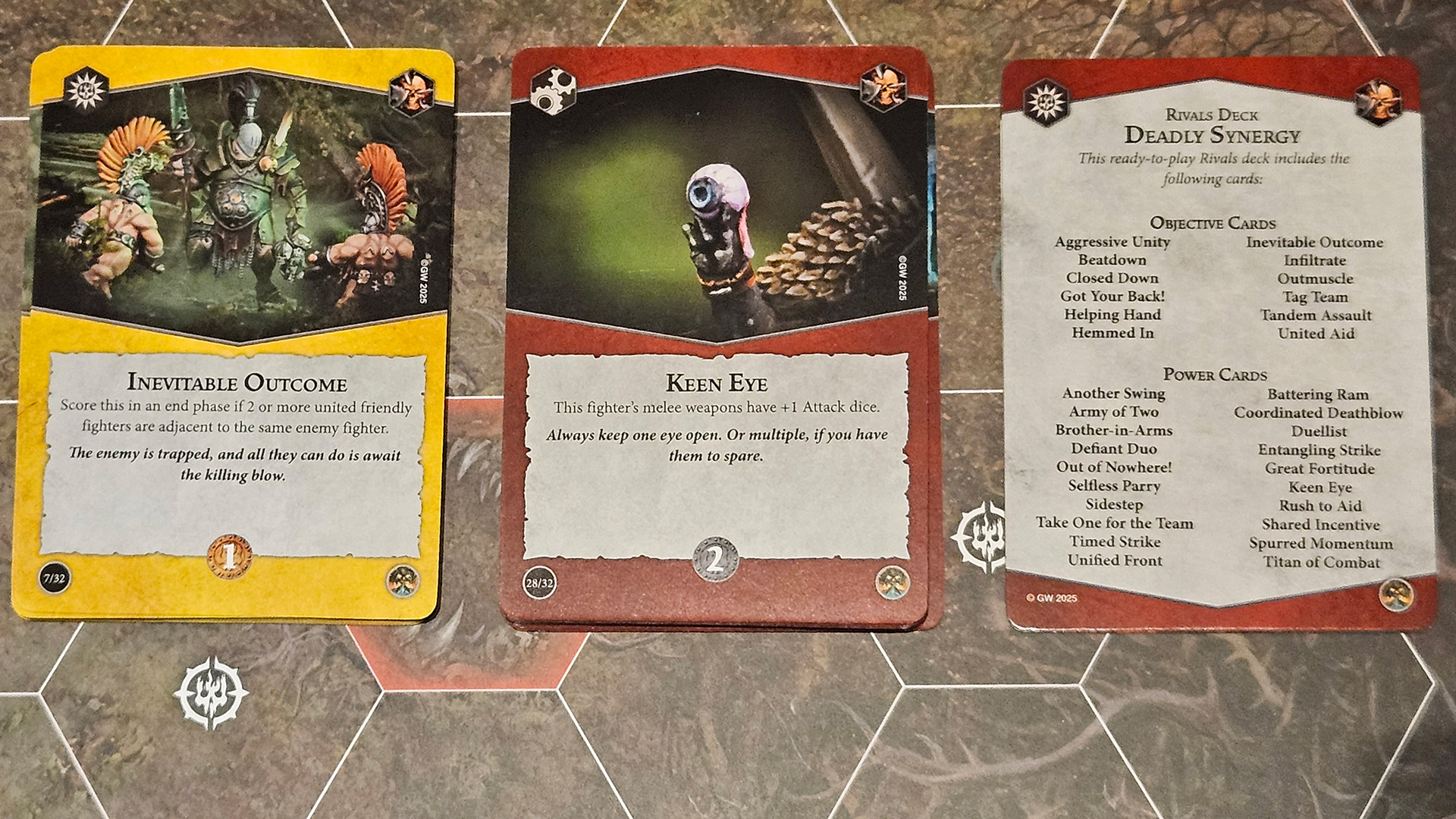
Also included in the box are two new Rivals decks. Deadly Synergy largely revolves around the United keyword. This is when a fighter is adjacent to another of their team mates, though it also kicks in if the warband is reduced to just one model. For that reason this deck really favors more numerous warbands, with five or more fighters.
In terms of Objective cards, Got Your Back is a nice and easy one Glory scorer that's triggered when an enemy fails an attack on a united friendly model. Aggressive Unity, meanwhile, is a solid end phase card that gives you two Glory if you make three or more melee attacks in the closing battle round. Outmuscle is also worthwhile, offering another two Glory in the end phase if an enemy was driven back by a united friendly fighter's successful attack in the closing battle round.
Cards like this can make or break a game, but unfortunately many of the other Objectives here are a bit too tricky to recommend as solid scorers. Hemmed In gets you two Glory, but you have to assassinate the enemy leader with a united fighter in the final battle round. Closed Down is even tougher – to score it a united friendly fighter must hold a treasure token that was previously held by an enemy fighter in the same battle round. C'mon, we deserve more than two Glory for that!
The united keyword is again reflected in Ploy cards like Army of Two, which lets you pick a fighter to be United and which lasts for the whole turn, and Brother-in-Arms which lets a fighter use an adjacent friendly model's melee weapon in its own attack. That has a huge amount of potential to give weaker models more punch in combat. Another good one here is Selfless Parry, which functions similarly to Brother-In-Arms, but allows you to boost a fighter's Save characteristic by borrowing that of a United comrade.
The Upgrade cards offer some powerful buffs, too. Coordinated Deathblow packs a real punch, giving a weapon Grievous and upping their stats. Entangling Strike is also a solid weapon-booster that bumps up the stat line while also potentially adding Cleave and Ensnare. Keen Eye is an older card that makes its way into this deck too and gives a fighter's melee weapons +1 Attack dice – always useful.
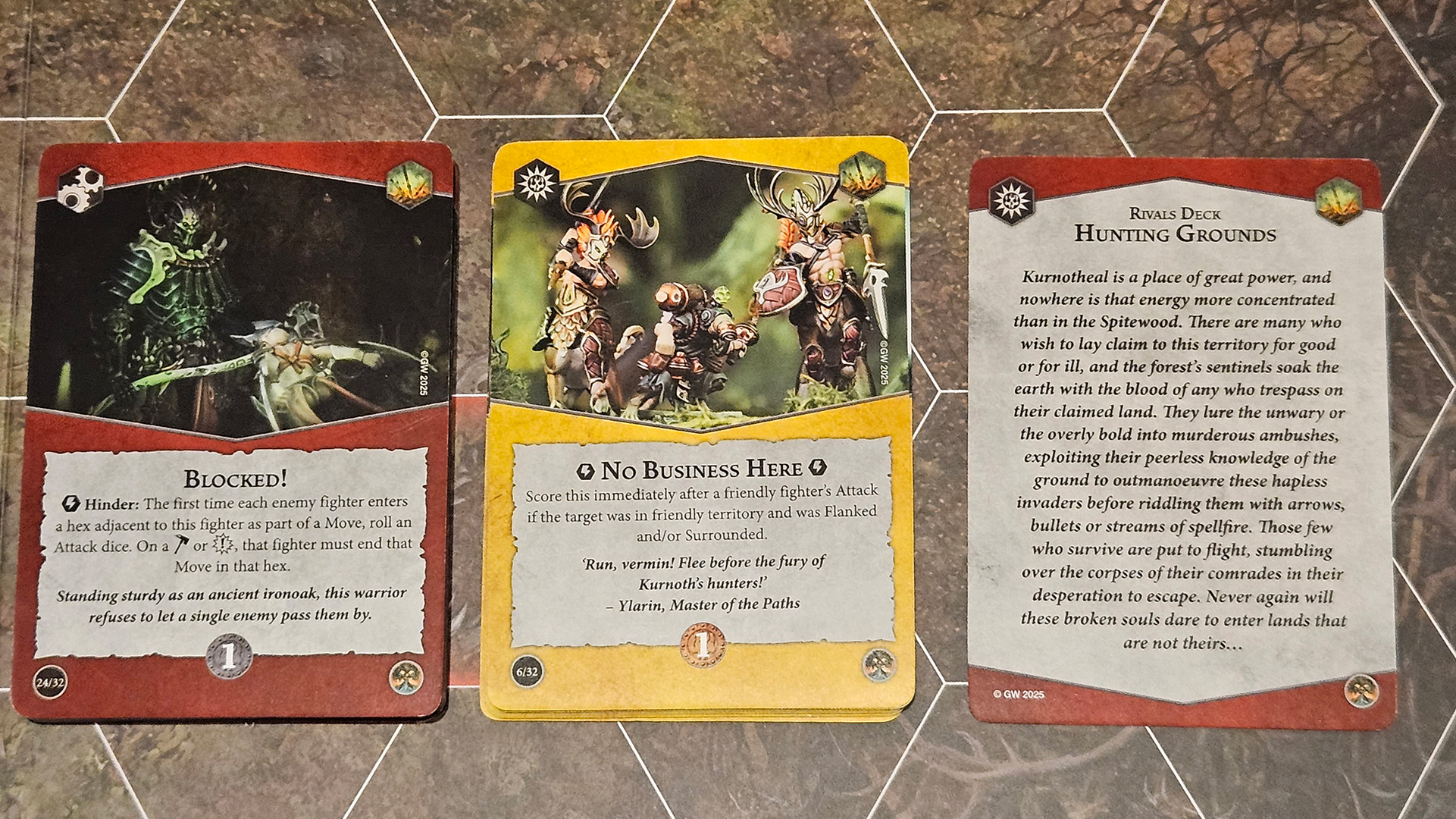
The second deck is Hunting Grounds, which is a Strike deck focused squarely on protecting friendly territory. That combination of aggression and defense is perfectly fitting for the theme of Kurnoth's Hunters, though again, it can be used with any warband. It provides you with Ploy and Upgrade cards that work best when your opponent strays onto your side of the board.
There are a few Objective Cards here that will give you quick and easy Glory Points, such as Back Off! (scored if a friendly fighter's Attack pushes an enemy into different territory) and No Business Here (scored if you attack a flanked enemy in your territory – crucially, the attack doesn't even need to succeed here). Home Advantage is especially good – it's scored if an enemy fails an attack in your territory. Hello one Glory!
Not all of the Objectives are great, mind. Usurped is scored if your fighter is on a feature token that the target was on when you picked them. That's a bit too fiddly for a measly one Glory. Pinned! is also quite tricky – you need to drive an enemy back into an edge hex in friendly territory, in the end phase, to score it. On the plus side, though, that one will bag you a potentially game-winning three Glory.
The Ploy cards are also a real mixed bag. Some are terrific: Deny Invaders gives +1 Attack dice to friendly models in the next turn if they're in your territory. Keep Them At Bay adds +1 to melee weapons if an enemy fighter is in your territory. Mind Your Step pushes enemy fighters up to 2 hexes out of your territory – potentially super useful.
Less effective, however, are Mystical Misdirection (which switches the position of treasure tokens in a way that will only rarely be useful), and Hidden Snares (which sounds good, causing -1 on enemy melee attacks, but is only really useful if you pick precisely the right target).
In terms of Upgrade cards, Goading Defender gives a fighter +1 Save in friendly territory, which is not too shabby at all. Hidden Aid marks enemy fighters adjacent to a friendly model as Flanked. And Blocked! gives you a chance to curtail an enemy fighter's movement if it moves into a hex adjacent to your chosen fighter.
Should you buy Warhammer Underworlds: Spitewood?
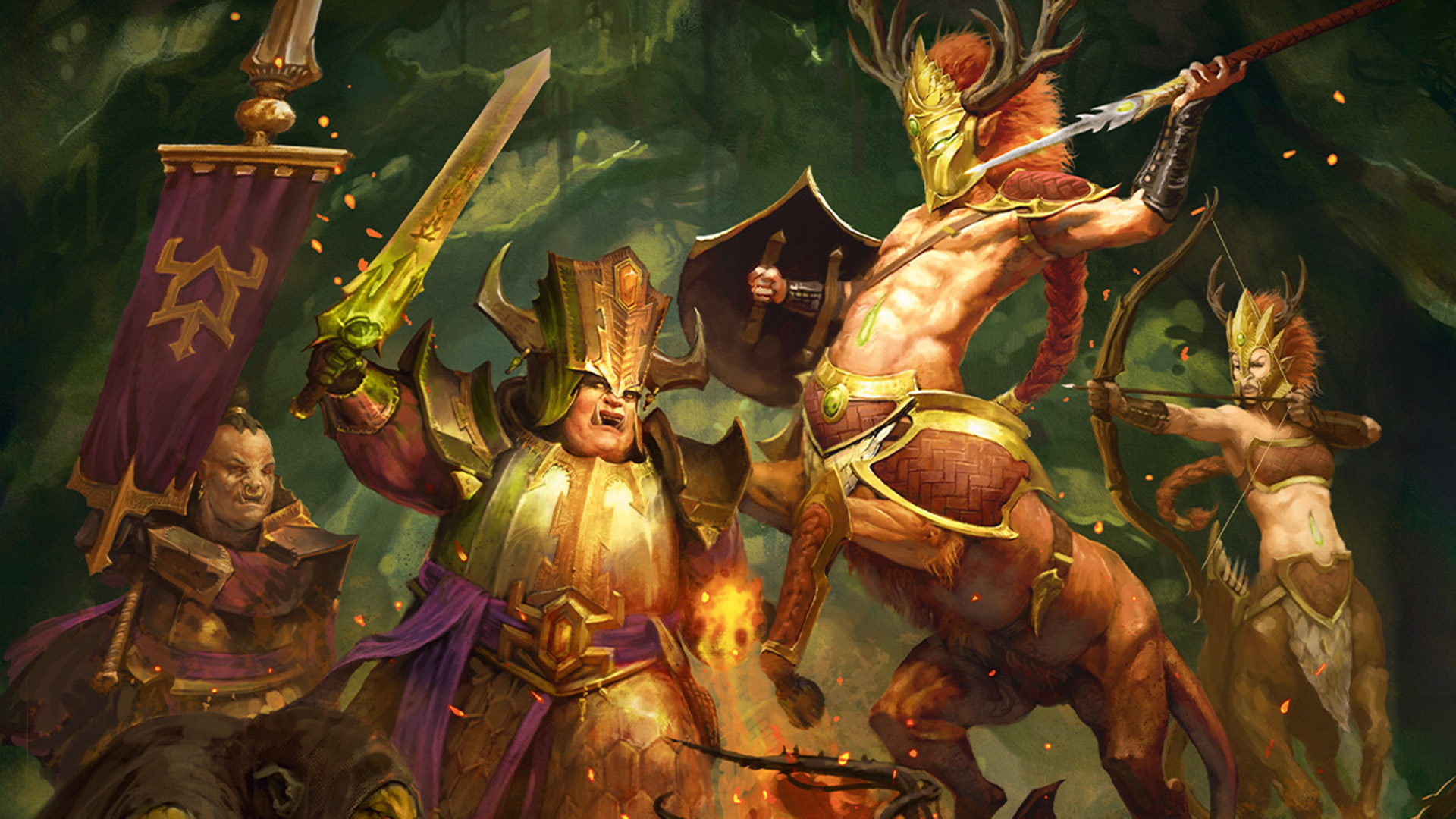
This is a really solid and enjoyable expansion for Warhammer Underworlds that introduces two fresh new warbands to the system. It’s your first chance to play Helsmiths in the game and The Blood of the Bull are a satisfyingly aggressive bunch, with some lovely models. Kurnoth's Heralds should satisfy players who prefer a more defensive game and it's great to see this unusual part of the range expanded with these models.
The sense of cost-cutting on the set is slightly annoying. Part of the appeal of the seasonal format was that anyone could jump into the game without any additional purchases, so needing to provide your own dice and the Embergard rulebook is irritating. It is, overall, a small thing though and won't be a deal breaker for dedicated players.
The new hexes add a little bit of thematic flavor to the board and do change the game, though not to a dramatic degree. Likewise, the new decks have some cool cards that make this worthwhile for existing players. If that's you then you don't need any extra encouragement to pick it up. For new players, start with Embergard first.
Buy it if...
Don't buy it if...
This product was purchased by the reviewer.