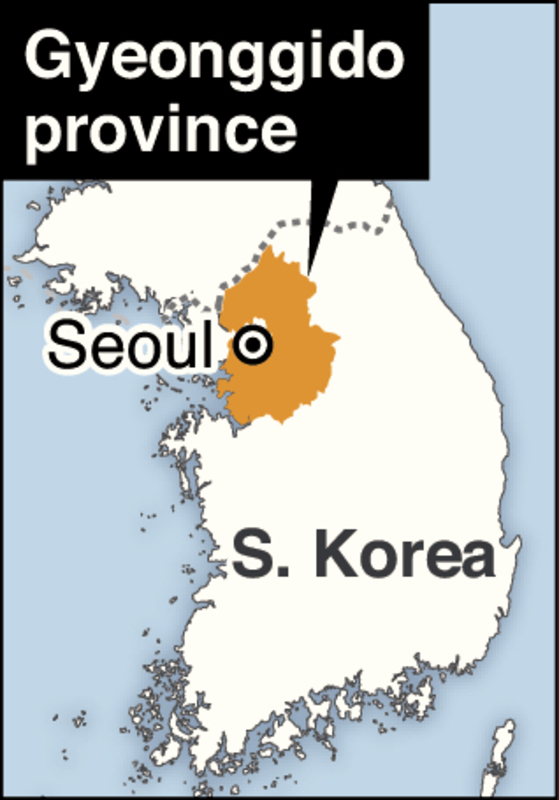
SEOUL -- A draft ordinance that would require elementary, junior high and high schools to place stickers saying "This product was produced by a Japanese company that committed war crimes" on products in schools has been submitted to a South Korean local assembly, it has been learned.
A bipartisan group of assembly members in Gyeonggido province, near Seoul, submitted the draft to the assembly, according to sources.
The assembly's website said the proposal was submitted to have students "recognize that Japanese companies have made no official apology or not paid compensation for forcibly mobilizing South Korean laborers and exploiting them." The proposal was intended to establish a correct historical understanding among students, and to caution school teachers and have them face reality, it said.
The draft had been proposed as of March 15 by 27 assembly members, including some from the ruling Democratic Party of Korea.
The Gyeonggido Office of Education submitted Wednesday to the assembly a written statement saying it cannot accept the draft, according to the online edition of the JoongAng Ilbo newspaper. The statement said there is no clear-cut definition for "a war crime company," and thus the ordinance could cause confusion at schools.
A committee of the South Korean prime minister's office probed wartime affairs in 2012, and listed 299 Japanese firms as "war crime companies" because they requisitioned people from the Korean Peninsula for work in Japan during World War II.
Of the firms, 284 companies still exist today, including Mitsubishi Heavy Industries Ltd. and Nippon Steel & Sumitomo Metal Corp.
Under the draft ordinance, goods worth 200,000 won (about 20,000 yen) or more would have to bear the sticker.
According to an assembly member who initiated the proposal, 50 percent to 70 percent of machines that schools possess such as copiers and projectors are made in Japan, and 10 percent to 20 percent of them are products of "war crime" companies.
"We didn't made the proposal in a bid to trigger a diplomatic conflict or encourage people to boycott Japanese products amid the deteriorating relationship between South Korea and Japan," he said during a telephone interview with The Yomiuri Shimbun. "We did this because Japanese companies have not made any apology."
Read more from The Japan News at https://japannews.yomiuri.co.jp/