My five-year-old nephew is going through a phase of telling fibs and his parents would like to gently reinforce the message that telling tales is a bad thing. They’ve read him a version of “the boy who cried wolf” and would like to supplement that with one or two more stories along similar lines. Can you recommend any titles please?
Children tell lies for a number of different reasons and at five they are not entirely sure of the distinction between exaggeration, make-believe and a downright lie.
They may be lying because they are making something up to impress; lying because they want to make something they desire seem to be allowed as in “mum lets me”; lying to see what the adult reaction will be; or lying to get themselves out of trouble.
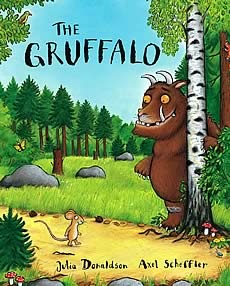
There are children’s books that cover all of the above in a variety of ways. In doing so they show that, while all adults want children to know that lying is “wrong”, the reality of lying is far more in subtle and nuanced than it may first appear. After all, Julia Donaldson and Axel Scheffler’s bestselling The Gruffalo is predicated on what readers of all ages accept as an enormous piece of make-believe.
To save his skin the little mouse outwits the fox, the owl and the rest by “inventing” the Gruffalo with his terrible claws and terrible teeth. Or does he? That whopper could easily be thought of as a lie. And there is a kind of retribution as the Gruffalo does turn up. Luckily, although he looks just as the Mouse has described, he is not quite the creature the Mouse had imagined so all does not end so badly. So, no useful message here but an example of how “lying” may not be quite what it seems.
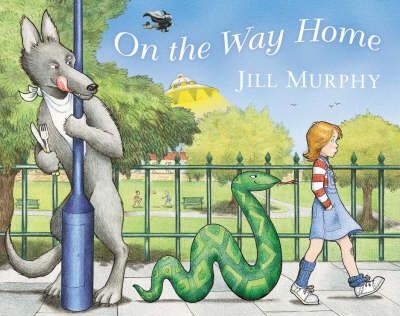
Jill Murphy’s On the Way Home is another, quite different but equally delightful story of make believe, exaggeration – or lying - with a particularly satisfying conclusion. When Claire hurts her knee she tells her friends all kinds of great stories about how it happened. She imagines being dropped by a wolf, squeezed by a slithering snake and so on. Each is a great lie or yarn but luckily there is one person to whom she can tell the truth. Her mum!
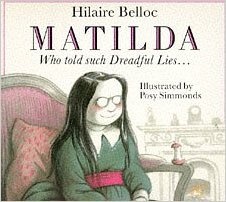
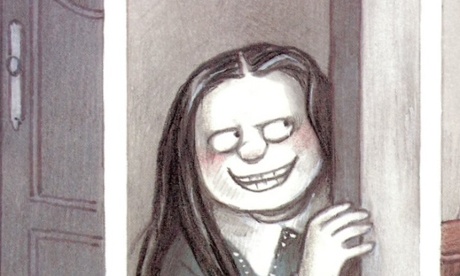
For the full shock value for an impressionable five year old, Hilaire Belloc’s Matilda, one of his Cautionary Tales for Children, is hard to beat. Published in a picture book format with illustrations by Posy Simmonds as Matilda Who Told Such Dreadful Lies and Was Burned to Death it contains the terrifying story of this deviant child. “Matilda told such Dreadful Lies,/ It made one Gasp and Stretch one’s Eyes; / Her Aunt, who, from her Earliest Youth, /Had kept a Strict Regard for Truth, / Attempted to believe Matilda: /The effort very nearly killed her,/ And would have done so, had not she/ Discovered this Infirmity.” The reckless Matilda calls out the fire brigade when there is NO fire with the result that when there is a real fire she is ignored! “For every time She shouted ‘Fire!’/ They only answered ‘Little Liar!’/ And therefore when her Aunt returned, /Matilda, and the House, were burned.”
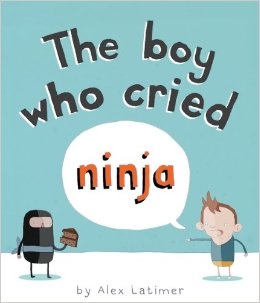
For a gentler version of a story about the importance of honesty, Alex Latimer’s The Boy Who Cried Ninja is a pleasing take on The Story of the Boy Who Cried Wolf. When various things go missing, including a slice of cake and his school bag, no one believes his Tim’s explanation. How can he make his parents believe his version of the story?
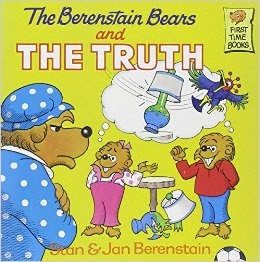
For a straightforward look at lying, the Berenstain Bears take a clear and easily to follow line. Stan and Jan Berenstain’s The Berenstain Bears and the Truth is a simple story of what happens when Sister and Brother Bear break Mother Bear’s lamp. As the story unfolds it covers a lot of the basic ground on lying – how it starts simple but can escalate, how it can make you feel bad and, above all, how coming clean can make you feel so much better!
Do you have books to recommend on this theme? Email childrens.books@theguardian.com or get in touch on Twitter @GdnchildrensBks, where you can also ask The Book Doctor a question using #BookDoctor.