
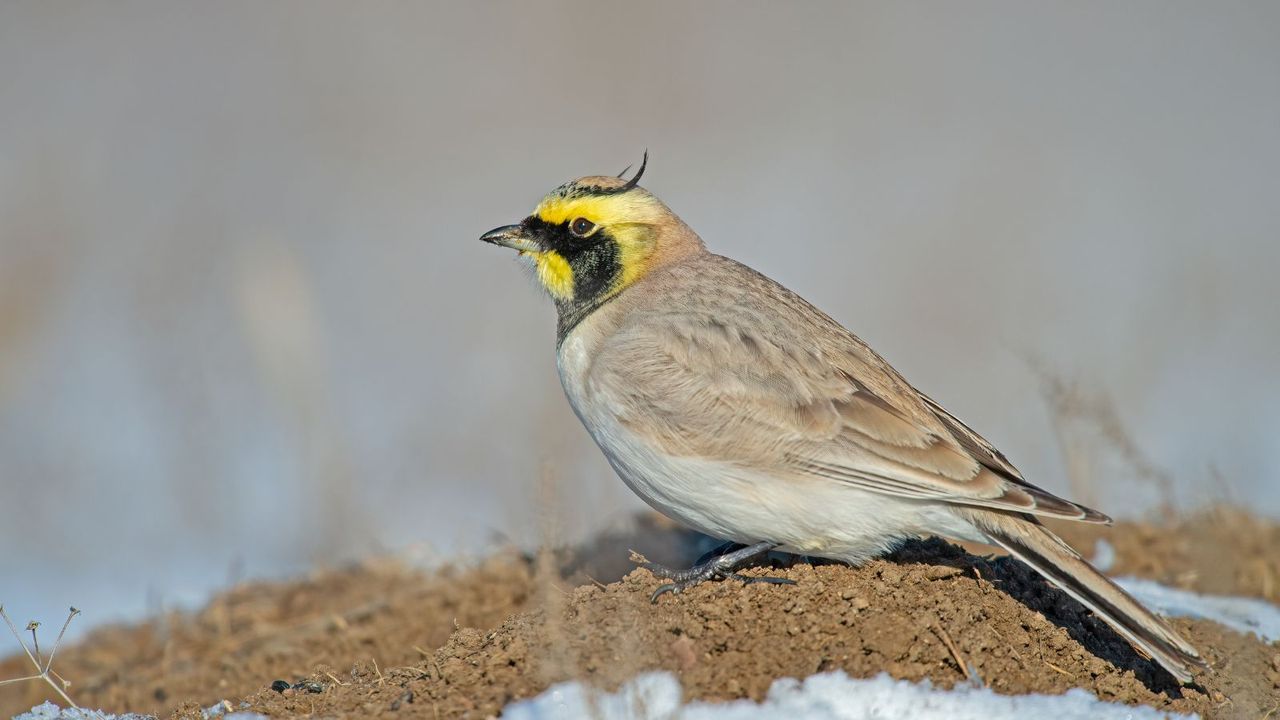
Horned larks are utterly beautiful songbirds, but they are not a common sight in American backyards. However, if you're planning a visit to the countryside anytime soon, you've got a high chance of spotting one.
With their distinctive yellow and black markings, you can find them across North America, but since they're known to prefer open habitats, experts say that you're most likely to spot them in rural areas rather than suburban gardens (even if you grow lots of the best plants for garden birds). They are on our radar right now because the American Bird Association has named the horned lark its 2026 bird of the year.
So what do we need to know about this shy feathered friend? We asked ornithology experts to give us the rundown on the horned lark – and explain exactly how you can see it for yourself.
Where Do Horned Larks Live?
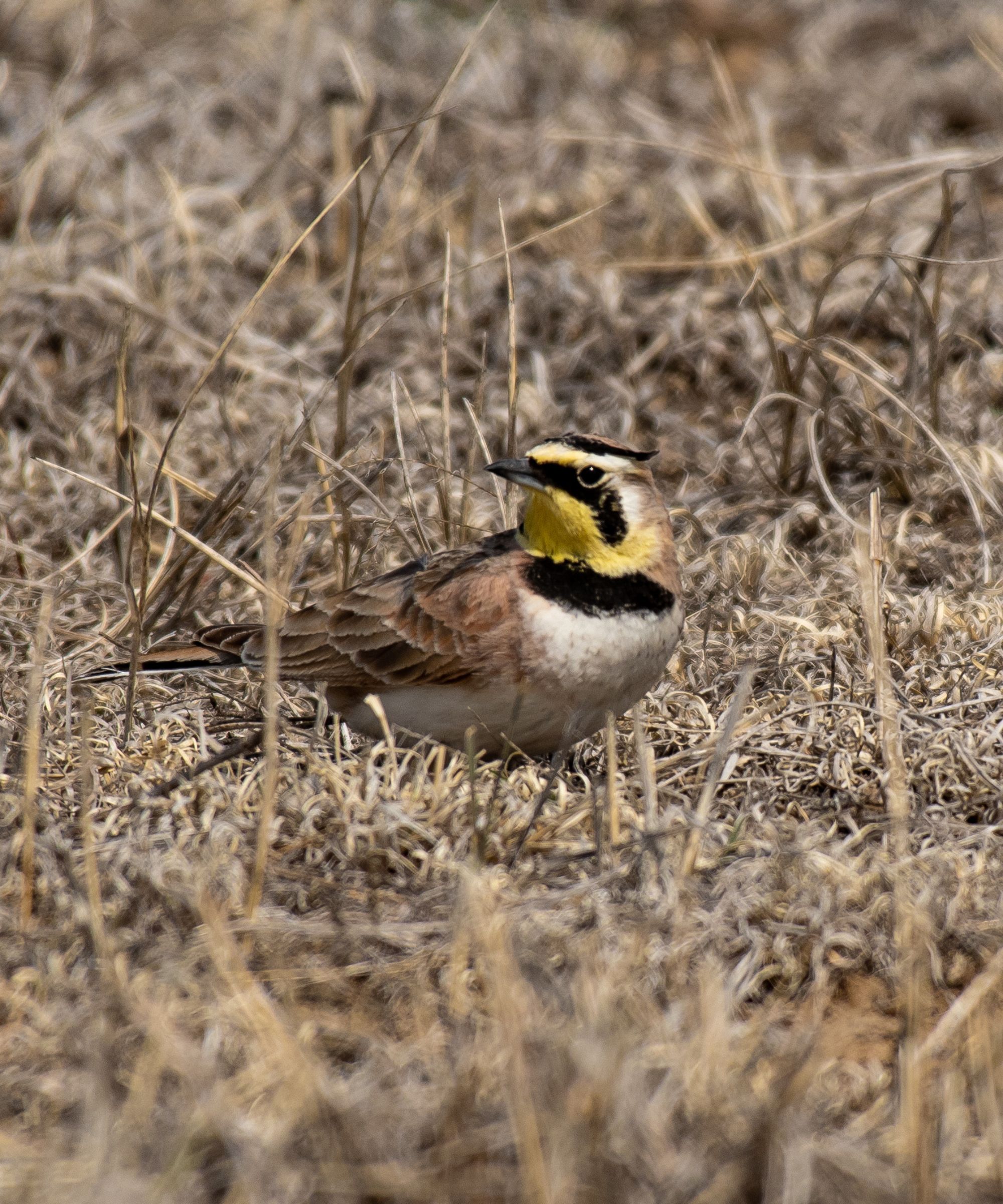
According to Holly Latteman, Director of Science & Research for The Dawes Arboretum in Newark, Ohio, horned larks are widespread throughout the United States, though they are a migratory species.
'Great Horned Larks can be found year-round in North America,' she explains. 'In summer, they can be found near Canada, while in the wintertime you can find them in southernmost states such as Florida, Georgia, Alabama and parts of Texas.'
How to Spot Horned Larks
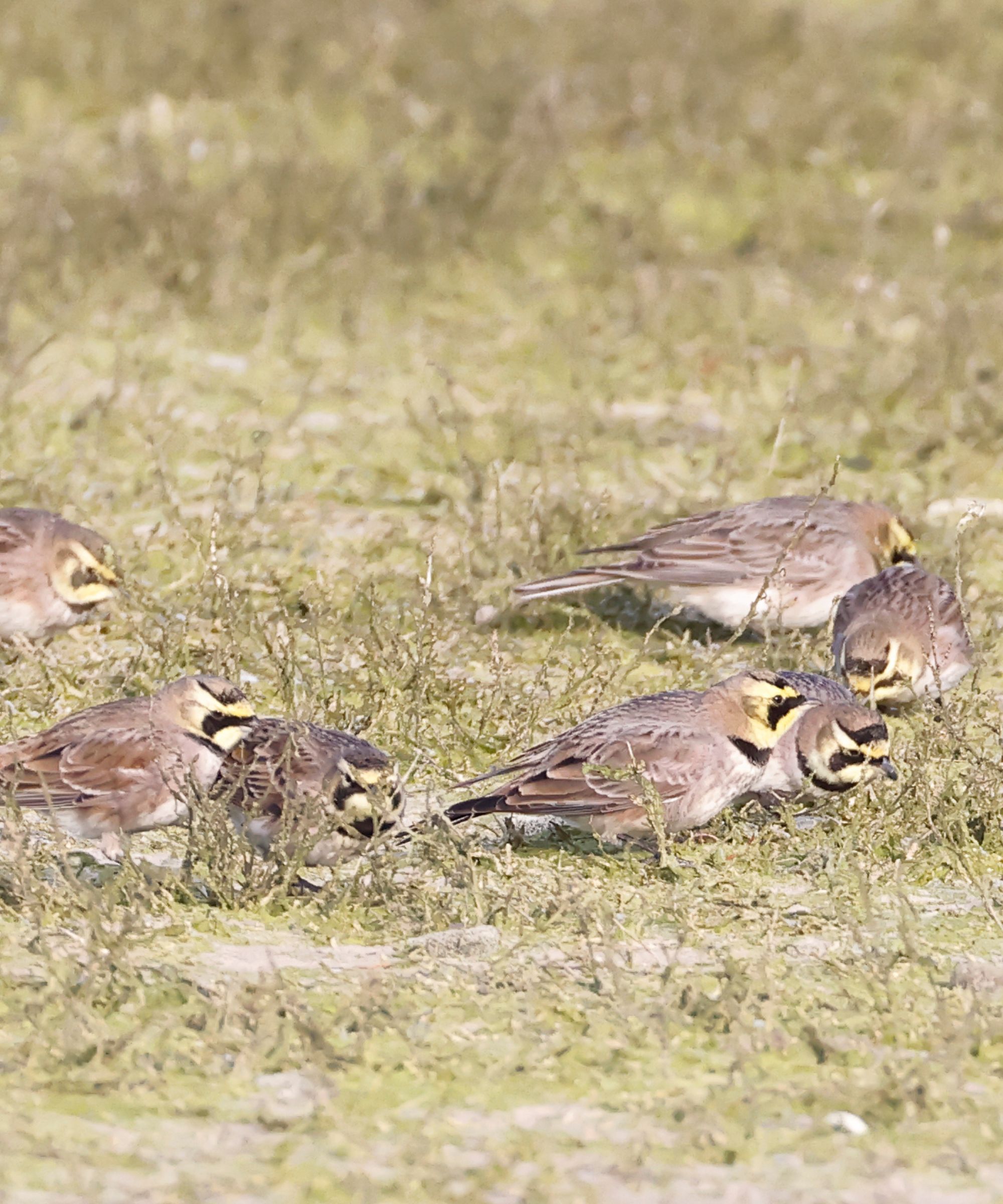
Spotting horned larks starts with understanding how to recognize them – and fortunately, these charming songbirds look rather unique.
'Horned larks are a tan and gray-ish color with yellow and black face markings,' says Holly. 'They earned their name from the tufts of feathers that lay at the top of their head and mirror a horn.'
When it comes to finding horned larks, you're most likely to come across them in large, rural spaces, where they gather to feed on seeds and vegetation.
'In Ohio, we see horned larks on large farm fields to pick corn, small stones, and seeds or vegetation left over from fall,' says Holly. 'They pick until March when they nest.'
Where Do Horned Larks Nest?
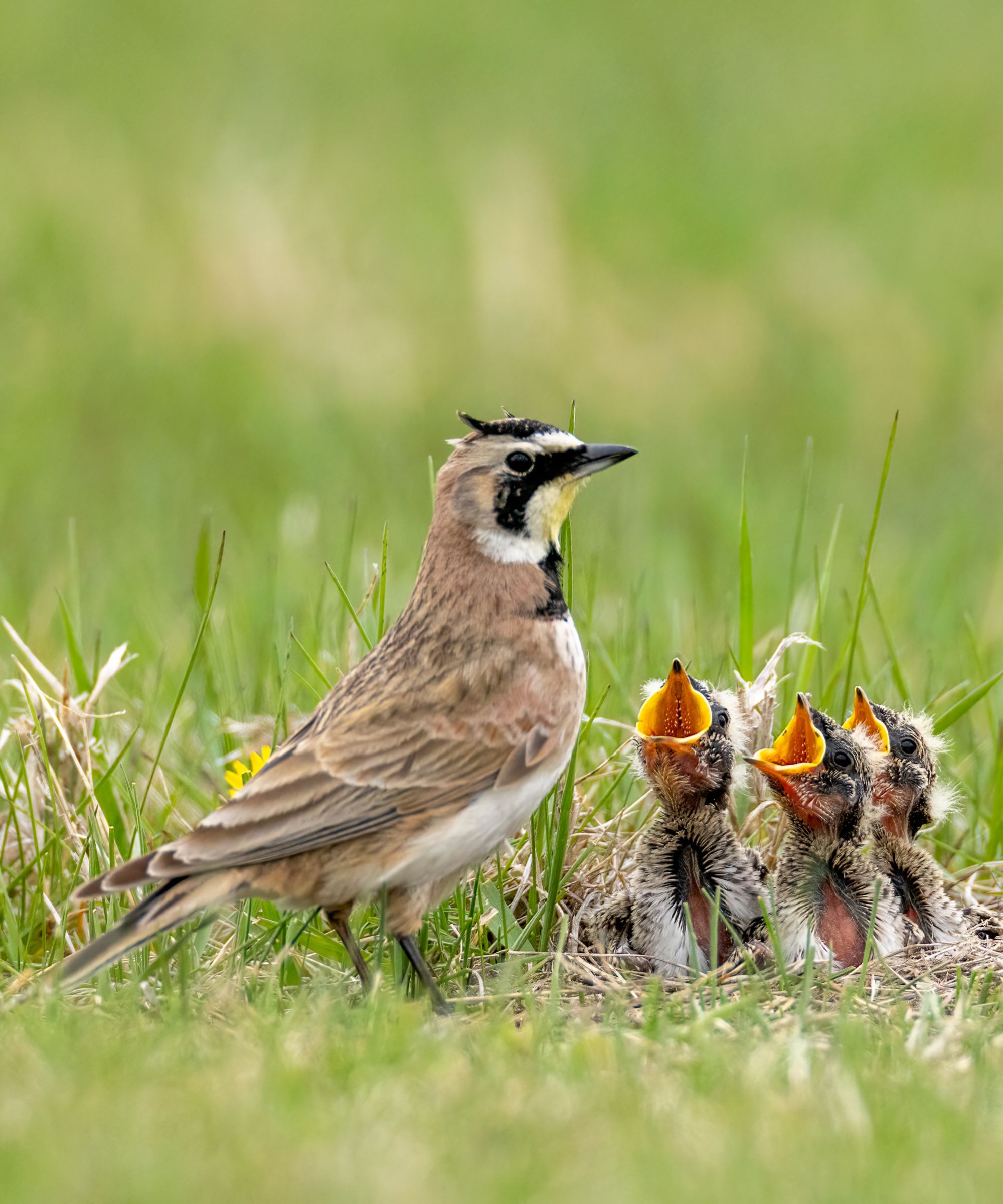
'Horned Larks nest in depressions of soil lined with plant materials,' says Holly.
Although they gravitate toward open spaces and rolling fields (Holly notes that 'they became more commonly sighted as agricultural efforts increased throughout history'), horned larks won't nest or gather in tall grass.
In fact, they prefer barren landscapes to leafy areas; think sparse hayfields, prairies, and even deserts or beaches with clumps of dunegrass.
How to Attract Them to Your Yard
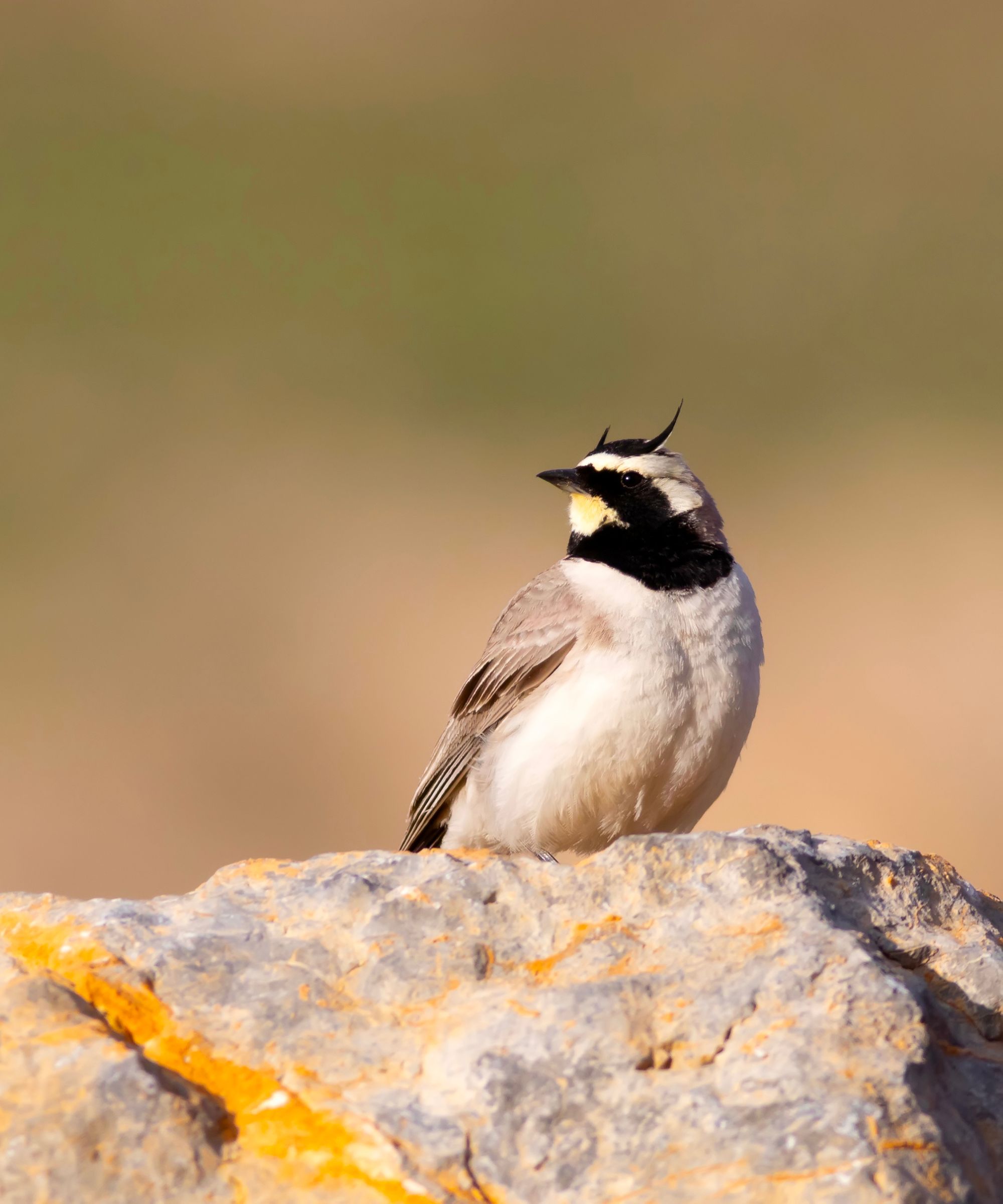
Due to their preference for open spaces, it can be difficult to attract horned larks to your backyard.
They rarely visit feeders, but they can be tempted by low, shallow bird baths and seeds scattered on the ground.
'The best place to see horned larks is not necessarily in your garden, but in the countryside fields that they prefer,' explains Holly.
'They’re not going to come to a bird feeder as other species might. They are a very beautiful species that you can have the pleasure of viewing – as long as you meet them where they’re at.'
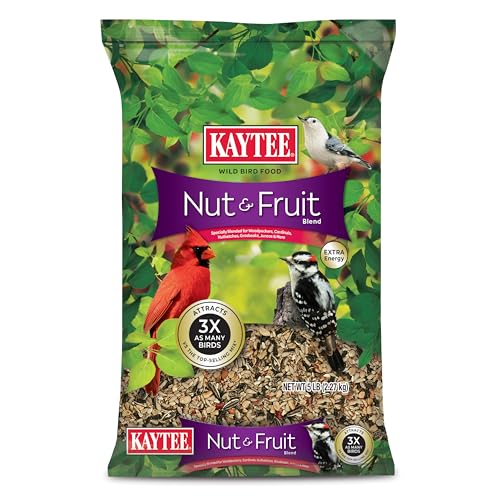
Horned larks primarily feed on waste grain, insects, and seeds like these. Just make sure to loosely scatter the food on the ground, rather than using a feeder.
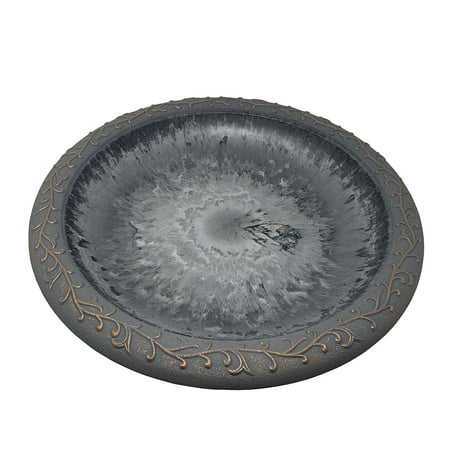
This handsome bird bath is sure to bring some heritage charm to your garden. Position it in a low-lying area to attract birds like larks.
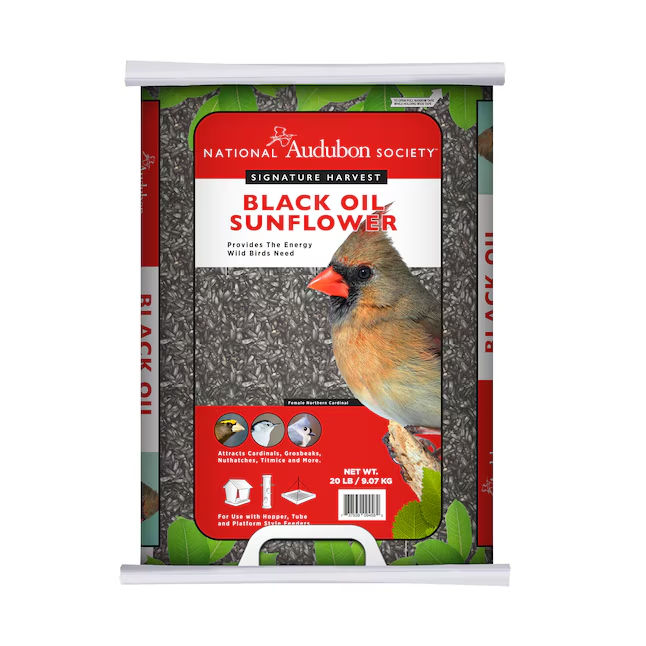
Horned larks are known to enjoy black oil sunflower seeds, so you might want to stock up in the hope of attracting them this spring.
Want to transform your yard into a wildlife haven this year? Check out our guide on how to feed birds, and how to help garden birds in summer.
And if you love inspiring garden ideas, outdoor advice, and the latest news, why not sign up for our newsletter and get the latest features delivered straight to your inbox?