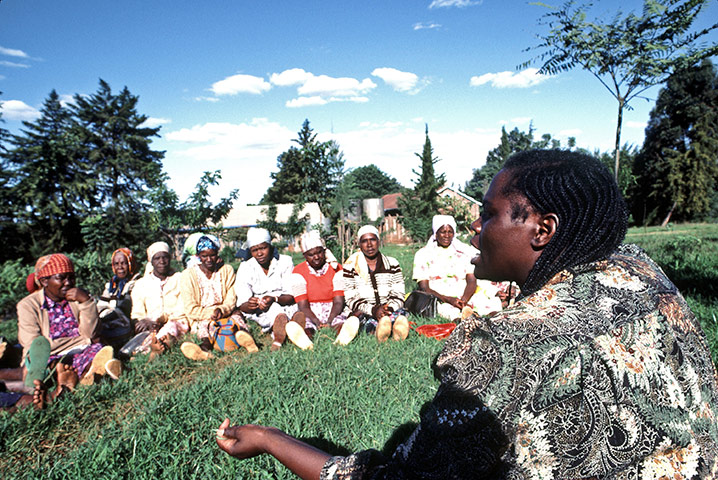
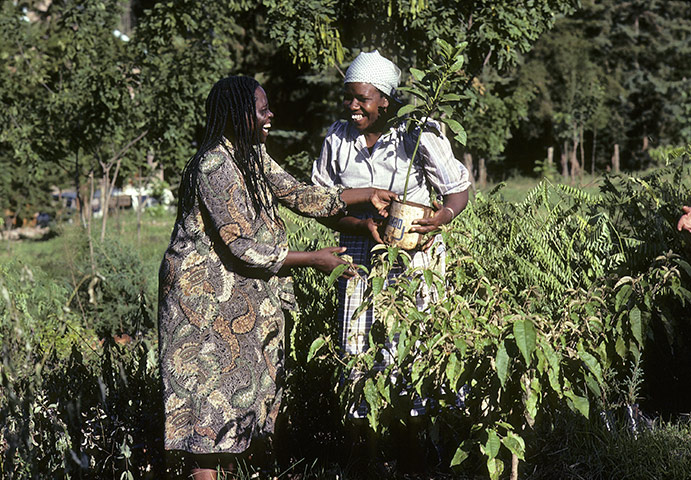
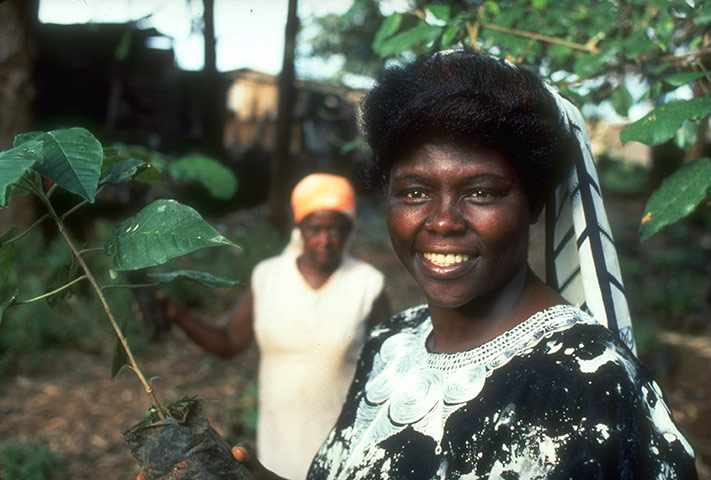
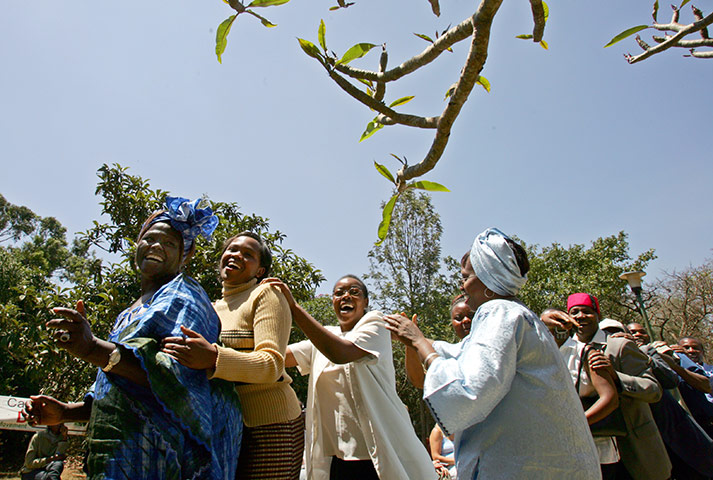
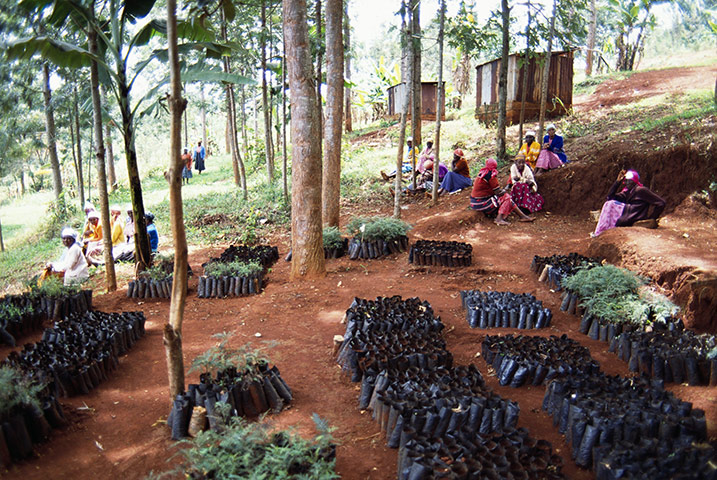
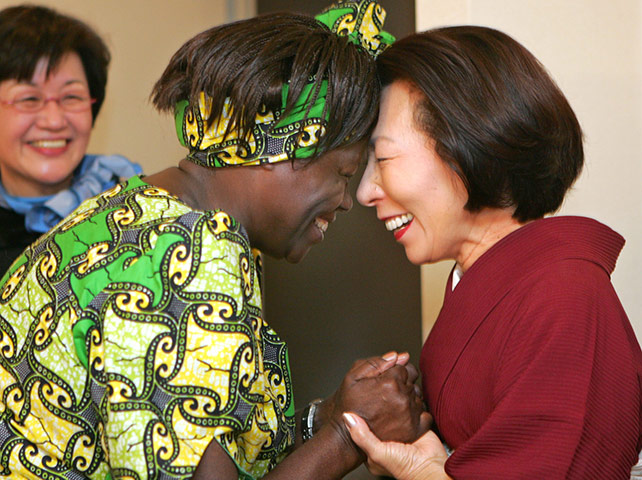
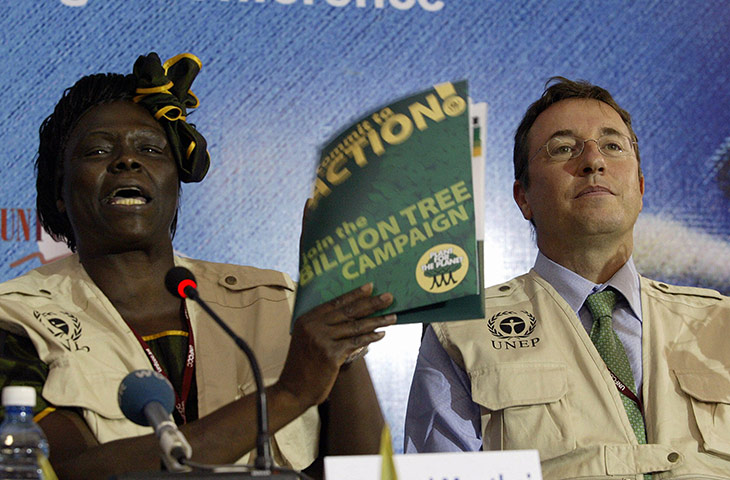
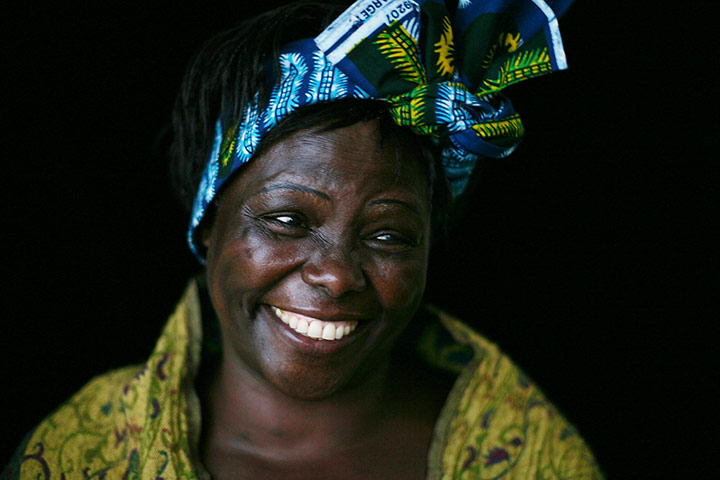
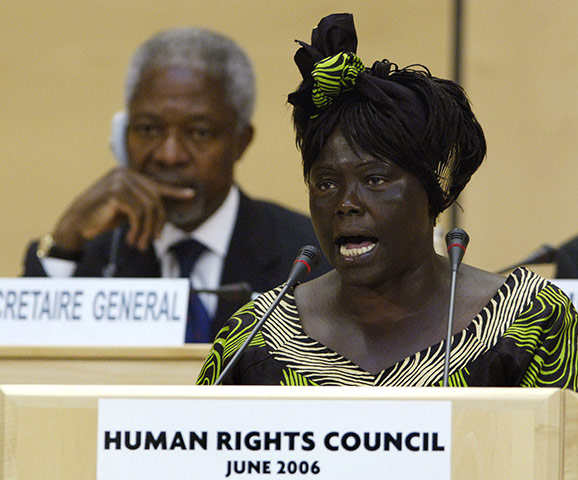
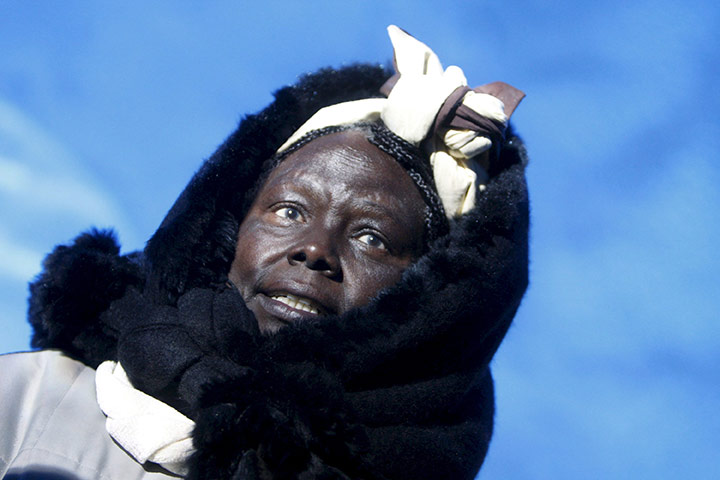
Wangari Maathai pictured in Kiriti, Kenya, in 2004. After founding the Green Belt Movement, Africa's largest tree-planting project, in 1977, she went on to become Kenya's assistant environment minister in 2003Photograph: Micheline Pelletier/CorbisMaathai participates in a group discussion with staff members at a Kenyan nursery in January 1983. The Green Belt Movement was aimed at promoting biodiversity, creating jobs and giving women a stronger identity in society Photograph: Jackie Curtis/UN PhotoMaathai handing over a plant in January 1983. Her work with voluntary groups alerted her to the struggles of women in rural Kenya, which became her life's cause. The Voluntary Fund for the UN Decade for Women assisted the Green Belt Movement Photograph: Jackie Curtis/UN Photo
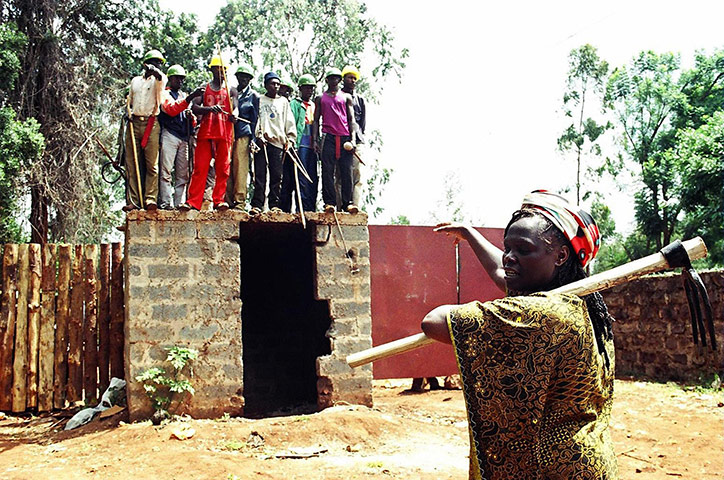
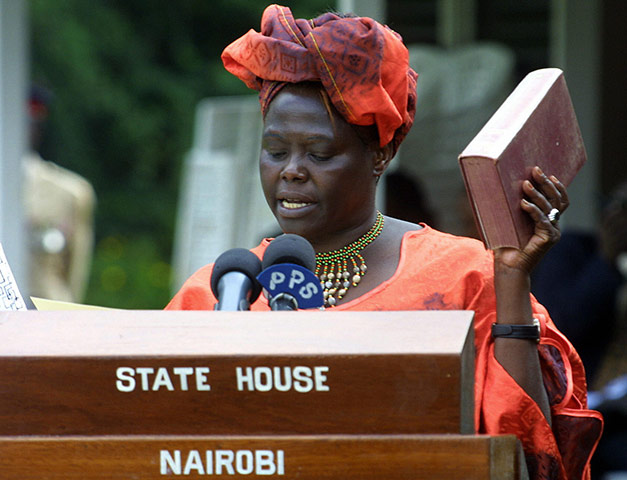
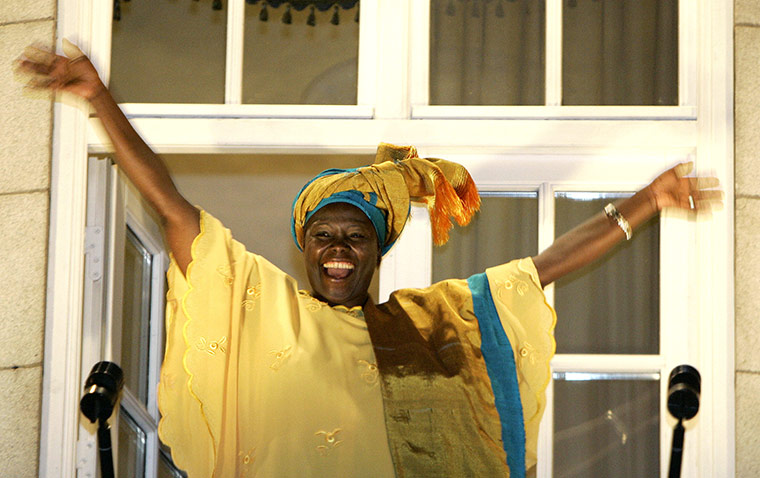
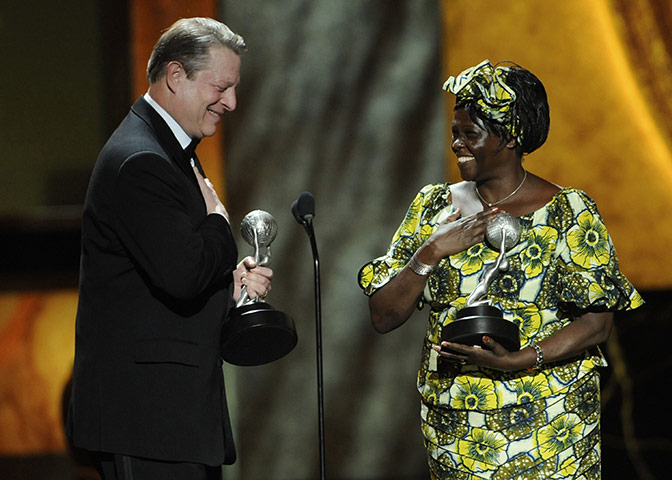
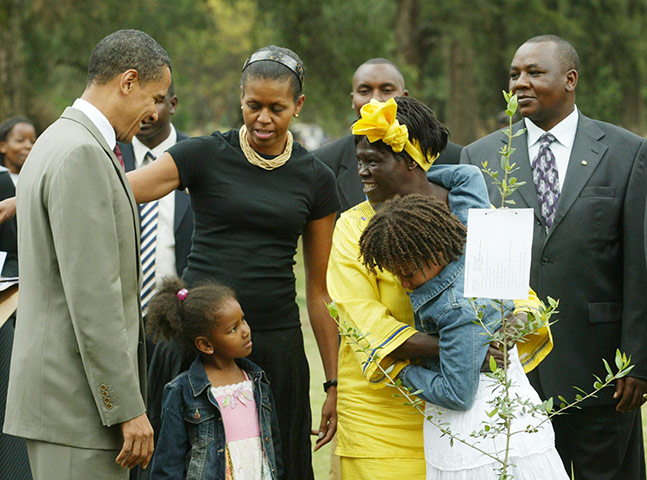
Maathai outside Green Belt Movement headquarters in 1990. Her grassroots organisation aimed to help poor women from rural areas by paying them to plant trees in their villages. It was a unique marriage of conservation and feminism Photograph: William F. Campbell/Time & Life Pictures/GettyMaathai is pictured here challenging hired security guards in the Karura forest during a Green Belt Movement operation to plant trees in 1999. Her innovative approach to green activism became a model around the world Photograph: Simon Maina/AFP/Getty ImagesMaathai was an environmental visionary possessed of a formidable intellect, but she retained a firm affinity with rural communities in her native Kenya. Here she is seen leading a traditional dance at Green Belt Movement headquarters in October 2004Photograph: Radu Sigheti/ReutersMembers of the Green Belt Movement prepare seedlings for local families in Muranga, Kenya in 2001. The tree planting project, which Maathai initially funded with her own money, then with income from grants (notably from the UN), is led mostly by womenPhotograph: Wendy Stone/ReutersMaathai, pictured at the Kenyan government's swearing-in ceremony on 6 January 2003, served as assistant environmental minister under President Mwai Kibaki from 2003 to 2005. She found the budget for environmental action 'peanuts'Photograph: Simon Maina/AFPMaathai waves from her hotel balcony after being awarded the Nobel peace prize in Oslo in December 2004. Honoured for fighting poverty by trying to save Africa's shrinking forests, she was the first woman from the continent to win the prizePhotograph: Yves Herman/ReutersMaathai was reunited with her Japanese college friend, Grace Mahr, while in Tokyo in 2005. They studied together at Mount St Scholastica College (now Benedictine College) in Kansas in the 1960s. It was the first time they had met in 41 years. Maathai was the first woman from east and central Africa to obtain a PhDPhotograph: Koji Sasahara/APIn November 2006, Maathai launched a tree-planting campaign in tandem with UN under-secretary and UNEP executive Achim Steiner at the UN framework conference on climate change. She called for 1bn trees to be planted over the following 12 months in order to combat environmental degradation and reverse desertification and erosionPhotograph: Simon Maina/AFPIn 2007, Maathai attended the Guardian Hay festival to promote her book, Unbowed, which was published in September 2006. 'Like a Nelson Mandela or a Mahatma Gandhi, Maathai stands way above most mortals,' wrote a Guardian reviewerPhotograph: Martin Godwin/GuardianIn June 2006, Maathai addressed the inaugural session of the newly created Human Rights Council at UN headquarters in Geneva Photograph: Denis Balibouse/ReutersIn February 2008, Maathai visited Longyearbyen in Norway prior to the official opening of the Svalbard global seed vault. Carved into the permafrost and rock of the remote Svalbard peninsula, the vault was designed to house 3m seed samples from nearly every variety of food crop, protecting them in case of a global disaster Photograph: Larsen Hakon Mosvold/epaIn February 2009, Maathai attended her last big event, courtesy of the National Association for the Advancement of Coloured People (NAACP), one of the most important voices for black people in the US. At the organisation's 40th image awards ceremony, former vice-president Al Gore presented her with the chairman's awardPhotograph: Chris Pizzello/APIn August 2006, Maathai met US senator Barack Obama in Uhuru Park, Naiorbi, where the future president and his family planted a tree. 'Obama has shown us all that a society can elect its best person as leader, and reject the ethnic labels we are so often stuck with,' she later wrote in the Guardian, following Obama's presidential winPhotograph: Sayyid Azim/AP
Sign up to read this article
Read news from 100’s of titles, curated specifically for you.