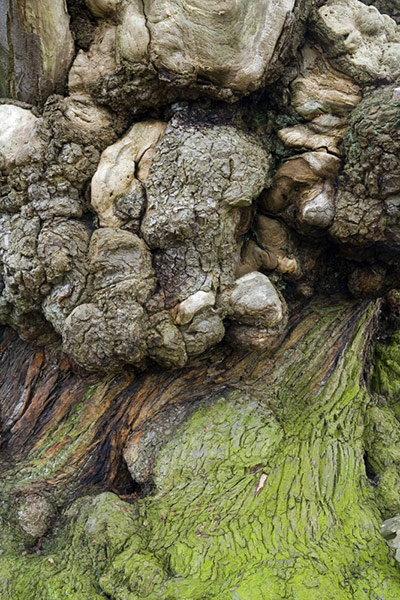
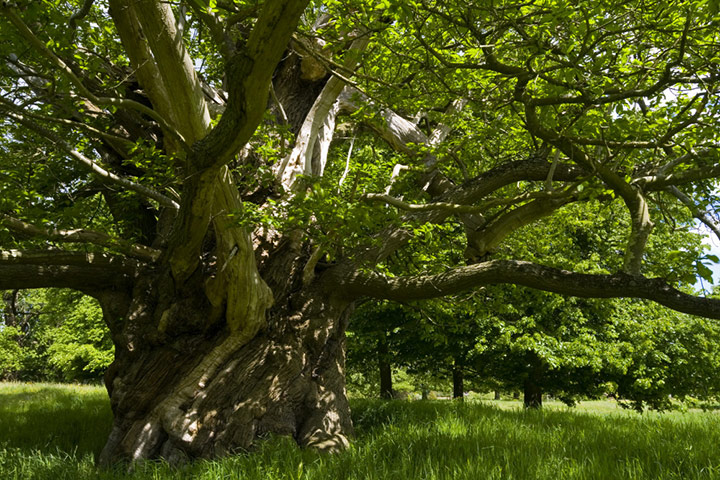
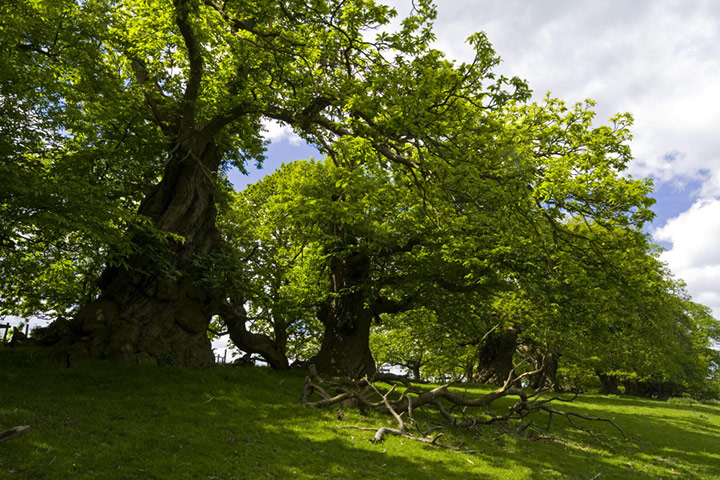
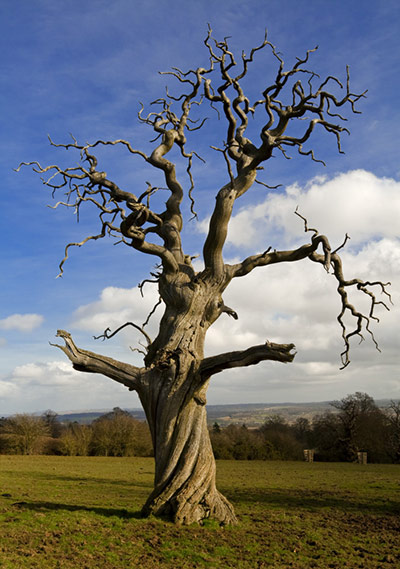
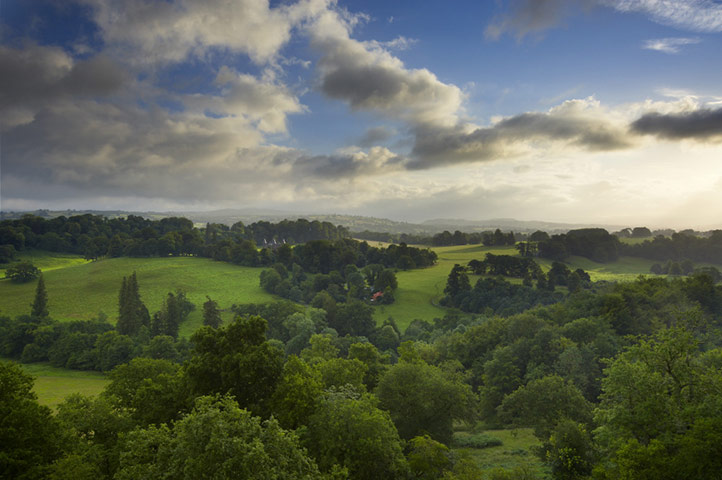
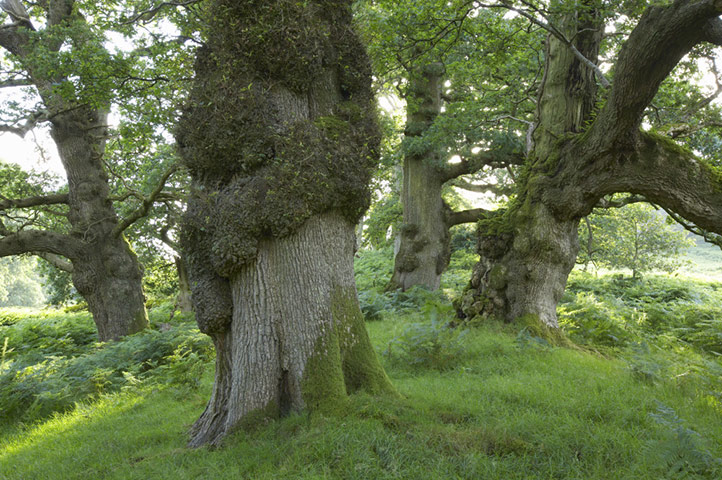
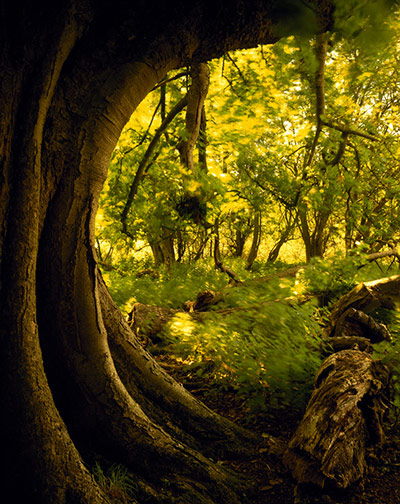
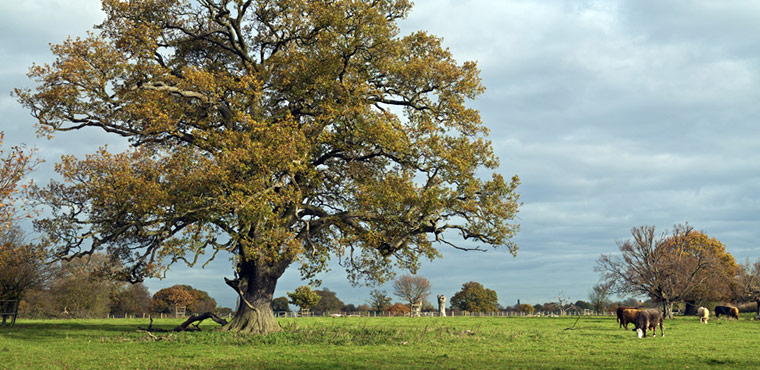
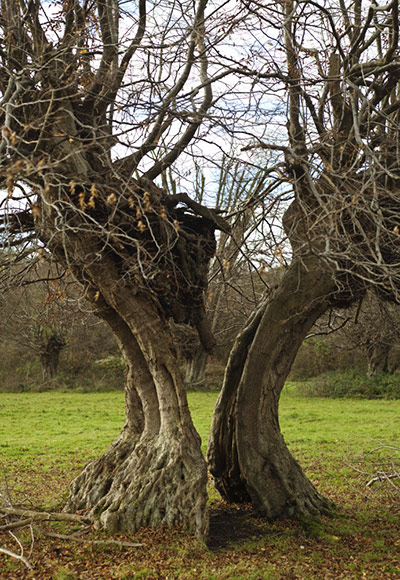
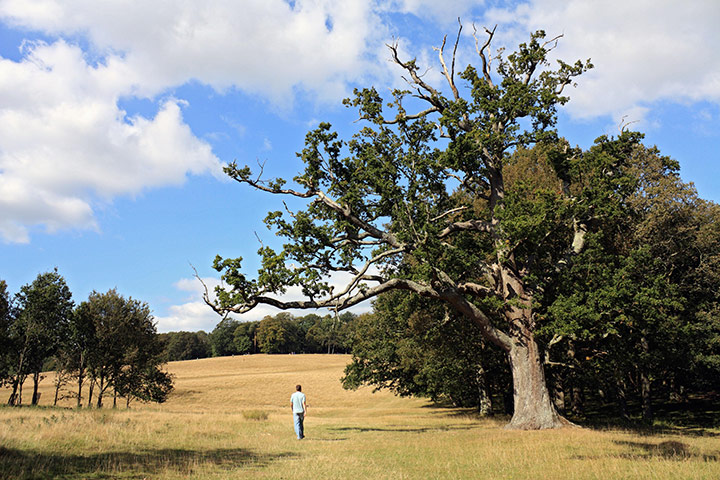
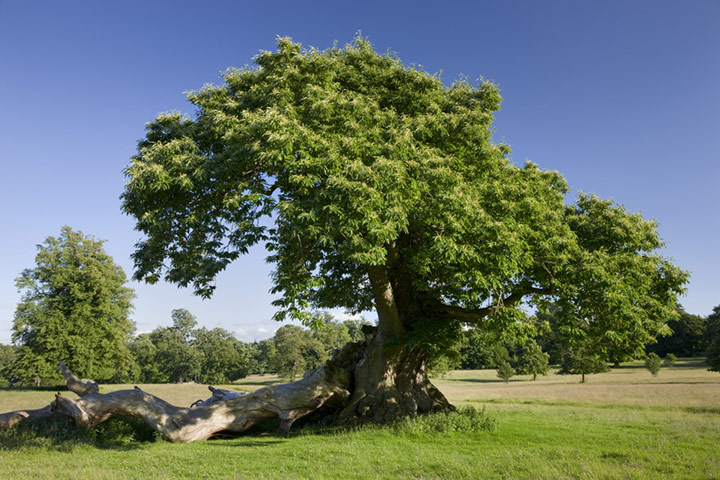
View down the Ticknall lime avenue, planted to celebrate the birth of the last baronet, Sir Vauncey Harpur Crewe in 1846, at Calke Abbey in Derbyshire, with trees either side lit by late afternoon. "Calke is possibly the National Trust's best property to see ancient trees, as they can be found across the parkland. This is the only known Trust property that has two oak trees which are one thousand years old and also a lime tree that is slowly making its way across the landscape as the branches make contact with the ground"Photograph: Mike Williams/NTPLGnarled trunk of an ancient Spanish Chestnut tree planted between 1670 and 1700 in the parkland at Croft Castle, Herefordshire. "A spectacular property where you feel you've stepped back hundreds of years into a landscape more akin to Tudor times with gnarly old trees covering the parkland" Photograph: Robert Morris/NTPL"Of particular interest is the Quarry oak, one of only a handful of thousand-year-old trees in Trust ownership"Photograph: Robert Morris/NTPL
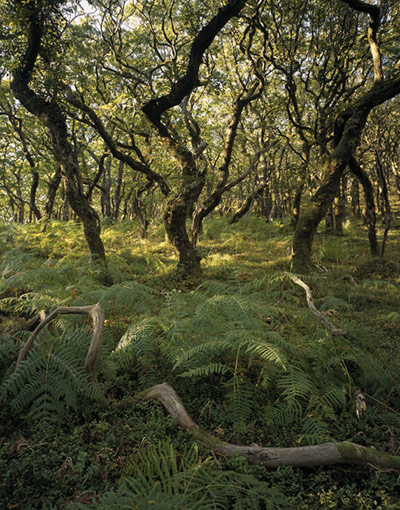
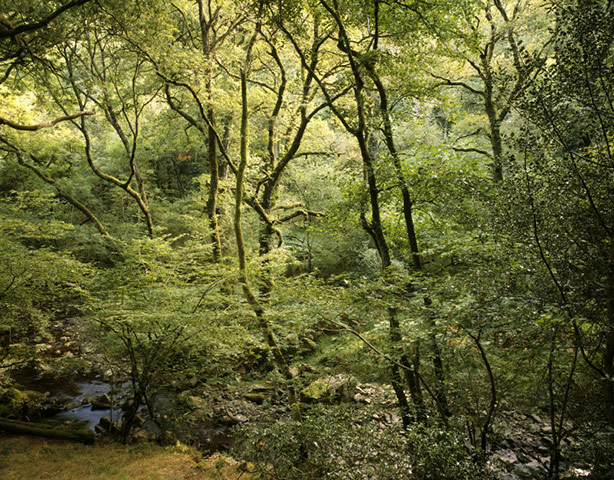
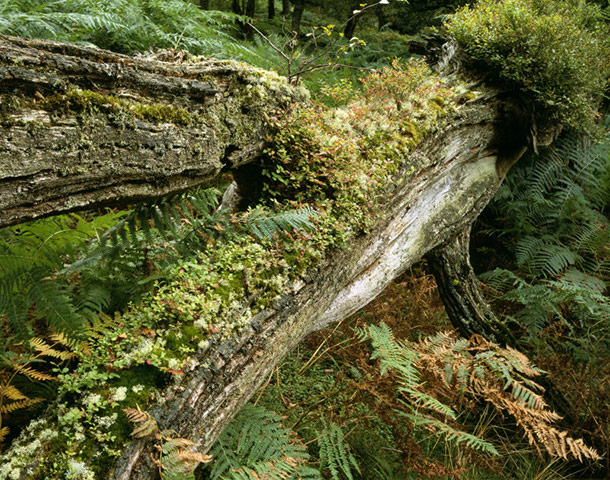
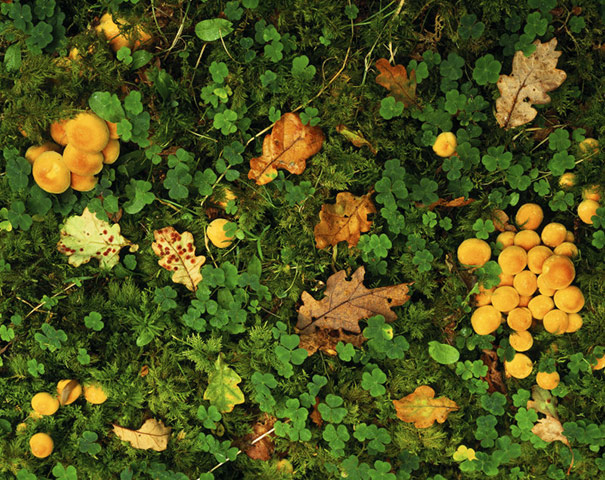
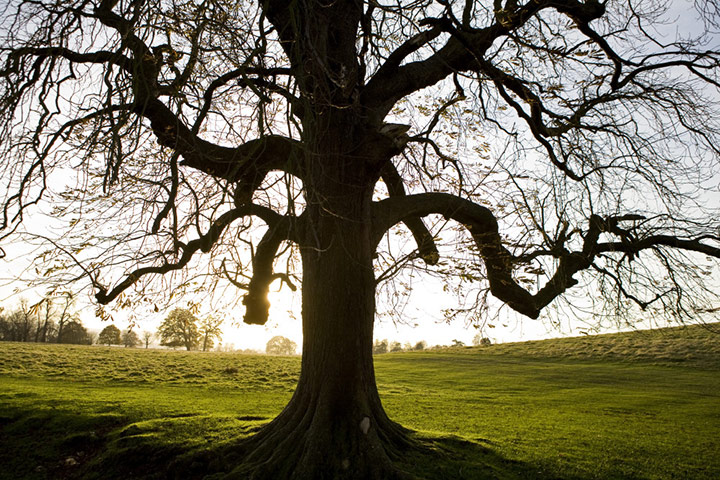
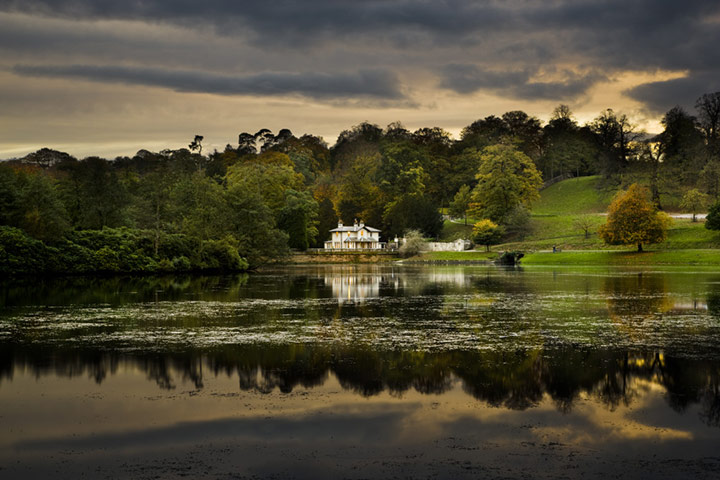
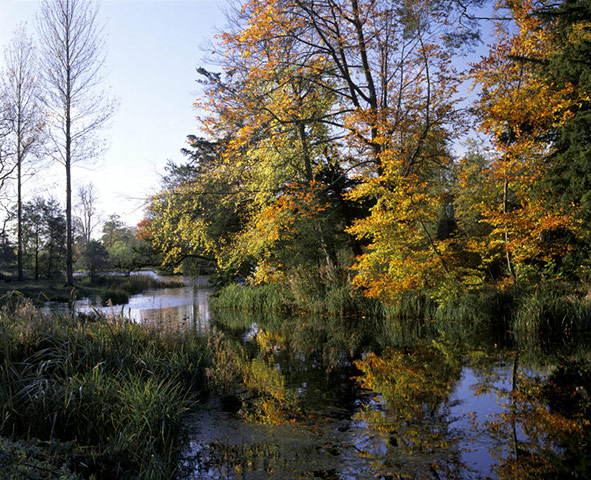
The Spanish chestnut avenue at Croft Castle, Herefordshire, an avenue of pollarded sweet chestnuts (Castanea sativa) stretching for 1km to the west of the castle. The tale of the chestnuts' origins suggests that the nuts came from the wrecks of the Spanish Armada in 1592, making some of the trees over 400 years oldPhotograph: Robert Morris/NTPLAncient Spanish chestnut tree planted between 1670 and 1700 in the parkland at Croft Castle, HerefordshirePhotograph: Robert Morris/NTPLDinefwr in Carmarthenshire: "The ancient deer park below the remains of Dinefwr castle has a stunning array of ancient trees, the sheer numbers is what is particularly special about this magnificent property." A view of the landscape park and countryside surrounding Newton House and Dinefwr, Llandeilo, Carmarthenshire, WalesPhotograph: David Noton/NTPLDinefwr, Llandeilo, Carmarthenshire, Wales. "There are some particularly old and substantial individual oaks, ash and lime trees, but it's the profusion of hundreds of oaks which dominate the wood pasture" Photograph: David Noton/NTPLA view under a sunlit chestnut tree with moving leaves among the ancient trees of Hatfield Forest, Essex. "Hatfield is the only intact Royal Hunting Forest in Europe, dating back to the Norman kings ... Walking with ancient trees can give you a real sense of history and the things that they've seen through the centuries" Photograph: Paul Wakefield/NTPLAncient oak and hornbeam trees in autumn at Hatfield Forest, Essex. "The property has countless ancient pollarded hornbeam trees as well as oak, ash, beech and field maple" Photograph: Stephen Robson/NTPLAncient hornbeam tree with a split trunk in autumn at Hatfield Forest, Essex. "There is something really special about standing in front of a thousand-year-old oak tree in the winter when its at is starkest and yet amazingly beautiful" Photograph: NTPL"Coppiced trees produced tool handles, firewood and wattle for timber framed wattle and daub houses." Hornbeam tree in autumn at Hatfield Forest, Essex. Photograph: Stephen Robson/NTPLStunted oaks on Ley Hill, Horner Wood, Holnicote Estate. "Horner Wood is an extensive ancient wood pasture, a historic land use which was an open, but heavily tree covered landscape used to produce wood for fuel, winter fodder for stock, wood for hand tools and was also grazed or used for hunting deer" Photograph: NTPL"Over the past century the area slowly became a woodland, but in recent years the Trust has been removing competition from the old pollarded trees, trees which repeatedly had their tops removed above the reach of browsing cattle and deer every few years and the material was then used for firewood, tools or was stored for winter fodder"Photograph: Paul Wakefield/NTPLClose view of fallen rotting oak with mosses and lichens in Horner Wood, Holnicote Estate – with ancient oak woodland with mostly sessile oak trees with an important lichen floraPhotograph: Paul Wakefield/NTPLMushrooms and oak leaves on rotting log in Horner Wood, Holnicote Estate Photograph: Paul Wakefield/NTPLPetworth in West Sussex - "Petworth has an array of extremely characterful ancient sweet chestnut trees, some of which clearly show signs of having been struck by lightning"Photograph: Julia Gavin / Alamy/AlamyTree silhouetted in the deer park in November at Petworth House, West Sussex. "There are also some ancient lime trees in the park. These very old trees have had extensive decay to their trunks creating totally hollow shells with only strands of the original trunks remaining. However these trees may go on to live for several hundred more years in this fragile state" Photograph: David Levenson/NTPLView across the lake at dusk at Studley Royal Water Garden laid out by John Aislabie in 1716-40, next to Fountains Abbey, North Yorkshire. "Studley Royal has some exquisite ancient trees, one of the best is the wild cherry, which unfortunately shed much if its crown last year, but is still an amazingly monstrous cherry"Photograph: Andrew Butler/NTPLA sweet chestnut tree and fallen trunk in the deer park at Studley Royal Water Garden, adjoining the estate at Fountains Abbey, north Yorkshire. John Aislabie began the creation of the water gardens in 1716 and the work was continued by his son William in the later eighteenth century. "There are also some pretty quirky oaks with windows cut into their hollow trunks, it's not known precisely when or indeed why these were created, but the end result is quite enchanting" Photograph: Andrew Butler/NTPLAn island on the Octagon Lake at Stowe Landscape Gardens, Buckinghamshire, in Autumn. "The ancient lime avenue is well worth walking down but don't be shy about getting up to one or two individual trees to get a true scale of just how big they are. There are a few other special features around the property such as the fantastic old field maples dotted around the property, one or two are now horizontal but still very much alive" Photograph: Jerry Harpur/NTPL
Sign up to read this article
Read news from 100’s of titles, curated specifically for you.