When it comes to nature trails on Doi Inthanon, the country's highest mountain in Chiang Mai's Chom Thong district, many will be familiar with Ang Ka Luang on the mountain peak as well as Kiew Mae Pan at KM42 on the road leading to Doi Inthanon. As a matter of fact, another interesting nature trail in the area was opened to the public about 10 years ago with the collaboration of local villagers and Doi Inthanon National Park. However, it is not as popular as the two other routes, famous for the sea of mist over evergreen forests and grass fields.
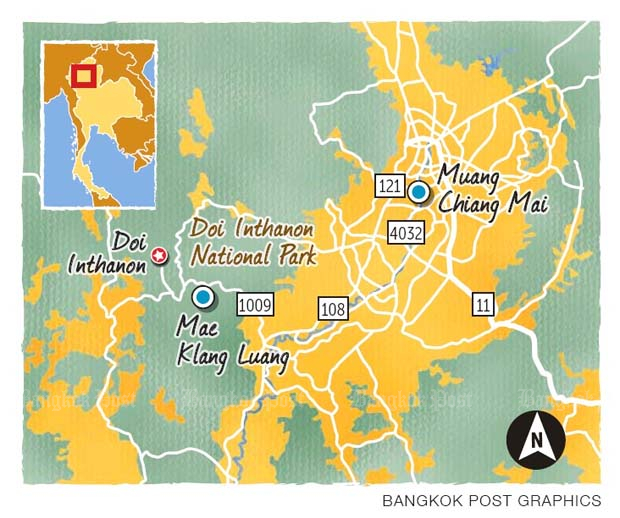
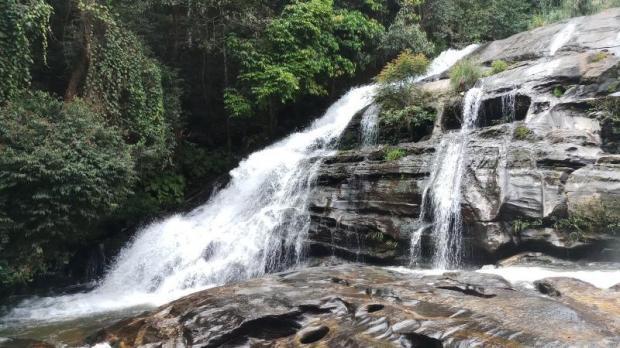
Starting at KM 26 on the road leading to Doi Inthanon, the 5.3km nature trail around Mae Klang Luang Village is suitable for both trekkers and tourists, because visitors can choose between trekking uphill and trekking downhill, which is not tough. The area, about 80km from downtown Chiang Mai, is populated by Karen and Hmong people. Among the highlights are rice terraces and the Pha Dok Sieo Waterfall, which has become well-known since the release of the popular romantic comedy movie Rak Jang (The Memory) in 2006. Dok Sieo is the northern phrase for purple-orchid-tree (chong kho) flowers.
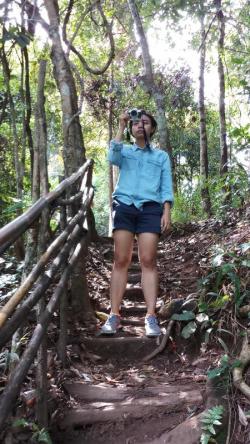
Strolling the Mae Klang Luang nature trail is an opportunity to appreciate the beauty of nature.
Strolling there requires local guides. Thirty Karen villagers from Mae Klang Luang have been so far trained by the national park about how to guide tourists on this route. The training is provided every October. Permits will be issued by the park for those passing the test and must be renewed every year after another test. It takes from a few hours to a half-day (depending on the number of attractions tourists want to visit) to stroll the nature trail to the beautiful Pha Dok Sieo Waterfall and walk downhill to Mae Klang Luang Village, where they can see rice terraces and experience the Karen way of life.
This area is called Mae Klang River Valley, or Mae Klang Ki in the local dialect. It is mostly inhabited by Karen people, or Kanyaw -- meaning modest people. The area consists of Mae Klang Luang, Angka Noi, Nong Lom and Pha Mon villages. Sitting on a high plain, Mae Klang Luang Village is surrounded by fertile forests and is run through by the Mae Klang River and a few other streams. The highest temperature all year round is 25 degrees Celsius.
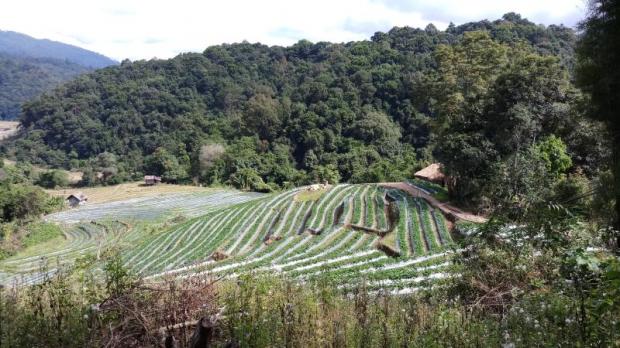
Visiting the area during rice-farming season, from June until November, tourists can see rice terraces on the foots of hills. During this season, visitors can observe or even take part in rice farming. From September until early October, the rice terraces look green. After rain, the area is usually covered in a sea of mist. From late October until early November, the rice terraces are gold with ripe rice. Rice farming there is done with farmers putting rice saplings onto the ploughed soil.
Rice terraces reflect the use of local knowledge of land and water management. Around February, the villagers perform rituals to seek permission from spirits for them to grow and harvest crops and express their gratitude for granting yields. In some of the rice fields, the farmers raise giant freshwater prawns.
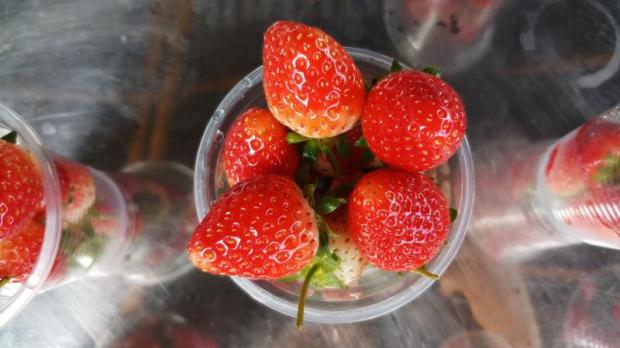
Outside the rice-farming season, tourists can instead observe the growing of temperate plants and try harvesting and buy the yields, such as strawberries, zucchini and flowers like Lily and Gerbera.
Also in the village, there are rainbow-trout farms and organic-coffee plantations. A number of local villagers raise rainbow trout for royal projects and grow coffee trees in the same plots of land as wild plants without using pesticide.
The local villagers still live the traditional way of life. Local wisdom, craftsmanship and knowledge about farming, herbs and more have been passed on from one generation to another.
Local expertise includes herbal medicine, cotton-textile weaving, bamboo basketry, and knowledge about forest trekking, living in the woods, watching native and migratory birds, and the preparation of rice whisky and farm produce as offerings for local rituals. If visitors are lucky, they may be able to witness some of the six major local traditions, such as the rice-harvesting and buffalo-blessing rituals and the New Year and End of Lent blessing ceremonies.
After a long stroll, tourists can conclude the trek by sipping coffee at local coffee shops, including the house of Karen farmer Yosae Kijcharoonchai. Home-grown arabica coffee is boiled in a pot in the old style and poured into small cups for tourists to try for free. On the walls of Yosae's coffee house are old pictures of King Bhumibol Adulyadej and Queen Sirikit's several visits to the area beginning in 1977. The royal couple encouraged hilltribe villagers in the North to stop growing opium and slash-and-burn farming and opt for planting temperate fruits and coffee instead. Their visits changed the local villagers' lives forever and led to sustainable farming and their well-being.
On the way home, tourists may feel tired because they must carry organic vegetables and coffee, strawberries and woven textiles they purchase from Mae Klang Laung Village.