Wales have been keeping the metres running this month as they look to end a long losing streak against the major southern hemisphere nations which stands at 20 matches since they defeated Australia in Cardiff six years ago. Only two of that side remain for Saturday’stoday’s encounter with the Wallabies, Jamie Roberts and Alun Wyn Jones, and the head coach, Warren Gatland, spent the summer working out reasons why his team have been consistently throwing away winning positions against the Sanzar nations.
The last eight defeats to Australia have been by single-figure margins – late kicks and tries invariably costing Wales, and typical of their facility for turning advantage into defeat was the second Test against South Africa on last summer’s tour: Wales at one point led 17-0 and were 13 points ahead with eight minutes to go only to concede two late tries and go down by a point.
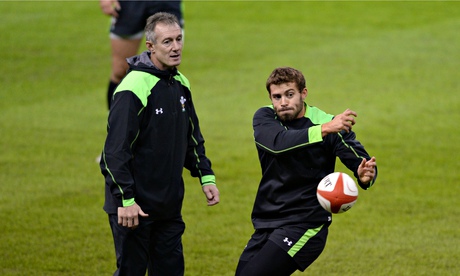
“It’s important that this run stops now,” said the Wales attack coach, Rob Howley. “That means being able to grind out victories in the last five minutes, having composure on the ball, playing the scoreboard and making sure we get over the line. One reason we have found for games slipping away at the end is the step up in pace the players are having to make from regional rugby to internationals against the best teams in the southern hemisphere.
“Players will, on average, run between 50 and 55 metres a minute in the Guinness Pro12. That figure goes up to 65-70 metres in the European Champions Cup, but when you play New Zealand, South Africa and Australia, the figure often goes over 80. In the Super 15, players run an average of 85 metres a minute, so they are coming down in a Test match. What it means is that in the final minutes of a game against one of the three, fatigue sets in, mental and physical, decision-making under pressure suffers and crucial mistakes are made.
“That is why we have made sure that in training in the last two weeks, the players have been running 85 metres a minute and getting used to making decisions and scanning when they have less time and space. It is about being able to play in the final 10 minutes as you do in the first 10 and it has always been difficult for the players to make the step up in the first match of an autumn series, getting more used to it as the month goes on. Warren has manufactured that intensity in training and what we face in the next few weeks is different to when you play northern hemisphere sides.”
Wales started strongly against Australia a year ago in the final match of the month, but a 13-3 lead turned into a 30-16 deficit before a late rally took them to within four points. In 2012, they looked to have won only for Kurtley Beale to finish off a counterattack in the final minute; 12-7 became 12-14.
“We knew we had to change something,” said the Wales captain, Sam Warburton. “We need to match the intensity of Australia from the start and all the players have found training difficult. There is no guarantee that it will work 100%, but we know that in the 20-40 minute period in the first game, where we have been off the pace before, we have covered those metres. We can match the speed the Wallabies play at.”
While Australia have come to enjoy playing Wales, finding various ways to win matches they looked destined to lose, they have in recent years been unable to close out games against New Zealand in the final minutes. They led the All Blacks 28-22 with 10 seconds to go in Brisbane last month, only to concede a try that was converted. Two months before, they had drawn in Sydney.
“It is hard to explain,” said the Australia prop Sekope Kepu. “You need composure in crucial moments at the end of matches and while Wales have lacked that against us in recent matches, we have not shut out games against New Zealand. You need to keep pushing through and you need to be consistent for the whole 80 minutes. I am not sure what it is, but the boys seem to thrive in the atmosphere at the Millennium Stadium.”
When Neil Jenkins played for Wales in the 1990s, the closest they came to the Wallabies was at the kick-off when the scores were level, but a chasm has turned into the smallest of gaps. As Kepu and the Australia fly-half Bernard Foley acknowledged, the question is not if Wales will end the losing run, but when.
“The majority of our starting lineup have beaten Australia in a Lions’ jersey,” said Jenkins, now Wales’s kicking coach. “I know it is not the same, but the players appreciate that the physical and mental side go together. We have come incredibly close so many times.When you are up against Australia, New Zealand and South Africa, they never stop playing. If you beat them, you deserve it because they give you nothing and make you pay when you double- or triple-up on errors at the end. We are going to get it right and I hope it will be sooner rather than later.”
As a New Zealander, Gatland has been especially frustrated by the one smear on his record as Wales’s head coach. “We have got to get across the line and nail one of these victories,” he said. “We had an honest debrief when we came into camp and looked at the second Test in South Africa and focused on why we have put ourselves in positions, certainly against South Africa and Australia, that we did not turn into victories. We have to be more clinical and once you do it the first time, it becomes easier the second and third time.”
With Australia in Wales’s World Cup group next year, the thirst for the first this week is great.