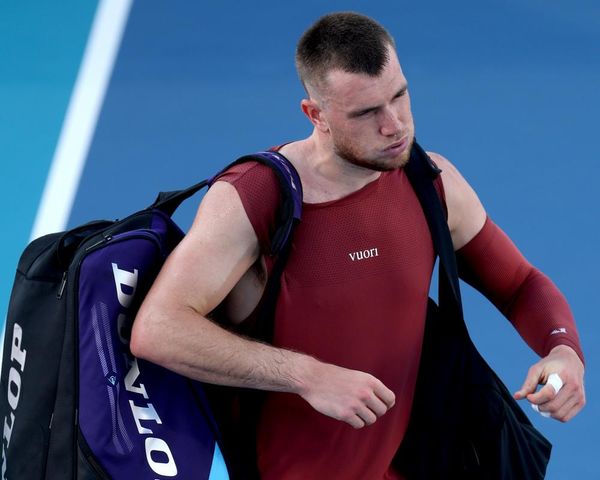
Bernard Foley was quick with a retort when asked why, four years after the Six Nations failed to provide a World Cup semi-finalist for the first time, the prospect of an all-European final with England, Ireland and Wales all confident of making the last four, was far from fanciful. Foley said: “They all have southern hemisphere coaches, don’t they?”
The Australia fly-half, the architect of the 2015 victories over England and Wales has been restored to the side for Sunday’smatch against Wales. It will, after Fiji’s defeat to Uruguay, very probably settle the group title. Wales and Ireland had the same coaches in 2015 when they were knocked out in the quarter-finals by South Africa and Argentina, respectively. Australia saw off England, Wales and Scotland – just – while the Springboks overpowered Scotland and New Zealand flattened France. It was put down as a triumph of ball handling over manhandling, brain-vanquishing brawn, but despite the nationalities of the three head coaches, the gap has closed not through imitation but the reinforcement of traditional virtues.
The meeting between Australia and Wales will be the first and only test of whether there has been a significant shift in the balance between the hemispheres, with New Zealand and South Africa in the same pool. England do have Argentina to contend with next Saturday, but the Pumas have barely won a Test since overwhelming Ireland, in the 2015 semi-final.
“A number of the squads have improved in terms of depth and consistency,” said Foley. “They all have world-class players throughout their 31 and their domestic competitions are set at an extremely high level. It means they play a lot of good football all year round and that can only benefit them when it comes to preparing for a World Cup.”
It is an explanation for the rejuvenation of England and Ireland, the two countries to supply European Champions Cup winners in the past four years. But Wales? The Scarlets did make the semi-finals last year and in 2017 became the last winners of the old Pro 12, but the success of the national side under Warren Gatland has largely been despite the record of the country’s four regions rather than because of it.
“We are not going to look too far back,” said the Wales captain, Alun Wyn Jones, who breaks Gethin Jenkins’s record of 129 Welsh caps. “‘Gats has said that we now perform when the big games come around. We know we have a big test in front of us and we will not shy away from it.”
For all the three grand slams Wales have won in the Gatland era, and the manner they stole the 2013 Six Nations title from England in Cardiff, it will be their defining moment under Gatland, no more than five weeks before he hands over after 12 years in charge. They are expected to win, as Australia’s head coach, Michael Cheika, acknowledged, even if almost in relief. Yet their record against the south’s big three in the World Cup is poor, 10 straight defeats.
While Australia have largely struggled since reaching the final four years ago, they tend to dig deep in a World Cup. They have reached three finals, more than anyone else, and one semi-final in the five tournaments in the professional era, their one failure coming when England burst their tyres at the Stade Velodrome in the 2007 quarter-final.
They were in no better shape four years ago than now. Cheika, less than a year into the job, turned to experience then and he has done so again. Wales ended a run of 13 consecutive defeats to Australia in Cardiff in November, but matches between them this decade have tended to be tight, often decided by a late score.
“We made changes to the backline from the Fiji game because we want to produce different pictures,” said Cheika. “It was not a response to what happened that day but something we thought about from the very start. Wales are a very well-drilled side, but our players know what their jobs are.”
Cheika has loosened the reins this year in an attempt to made his side more difficult to read in an age of constant analysis. It did not work against Fiji who revel in chaos, but if there is a reason why it may be premature to anticipate an all-European final, it is that England, Wales and Ireland are not at their most comfortable dealing with the unexpected. Australia will be armed with the element of surprise and they have a turnover specialist in David Pocock. “There is no one style of play that guarantees you victory,” said Cheika. “When I coached Leinster, we played in a very different way to Munster but both teams were successful. I just like my teams to play footy.
“When we first came together at the start of the year and started talking about playing a different way, there were a lot of blank looks, especially from the playmakers because they are so used to pre-calling everything. A certain amount of unpredictability is good.”
Wales do not see it that way, but they will need to deal with the unexpected.