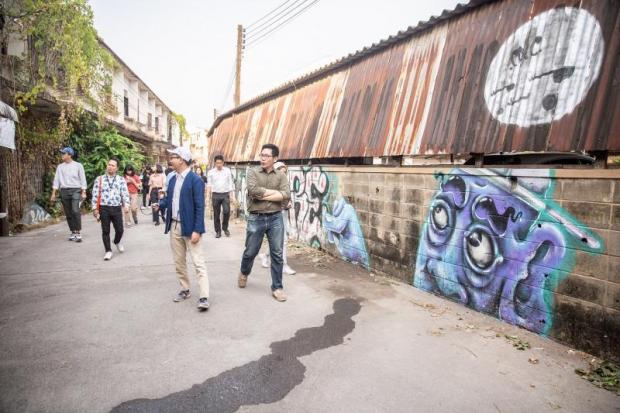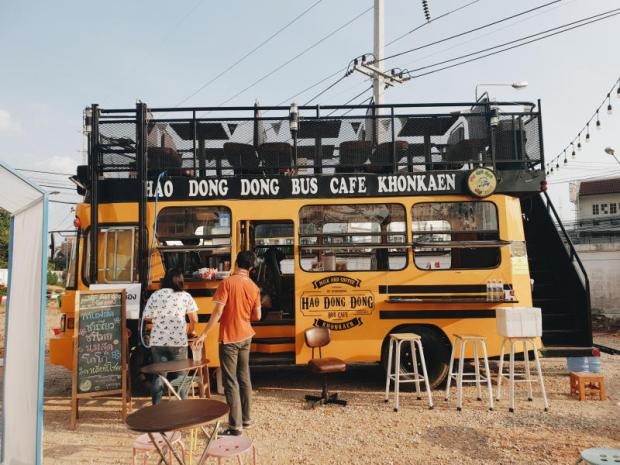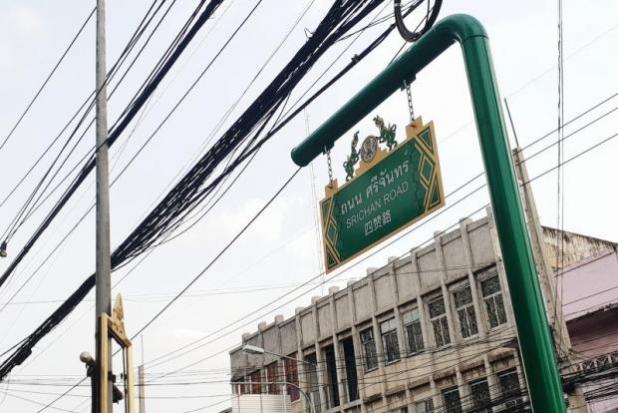
Walking along Khon Kaen's historic Srichan Road, you might expect tumbleweed to roll past at any given moment. The shophouses that line the street are shut -- empty and abandoned. Roadside restaurants are scarce and vacant. Apart from the one café and jazz bar down the street, there's nothing to see or do. Srichan Road, put simply, is dead. Thankfully, the Creative Economy Agency (CEA) and Khon Kaen Municipality, are planning to change that.
"If we look at Srichan through a current lens, we feel that there is nothing at all. That it's boring," said Supakorn Sirisoontorn, designer and advisor for Khon Kaen Municipality. "But if we look at it through the lens of the past, there is evidence that this area used to be fabulous -- because of the architecture, the metal railings and the fonts used on the business signs, which show that in the 60s and 70s Srichan was a prosperous area."
As one of the main roads cutting through the major Northeastern city of Khon Kaen, Srichan used to be a flourishing area full of businesses, cinemas and learning centres. Yet, as time went by, consumer behaviour changed along with the economic situation. Slowly, businesses began closing down or moving elsewhere and what once used to be a bustling area turned into a ghost town.
Seeing this dire situation and the reduced quality of life among locals, the CEA -- which was established by the Thailand Creative & Design Centre (TCDC) -- has joined hands with Khon Kaen Municipality and locals in order to develop the area into the first ever creative district in the Northeast. With CEA's main mission to promote creativity as the driving force behind a balanced and sustainable economy, many steps must be taken in order to revive Srichan Road and help it reach its full potential. "We feel that there are still some interesting assets," said Supakorn. "We want to wake the dead in order for the area to be more full of life. We think that creativity is one of the tools."
Thorough research and surveys of the community have turned up six main problems that have to be tackled in Srichan in order to see any improvement. The first issue is travel; it's difficult to get around Srichan due to a lack of public transportation. Second, there are no parking spaces. Third, there are no attractions in the area. As a result, Srichan just doesn't attract any new business. The fourth issue is the bleak environment, which doesn't encourage people to go outside. The fifth problem is there is no sense of community; locals don't talk to each other anymore and thus don't know much about their own community. And finally, when anyone comes to Khon Kaen, nobody thinks of Srichan Road. They just don't know about it.
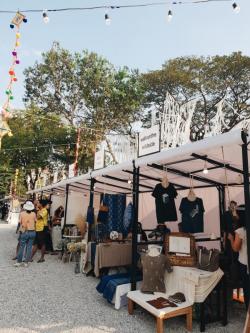
Khon Kaen's first Isan Creative Festival gives an idea of Srichan's potential.
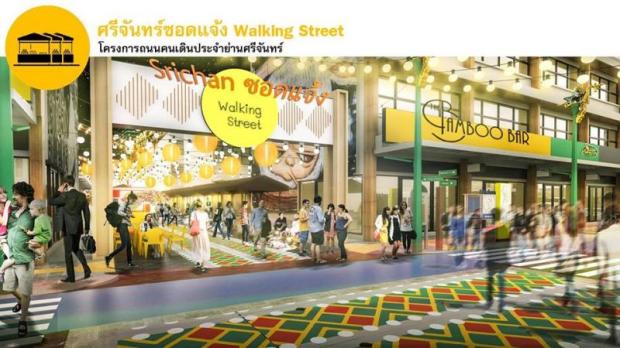
Going through these problems one at a time, the CEA and the Municipality started creating projects in order to bring local people together. Once there is a larger sense of community, the second phase is renovating and restoring the area. With the help of locals, designers and creatives, they plan on creating a walking street and business club, and hope to develop public transport in order to provide easier access. Locals want Srichan to be "old but cool" and to be a "creative business area" which will attract talented people.
"Khon Kaen has people in the creative economy," said Supakorn. "Having spaces like this will create a stronger ecosystem for them. For example, people who are in design or make movies or music, we want them to have a space or district where they can exchange ideas. In Bangkok, that's somewhere like Charoen Krung or Charoen Nakhon where the hipsters hang out. But in the provinces, these areas will serve both creative types and tourists, like in Phuket's Old Town or Chiang Mai's Nimmanhaemin. We want to see these models happening in Khon Kaen. Whether it be businesses, restaurants or offices -- they will help each other out."
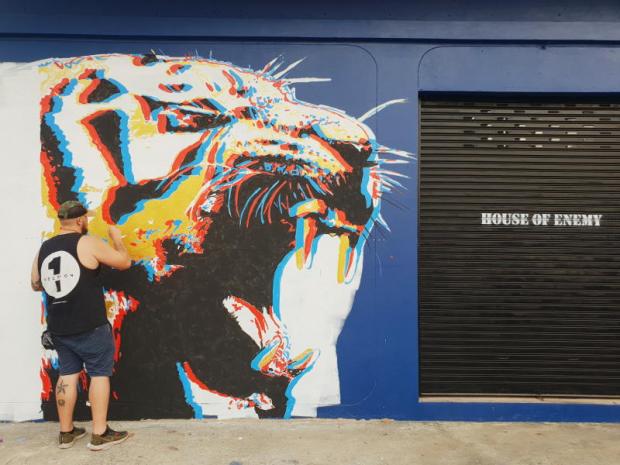
As in Charoen Krung, the CEA is focusing on using abandoned buildings to host activities and events in order to show locals the area's capabilities and potential. It's also organising events such as the Isan Creative Festival -- the first of its kind in the Northeast -- to attract local creatives and introduce locals to the idea of a creative district. "Bangkok Design Week was our model," said Montinee Yongvikul, festival director. "But we call it the Isan Creative Festival because Khon Kaen is the gateway and the meeting point [for Northeasterners]. We want Isan creatives to come show their skills."
For now, the challenge for the CEA and the municipality is expressing to locals what they want to accomplish. "The first job would be to create awareness," said Karin Kungwankitti, project manager of the Creative District Programme. So far, they are in the early stages of development. They've been able to enter two communities to renovate their shops and let designers come in and work directly with locals. According to Karin, the creative district of Srichan will be the first to reflect "Khon Kaen-ness" and "Isan-ness", and to develop its economy and quality of life while keeping the region's roots intact.
"We don't want to develop Khon Kaen to just be a liveable city," added Supakorn. "We want to live here and be happy, with pleasantness and beauty … We believe that if people here live happily, it should create new things within the area, and there will be more social contribution and help. This type of ecosystem and environment in a city should solve many problems in this country, like indifference to suffering. We also have hope in the creative economy -- that it should be a tool in order to develop the city as not only liveable but pleasurable."
One problem that comes to mind, of course, is that if Srichan does develop into the next Charoen Krung, won't gentrification be a problem? "Of course that's an issue," said Montinee. "But gentrification in Khon Kaen isn't like in Bangkok. In Bangkok, land was cheap and then it became expensive. But right now, the problem with Srichan [due to the municipality promising so many improvements] is that the price of land has skyrocketed. Expectations have gone so far but the actual infrastructure hasn't even arrived yet."
Hopefully, the CEA and the municipality can get over this hiccup, because if Srichan is left undeveloped any longer, it will remain a shadow of its past glories.