Matt Collins, founder of digital marketing agency Platypus Digital
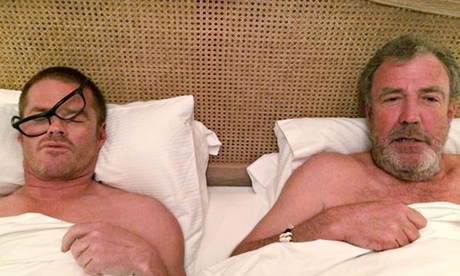
I like #wakeupselfie – it’s silly, social, genuine and raises money for Unicef and Syria, so has a real impact on people’s lives.
Every time we think campaigns like these have had their day, another one springs up in its place. I was talking to a colleague recently about how much longer we give #icebucketchallenge (seven-10 days we thought) – #wakeupselfie sprung up in that time.
Social media has been encouraging people to share the irreverent and funny details of their lives for years. The best campaigns capitalise on this.
I don’t buy the idea that they appeal to people’s vanity – personally, knowing what friends look like first thing in the morning is fun, and I don’t think any of them are vain.
I think the idea that it’s vain or self-centred to publicly share anything involving ourselves that raises money for charity is dangerous. It forces people back to some sort of 1950’s belief that good deeds must go unnoticed. That’s wrong – we should be sharing them and inspiring our ever closer networks to do the same.
Tony Elischer, founder of Think Consulting Solutions
2014 was the turning point for the fundraising power of social networks. #nomakeupselfie was a major wake up call for those charities smart enough to listen, it signalled that there really was no such thing as “normal fundraising” any more, ie, creating propositions and activities to which people respond. It means that charities can never be fully in control again, they have to be ready to roll with the opportunities.
Perhaps for about 60% or more of the people doing the ice bucket challenge, the cause was very much secondary, but does that matter? Many will have stopped to ask “What is ALS?” and then made their donation. I have always believed that the secret to brilliant fundraising is to integrate into people’s lives and make it natural to give or act, even if that act is a moment of silliness.
Harnessing this momentum, Jemima Khan is leading on #wakeupcall selfie campaign for Unicef, the difference is that it is centred on a celebrity and her celebrity friends as a catalyst to reach the wider public. Some might say the focus is too much on Khan and famous people. But, with friends such as Stephen Fry posting a picture to his 7.5 million Twitter followers, this will get traction. It’s also much easier to do than the ice bucket challenge with winter on is way.
Each of this year’s big initiatives are distinctly different, but all are built around speed, freshness and power of social networks. It is estimated that the wake up challenge has already reached three 300 million people, something of which the Unicef marketing budgets could only dream.
Zoe Amar, founder of Zoe Amar Communications
More than ever we are seeing the public come up with their own fundraising drives, which are spreading like wildfire on social media. #wakeupselfie has big shoes to fill. #icebucketchallenge raised more than $100m in 30 days for the ALS Association and £7m for the Motor Neurone Disease Association. It was fun, easy to participate in and took off once celebrities such as Lady Gaga and Benedict Cumberbatch got involved. It captured people’s imagination and boosted awareness of motor neurone disease.
#wakeupselfie is focused on a specific, hard hitting issue, namely the millions of children caught up the conflict in Syria who need urgent humanitarian aid. Are glossy celebrity selfies the best way to achieve the campaign’s aims? #icebucketchallenge and #manchdogs – the appeal for Manchester and Cheshire Dogs’ Home – were exciting and vibrant because they were led by ordinary people. If Unicef’s campaign is to achieve the same kind of results that is who they ultimately need to reach, not just celebrities.
For fundraisers, it’s impossible to predict what the next successful campaign of this ilk will be, and that in itself is exciting. The space is being watched.
Matthew Sherrington is an independent charity consultant at Inspiring Action Consultancy
#wakeupcall for Syria is the latest social media fundraising campaign to press angry buttons (granted, some celebs are already over-exposed, never mind having to see them bleary-eyed). But getting angry about fundraising is nothing new. The #icebucketchallenge raised $100 million, but even the charity sector showed its nasty side. Fundraising seems to cause people unwarranted annoyance. Is it the being asked, or the vacuity of celebrity endorsement? Or is it the uncomfortable truth that, without being asked, you wouldn’t give at all. We’d all like to think we are generous, that we give spontaneously, and if only charities would get out of our faces and let us do that. But, no one wakes up in the morning thinking: “I’m going to give to charity today.”
To give, we need to be inspired, moved. We need to be asked. And we like it if it’s fun. Challenges, for yourself (like running marathons), or to others, are fun. Is the money given less worthy because the person isn’t engaged in the cause enough? Who’s judging?
Social media does it differently. Social media reaches people other fundraising doesn’t. Celebrities push it around further. If it’s not for you, you’re not the audience. The next one is #gowiththeflow. It’s about saving water and money by peeing in the shower.
For more news, opinions and ideas about the voluntary sector, join our community – it’s free!