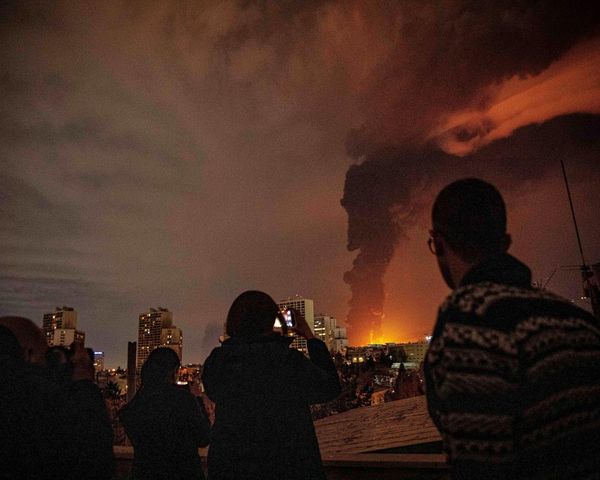
The World Bank has estimated that a huge explosion at Beirut port caused as much as $4.6 billion in damage to homes and infrastructure, and the bank’s regional head said this should be a catalyst for reforms to unlock reconstruction funds.
Lebanon has regularly turned to the international community for help during its slow reconstruction since a 1975-1990 civil war but its failure to reform a system blighted by corruption and mismanagement has often deterred donors and investors.
“This time around, the shock is so big, it is such a self-inflicted wound ... that I really hope and believe there will be a wake-up call,” World Bank Vice President for Middle East and North Africa Ferid Belhaj told Reuters.
He was speaking after the release of the bank’s Rapid Damage and Needs Assessment report on the Aug. 4 blast that shattered a swathe of Beirut, much of it an area that had already been rebuilt once following the civil war.
The World Bank report on the blast, blamed on a massive amount of ammonium nitrate stored poorly at the port, estimated physical damage at $3.8 billion to $4.6 billion.
Other losses, such as the knock to economic output, ranged from $2.9 billion to $3.5 billion, it said.
Lebanon, already crushed by a mountain of debt, has appealed to the international community for help.
Donors, led by French President Emmanuel Macron who is visiting Beirut this week for the second time in a month, have demanded a new government tackle endemic state corruption and implement other reforms to secure support.
Belhaj blamed “basic mismanagement” for the blast and economic crisis ravaging the economy even before the explosion.
Top officials, including the current president and caretaker prime minister, knew about the stockpile, which arrived at the port in 2013, but failed to remove it from the densely populated area.
Belhaj said Lebanon would have to attract foreign state aid and private investment to recover but that the global coronavirus crisis had made the task more challenging.
“The Lebanese need to wake up to the cruel reality that it is not like money is waiting to be spent on the country,” he said. The government needed to show more transparency, make sure the judiciary functioned properly and improve governance.