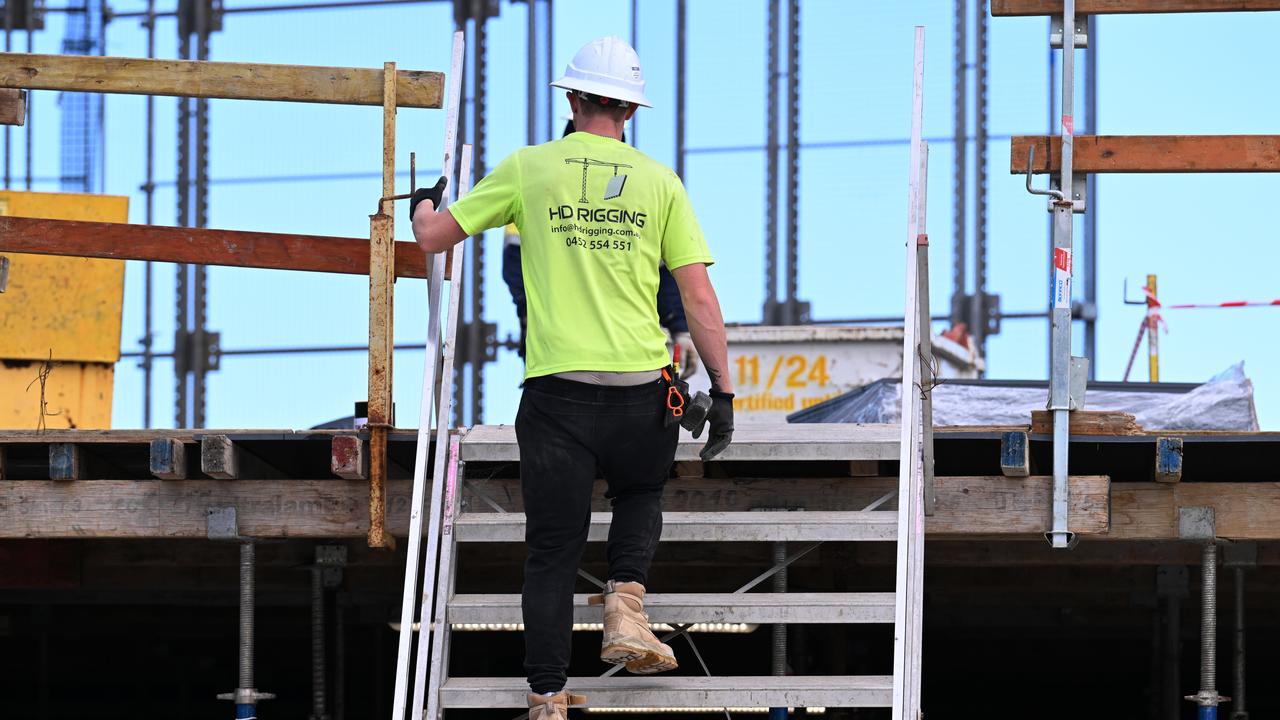
Young tradies scaling scaffolds and laying down the foundations for Australia's housing rebound are substantially more likely to end their own lives than other employed men.
A study has found male construction workers have an elevated suicide risk, prompting warnings over workplace bullying.
The Australian construction sector employs about nine per cent of the working population.
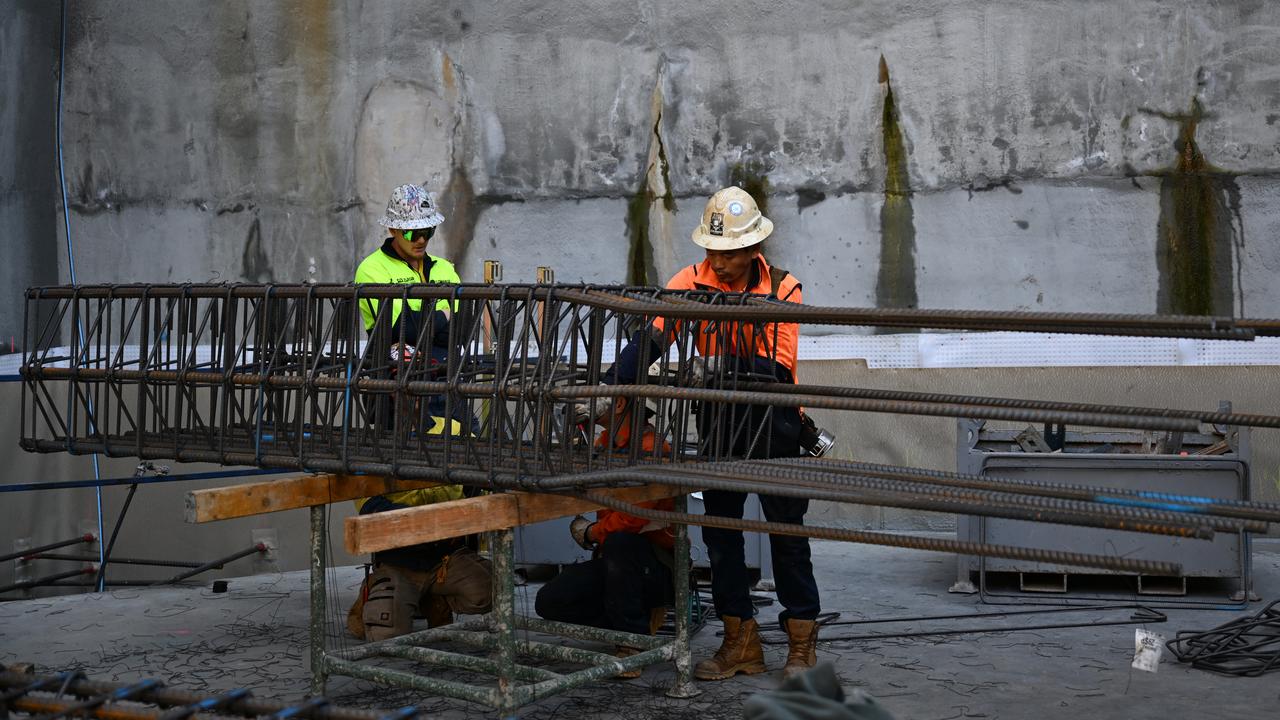
New data shows workers aged 25 to 34 have the highest suicide rates in the sector, at around 35 deaths per 100,000.
With a 400,000 strong workforce, NSW has the highest number of male construction worker suicides of any Australian jurisdiction, with 1176 deaths recorded in the past 19 years, according to latest official figures.
This was followed by Tasmania with 124 deaths over the same period.
Long-term analysis of national coronial data shows male construction workers in NSW have a suicide rate of 24.3 per 100,000 compared with 13.1 per 100,000 for other employed men.
Marti Amos, founder of support platform The Professional Builder, said the industry could no longer treat bullying, isolation and psychological pressure as secondary workplace issues.
"Many of the younger people the (construction) industry needs most are entering worksites where bullying, long hours, financial pressure and isolation can become part of the culture if they are not actively addressed," he said.
"That should be a wake-up call for every builder, subcontractor and site manager in NSW."
The NSW government says efforts are under way to embed mental health awareness and psychological safety into workplace training as core capabilities.
This includes helping workers recognise the early signs of mental health challenges and encouraging help-seeking behaviours.
"Young tradies play a vital role in building a better NSW, and we are committed to addressing the pressures that can affect their mental health and wellbeing," a spokesperson said.
Researchers from RMIT, Deakin University, and University of Melbourne identified a range of factors linked to elevated suicide risk.
These included mental health stigma, masculine norms that discourage help-seeking, low job control and periods away from family and support networks.
Mr Amos says these pressures are now being intensified by tighter project margins, labour shortages, rising operating costs and increasing pressure on builders to deliver homes at a time when affordability is already stretched.
That's compounded by the pressure to deliver large-scale housing and infrastructure programs, including 1.2 million new homes by 2029 under the National Housing Accord.
"The sector cannot meet these targets if our apprentices are burning out, leaving the industry, or being exposed to workplace cultures that increase psychological distress," Mr Amos noted.
"If the people building the homes are under unsustainable pressure, the pipeline itself is at risk."
AAP has contacted NSW's Building Commission for comment.
Lifeline 13 11 14
beyondblue 1300 22 4636