Inland, the snow dominated the landscape as it did the hills to the north. The tide was beginning to turn, to the satisfaction of the birds waiting to feed on the rich harvest to be uncovered.
Hooded and carrion crows squabbled, as only crows can, over any scraps on the edge of the water. Three feral doves patiently walked the edge of the water. Sometimes a slightly higher wave would push them into the air for a brief, hurried flight and their vivid white rumps almost sparkled even in the weak winter sun.
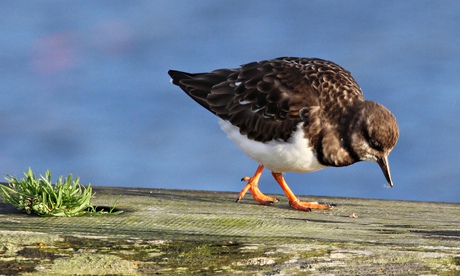
Oystercatchers and redshank were also waiting for the tide to ebb, but the birds that stole the show were the turnstones. Several were asleep on the harbour wall, short orange legs contrasting with their drab-looking plumage.
Though most of their many Gaelic and Scots names (others include “Hebridean sandpiper” and “stanepecker”) refer to the way the birds turn over small stones searching for food, in Shetland they are also called “ebb pickers”.
Being stocky birds with tortoiseshell colours to their plumage, they are also known as sea dotterels (though they are no longer officially part of the plover family, having been reclassified among the sandpipers). The second part of its Latin name, Arenaria interpres, meaning “messenger”, refers to its tuck-tuck-tuck alarm call.
Under the stones will be sandhoppers, small crabs and a variety of insects. If the stone is too large to move with its beak, the bird will use its breast to help it push it over to reveal the world below. If the stone is particularly large, more than one bird will help to move it.
Turnstones can be very tame and will feed almost at one’s feet. They are only the size of blackbirds but despite their small size, these birds, sleeping on Nairn harbour wall, will have bred in the Arctic, perhaps in Greenland or even north-east Canada.
Follow Country Diary @gdncountrydiary