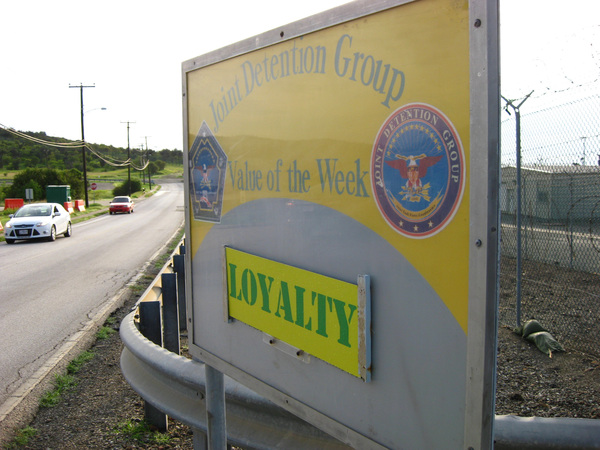
GUANTANAMO BAY NAVAL BASE, Cuba _ At the detainee library recently, the Army captain in charge divulged that he had ordered Season 4 of "Desperate Housewives" after a detainee wrecked the collection's DVDs of Seasons 1 through 3.
Three stops later in the monthly media tour, the man who serves as warden explained why. The destructive detainee was a fan of the show and "disappointed that the new ones hadn't come in," said Army Col. Stephen Gabavics.
This was the last media opportunity inside the Detention Center Zone before the presidential election, and the leadership offered a finely-honed message of full support for this commander in chief's 2009 closure order, while preparing for prison life after President Barack Obama leaves office.
And accessioning Season 4 of "Desperate Housewives" for the 35,000-item detainee lending library is the least of it.
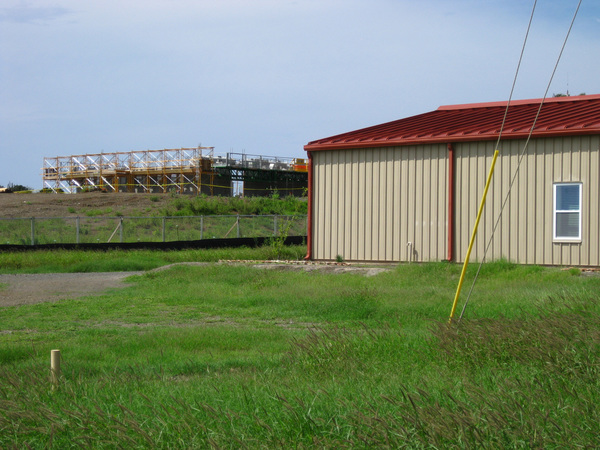
The skeletal structure of a $12.4 million dining hall _ for the exclusive use of hundreds of staff assigned to the prison that today holds 60 captives _ is rising not far from the commander's eavesdrop- and hurricane-proof headquarters that opened in 2004 at a cost of $13.5 million. Elsewhere, contractors are remodeling a cellblock at an empty state-of-the-art, 100-cell prison building, Camp 5, which will become a new, $8.4 million health clinic and psychiatric ward to serve fewer than four dozen prisoners.
"We are planning for closure. That's the direction we're given," the Detention Center Zone commander, Rear Adm. Peter Clarke, told five reporters representing news outlets from China, Germany, Spain, Tennessee and Miami the morning after he was the featured speaker at the base Navy Ball. But he also made a pitch to build new barracks even as he plans to cut three Military Police Companies from his guard force by year's end, shrinking his staff to 1,600. "I think it's my professional responsibility to continue to look at what we can, should and must do if we're going to be here for an extended period of time."
Un-prodded, the submariner offers that his staff is envisioning detention operations "10 years from now."
The commander's cultural adviser, a Jordanian-American Muslim man known to the captives as Zaki, says the detainees are more interested in the American presidential campaign than the World Series.
But nobody on the tour will hazard a guess on who the 60 foreign captives from 13 nations favor:
Hillary Clinton, as secretary of state, was a strong supporter of Obama's failed closure plan, which cut down the detainee population to a fourth of the approximately 240 captives who were left there after the administration of George W. Bush released or repatriated about 540 war-on-terror prisoners. Her Republican opponent, Donald Trump, has vowed to "load it up with some bad dudes."
"They watched all three debates," says Zaki, some in the original English on Iran's Press TV and others through Arabic translation on Lebanon's Al-Mayadeen satellite channel. Both are subscription-free channels available in the communal cellblocks. He predicts that on election night, "they'll watch it live."
Camp 7, the secret super-max-style lock-up of 15 former CIA captives, six awaiting death-penalty trials for al-Qaida's USS Cole and Sept. 11 attacks, is not up for discussion.
But for the captives who got here mostly from 2002 to 2004, the command staff is brainstorming quality-of-life improvements that, in some instances, seem to take a page from the Geneva Conventions.
Gabavics, the warden, is exploring whether the prison can provide "aquaponics" to the captives who live in communal confinement. Gardening efforts through the years have failed at the searing seafront property. These days, the only thing the captives have succeeded in growing is mint, a taste of home for their tea, planted in a recreation yard that reporters are not allowed to see.
Commanders are also discussing whether they can set up a commissary _ under the Geneva Conventions prisoners of war are entitled to a canteen _ where cooperative captives could trade points earned for good behavior for personal hygiene products, rather than take prison-issue basics.
It's just an idea. No action officer has given Clarke a report yet. But the commissary would let captives trade points earned for good behavior for choices in toothpaste, deodorant and soap. "The goal would be to provide a little more decision-ability," says Clarke, who is due to return to the Navy from this job supervising troops from across the services early next year.

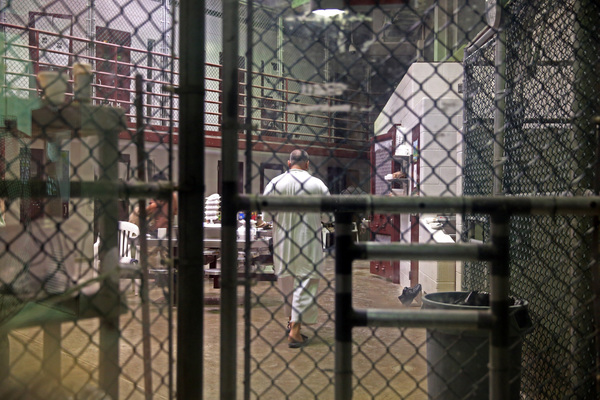
What the knot of international reporters did get to see was Saturday night prayer. Groups of captives in hospital-style uniforms could be seen through one-way glass standing hip to hip in communal ritual carried out across several cellblocks.
But not in Hotel Block. There, two Army guards occupied the common area meant for communal activities. Locked inside one of the cells was Ali Hamza al-Bahlul _ the prison's lone convict, serving life for conspiring with al-Qaida as Osama bin Laden's media aide.
The prison visit came two weeks after Hurricane Matthew brushed past, causing no meaningful damage to the base but devastating a western portion of Haiti.
On the base, the commander sent 717 family members plus several dozen pets to safe haven in Pensacola, just in case. And at the prison, troops moved the 15 former CIA captives from Camp 7 to a secret hurricane shelter that nobody would describe, and unplugged the satellite dishes used by the other 45 detainees in Camp 6, a 200-cell state-of-the-art building. "There was no appreciable damage to any of our camps," said Clarke, responding tersely to a question of whether he had to get the CIA's permission to move the men. "The Department of Defense operates all the detention facilities here."
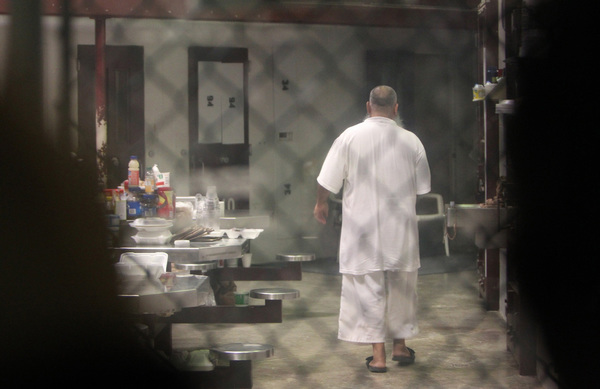
For the 45 run-of-the-mill detainees of Camp 6, that meant issuing them pork-free Meals-Ready-to-Eat, rations, and locking down each man in his cell until the storm passed. Just in case.
Zaki said the "shelter in place," as the military called it, went smoothly _ no complaints from the captives, who were briefed on the progress of the storm.
So much so, said Zaki, that Gabavics and Clarke thanked them _ an account that can't be verified since even now, 14 years into their detention, reporters are not allowed to speak with captives.
For the storm, most troops evacuated the Detention Center Zone to bivouac at the base gym or ballroom. But the few guards who were necessary to manage the 45 captives of Camp 6 slept in an empty block, their cell doors unlocked _ unlike the detainees.