Get all your news in one place.
100's of premium titles.
One app.
Start reading
Reuters
Reuters
Entertainment
Jakub Riha

Waiter, there's a fly in my waffle: Belgian researchers try out insect butter

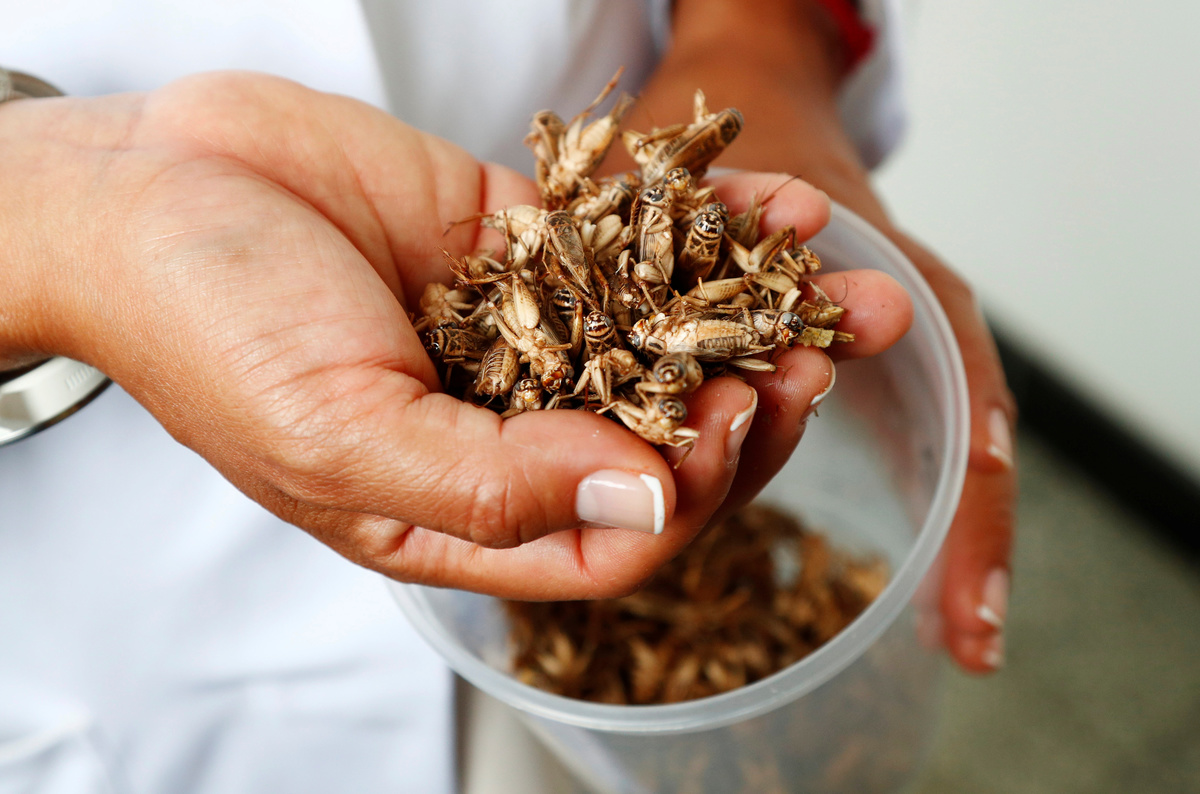
Dr. Daylan Tzompa Sosa holds a handful of crickets at Ghent University, Belgium February 27, 2020. REUTERS/Francois Lenoir

Belgian waffles may be about to become more environmentally friendly.

Scientists at Ghent University in Belgium are experimenting with larva fat to replace butter in waffles, cakes and cookies, saying using grease from insects is more sustainable than dairy produce.
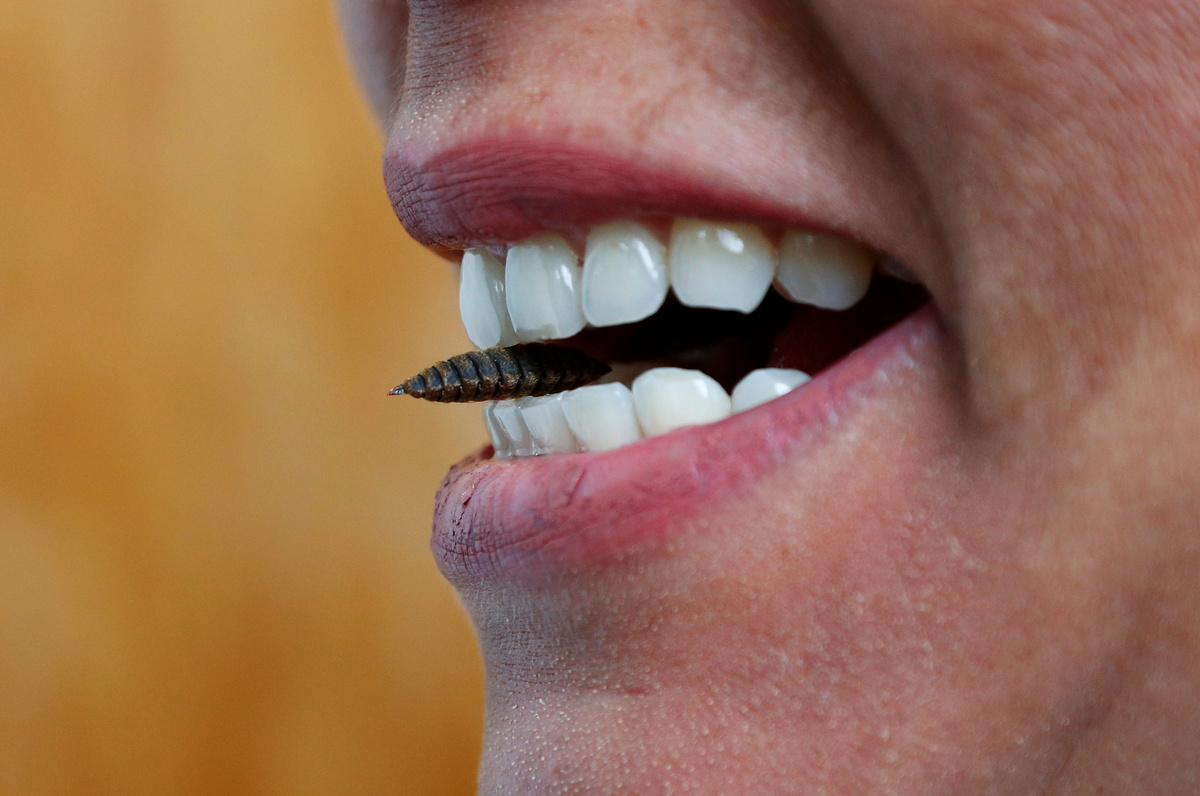
Dr. Daylan Tzompa Sosa from the University of Ghent poses with a black soldier fly larva between her teeth at Ghent University, Belgium February 27, 2020. REUTERS/Francois Lenoir

Clad in white aprons, the researchers soak Black soldier fly larvae in a bowl of water, put it in a blender to create a smooth greyish dollop and then use a kitchen centrifuge to separate out insect butter.

"There are several positive things about using insect ingredients," said Daylan Tzompa Sosa, who oversees the research.

"They are more sustainable because (insects) use less land (than cattle), they are more efficient at converting feed ... and they also use less water to produce butter," Tzompa Sosa said as she held out a freshly baked insect butter cake.
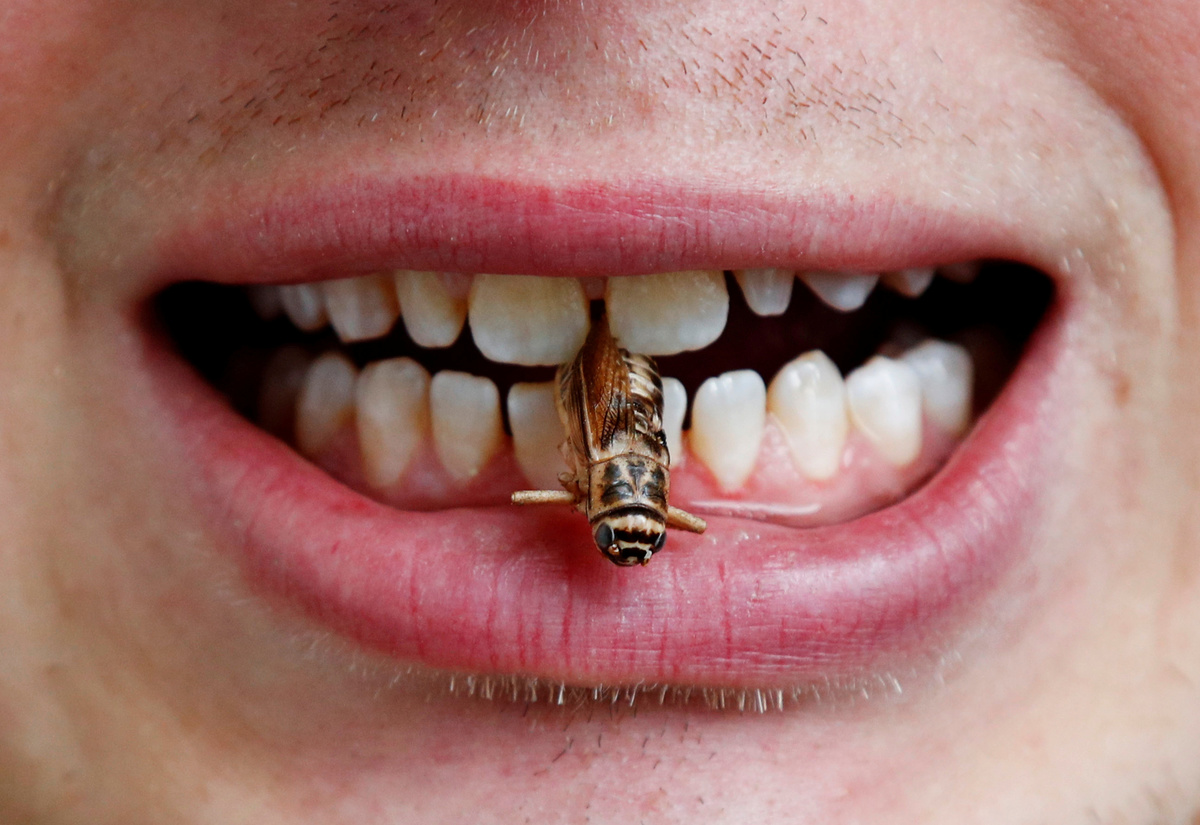
Dr. Joachim Schouteten from the University of Ghent poses with a cricket between his teeth at Ghent University, Belgium February 27, 2020. REUTERS/Francois Lenoir

According to the researchers, consumers notice no difference when a quarter of the milk butter in a cake is replaced with larva fat. However, they report an unusual taste when it gets to fifty-fifty and say they would not want to buy the cake.

Insect food has high levels of protein, vitamins, fiber and minerals and scientists elsewhere in Europe are looking at it as a more environmentally friendly and cheap alternative to other types of animal products.
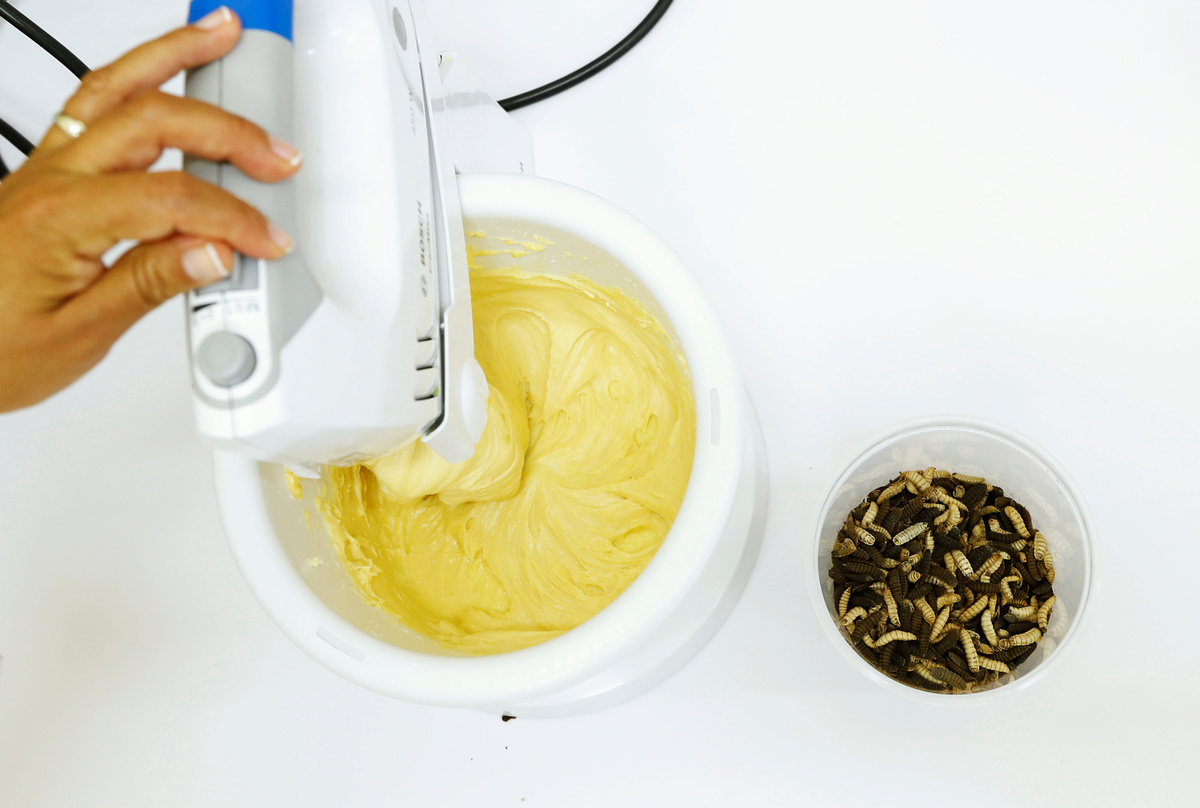
Dr. Daylan Tzompa Sosa from the University of Ghent prepares cake mixture made with fat from black soldier fly larvae at Ghent University, Belgium February 27, 2020. REUTERS/Francois Lenoir

(Reporting by Jakub Riha, Ciara Luxton and Christian Levaux; Editing by Gabriela Baczynska/John Chalmers/Susan Fenton)
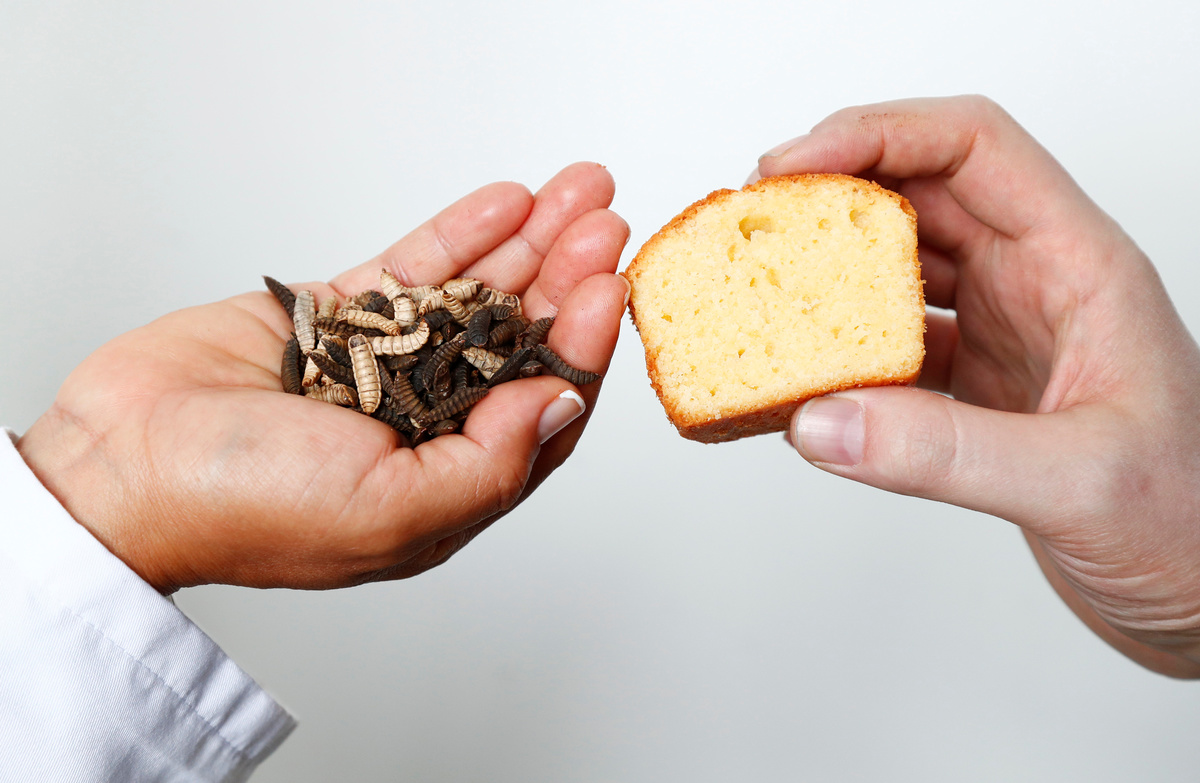
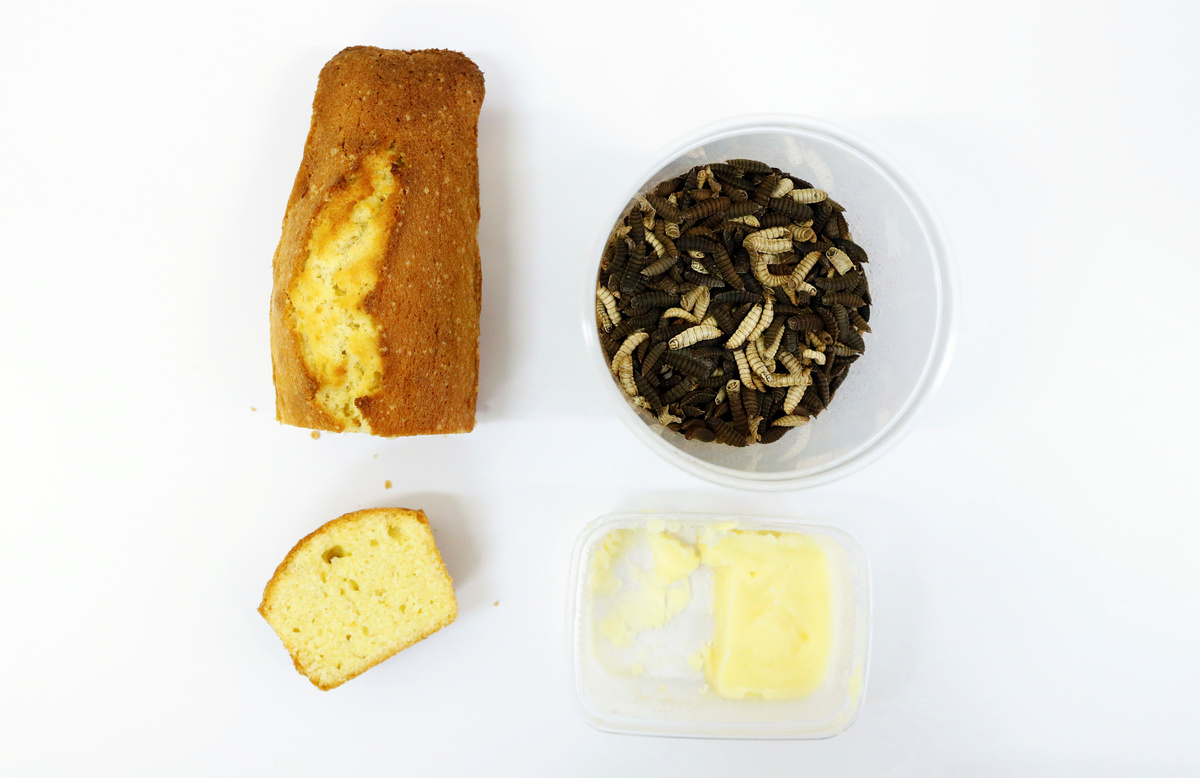
Black soldier fly larvae and a piece of cake are displayed at Ghent University, Belgium February 27, 2020. REUTERS/Francois Lenoir
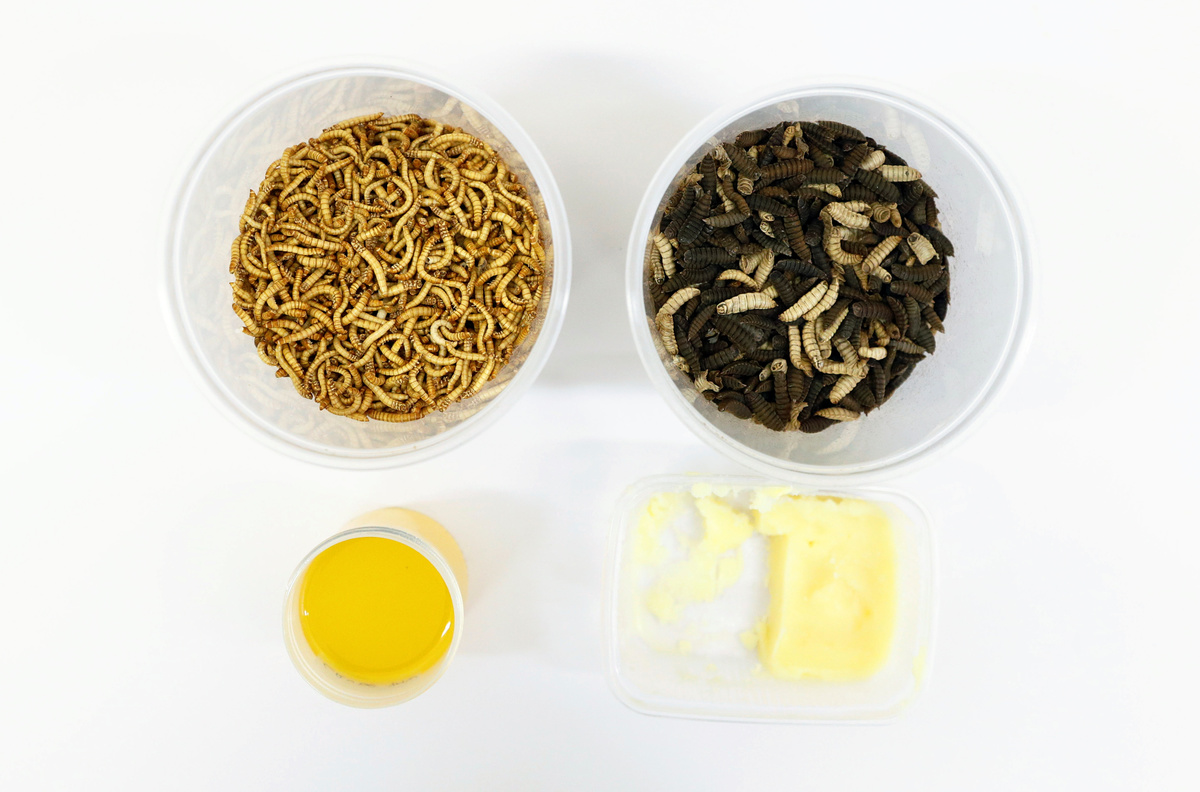
Yellow mealworms and black soldier fly larvae are displayed next to extracted oil and fat at Ghent University, Belgium February 27, 2020. REUTERS/Francois Lenoir
Black soldier fly larvae and a piece of cake are displayed next to extracted fat at Ghent University, Belgium February 27, 2020. REUTERS/Francois Lenoir
Sign up to read this article
Read news from 100's of titles, curated specifically for you.
Already a member? Sign in here
Related Stories
Top stories on inkl right now
One subscription that gives you access to news from hundreds of sites
Already a member? Sign in here
Our Picks
Fourteen days free
Download the app
One app. One membership.
100+ trusted global sources.