
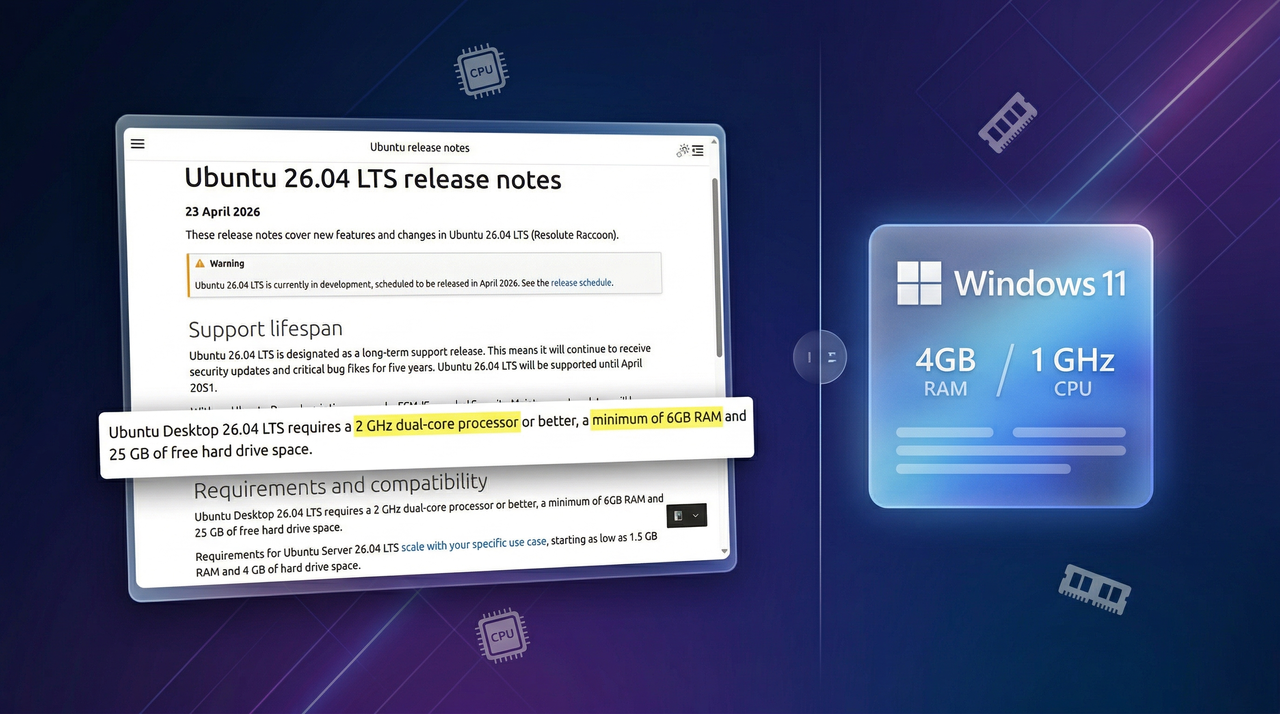
Ubuntu 26.04 LTS (Long Term Support), developed by Canonical, is scheduled for release on April 23, 2026, with updated desktop requirements, including a 2GHz dual-core processor, 6GB of RAM, and 25GB of storage.
From Windows 11's perspective, these specifications go beyond what's normally required for a smooth desktop experience. However, the two platforms differ notably in how strictly they enforce these requirements.
What the new requirements mean for users
This update challenges a long-standing view. Windows 11 has often been criticized for requiring modern hardware, especially given its strict minimum requirements. Linux, and Ubuntu in particular, has historically been the fallback for older or less powerful hardware.
Ubuntu 26.04 changes that perception. The 6GB of RAM recommendation, along with a 2GHz processor requirement, shows that the modern Linux desktop is no longer focused on low-end systems. However, the difference lies in enforcement. For instance, Windows 11 enforces a hard minimum. Devices with less than 4GB of RAM or unsupported CPUs (and are 1GHz-dual-core or faster, with at least 64GB of storage) are blocked from installation, unless you use workarounds.
Ubuntu takes a different approach. While it recommends higher specs for the smooth experience, the installer does not prevent installation on systems with 4GB of RAM or lower CPU speeds. Users can still run the operating system, even if performance is reduced.
This flexibility preserves one of Linux's biggest advantages. Even as Ubuntu evolves toward modern hardware, it allows older systems to stay in use.
The difference under the hood
Ubuntu 26.04's higher baseline comes from a modern desktop stack, as updated GNOME components, Wayland support, and extra background services for security and sandboxing all increase processor and memory demands.
Windows 11 distributes requirements differently. It enforces hardware-level security features, such as TPM 2.0 and Secure Boot, and blocks installation on devices under the minimum memory threshold. Processor and memory checks are strict, so unsupported machines cannot proceed without workarounds.
Ubuntu's installer is more flexible. It evaluates your hardware but doesn't stop the installation if specs are below the recommended level. You can still install and use the operating system, though performance may be slower.
The bigger picture
From the perspective of Windows 11, Ubuntu's latest release shows that modern desktop operating systems are becoming more similar in hardware requirements. The idea that Linux is always lightweight no longer fully applies to flagship desktop releases like Ubuntu.
The approaches still different. Microsoft enforces strict rules to ensure consistent performance, security, and support, while Ubuntu focuses on flexibility, letting users decide how far to push their hardware.
What are your thoughts on this Linux distro requiring more hardware than Windows 11? Let me know in the comments.
More resources
Explore more in-depth how-to guides, troubleshooting advice, and essential tips to get the most out of Windows 11 and 10. Start browsing here:
- Windows 11 on Windows Central — All you need to know
- Windows 10 on Windows Central — All you need to know

Join us on Reddit at r/WindowsCentral to share your insights and discuss our latest news, reviews, and more.