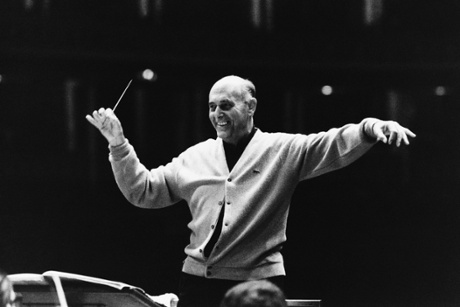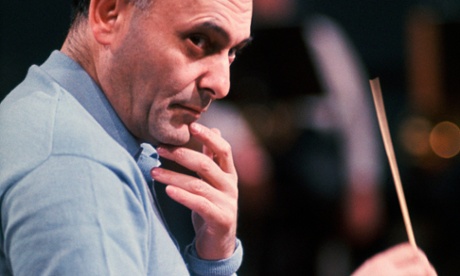
Two years ago, the BBC Proms marked the Wagner bicentenary with concert performances of seven of his operas, including a complete Ring cycle conducted by Daniel Barenboim. Fifty years earlier, the 150th anniversary of the composer’s death had been marked more modestly at the Albert Hall with a single concert given by the Royal Opera House Orchestra, conducted by Georg Solti. The programme had begun with Siegfried’s Rhine Journey and the Prelude and Liebestod from Tristan und Isolde, before a performance of the concluding act of Götterdämmerung.
By 1963, Solti had been music director at Covent Garden for two years. A new Ring cycle, directed by the supreme Wagnerian bass-baritone Hans Hotter, was one of Solti’s signature achievements of his first seasons there. The Götterdämmerung was to receive its first performance a few days after the Prom, and on either side of this production and concert Solti was recording Siegfried for his historic Decca Ring cycle, with the same singers as Brünnhilde and Siegfried, Birgit Nilsson and Wolfgang Windgassen.
What Testament’s immaculately remastered disc (in stereo, from BBC tapes) documents, then, is Solti’s view of the last act of the tetralogy, while it was still, to some extent, work in progress. This concert was the first time he had conducted Götterdämmerung’s complete third act in public. The dramatic weighting in his conducting is almost faultless – it’s hard to imagine Siegfried’s Funeral March delivered with more implacable intensity, and the Opera House orchestra plays out of its skin for him, though perhaps the opening scene between Siegfried and the Rhinemaidens (one of whom is a young Gwyneth Jones) is driven just a little too relentlessly for its bittersweet quality to come through. That, however, was always the Solti style. And while Windgassen may have been slightly past his very best by 1963 – there are a few moments in his confrontation with Gottlob Frick’s implacably powerful Hagen when his tone seems unsteady – Nilsson was arguably approaching her zenith as the greatest Wagnerian soprano of her time. The final Immolation scene, with her voice seemingly surfing effortlessly on the waves of orchestral sonority, is startling by any standards.