This series discusses the present and future of washoku traditional Japanese cuisine. This installment features wagashi confectionery.
In an effort to promote wagashi among a wider range of consumers, shops and manufacturers have been offering the traditional sweets in unconventional ways in recent years. Pairing with alcoholic drinks or sales methods intended to attract young people are among such moves.
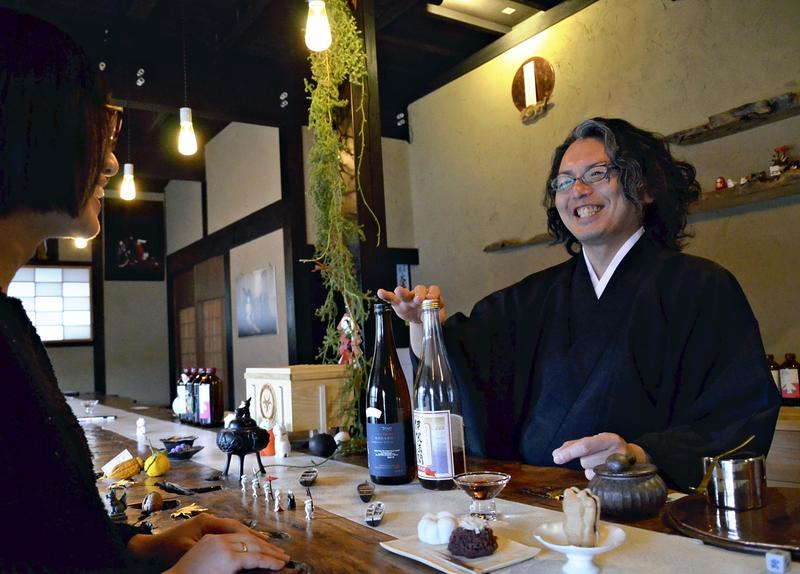
Amid the earthen walls of the cafe Kissa Koan in Kita Ward, Kyoto is a counter that suggests the atmosphere of a bar. Yet it serves wagashi made by well-known local confectioners. More notably, the cafe offers sake and coffee as parings with wagashi, shifting from the conventional view that green tea or matcha are the most suitable drinks to have with the traditional sweets.
"Try it with several different types of sake," said kimono-clad shop owner Matthew. "You'll probably be surprised the taste changes greatly" depending on the sake.
Matthew, who loves sweets, opened the cafe in 2017 to "have people enjoy wagashi in a relaxing atmosphere."
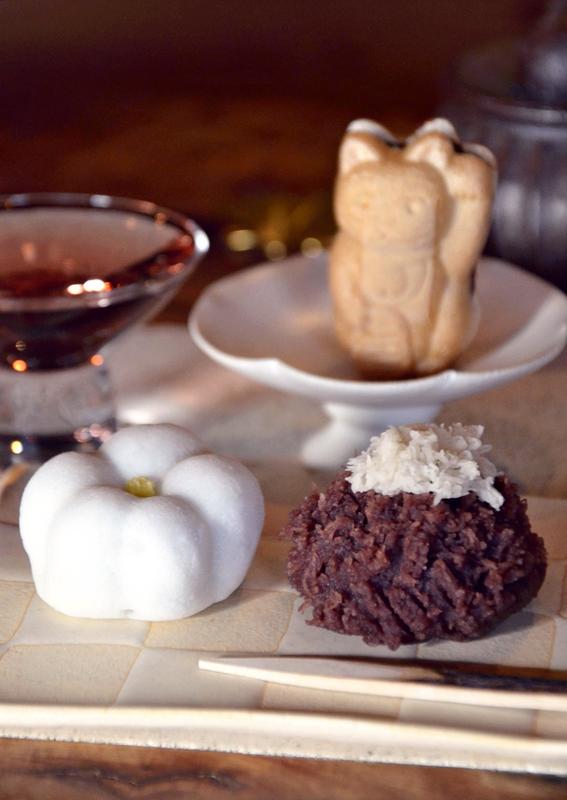
For many years, he has regularly gone to popular wagashi shops Shogetsu and Juko. He consulted with them and received permission to serve at his cafe their jo-namagashi (high-end, fresh, easily perishable sweets). Customers choose from sweets of the day or other menu items and Matthew recommends several suitable sake. Those who do not drink alcohol are offered coffee, caffe latte or matcha. Matthew has personally tasted various combinations to find suitable drinks for the wagashi he serves.
For example, Matthew recommends a junmai ginjo type of sake produced in Kyoto for the Shogetsu wagashi named Shiba no Yuki (snowfall on brushwood).
"This sake enhances the taste of the adzuki red beans," he said.
For an alternative choice of alcoholic beverage for this sweet he said, "If you want to appreciate the design of this sweet, I'd instead recommend cloudy nigori sake, which may remind you of the whiteness of snow."
A 27-year-old female regular said, "Wagashi amazingly goes well with sake."
"I hope this will be the gateway to the world of wagashi for many people," Matthew said. "The most important thing is to make people realize that wagashi is interesting and delightful."
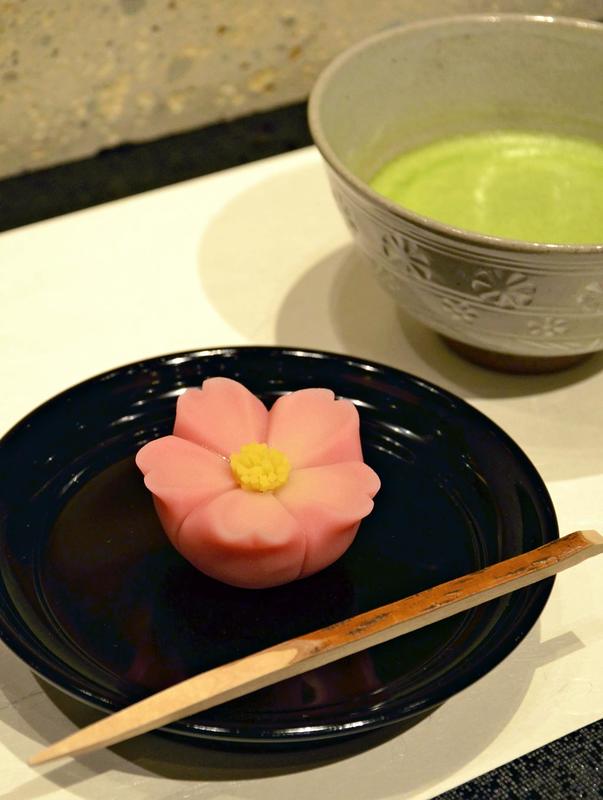
Served at tea ceremonies more often than other kinds of wagashi, jo-namagashi are visually gorgeous, depicting the seasons and exhibiting the refined skills of confectioners.
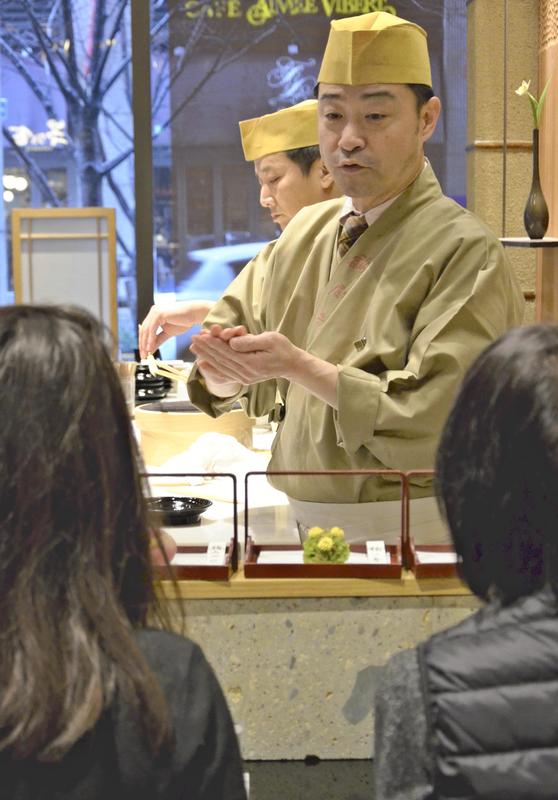
At Tsuruya Yoshinobu's Tokyo Mise in Chuo Ward, Tokyo, customers can watch confectioners craft jo-namagashi among other wagashi confections at the counter and eat the freshly made sweets. Crafting the traditional sweets behind the counter are Yasukazu Umezu, a wagashi confectioner with a 38-year career and three other confectioners.
Umezu explains to customers the history of the wagashi and the utensils used to make them. Customers can take photos while the confectioners make the wagashi.
"Thirty years ago, it would have been unthinkable to demonstrate all our wagashi-making skills this way in front of people," Umezu said. "Here, customers tell us 'Thank you' for our work and enjoy eating our wagashi. I'm very glad about that."
Behind these moves is a shrinking trend in the wagashi industry mainly as the Japanese diet diversifies.
Total shipment value by wagashi businesses with four or more workers decreased from 626.951 billion yen in 1999 to 561.228 billion yen in 2017, while the number of wagashi businesses also decreased from 3,420 to 2,139, according to data from the Economy, Trade and Industry Ministry.
Drawing new shoppers
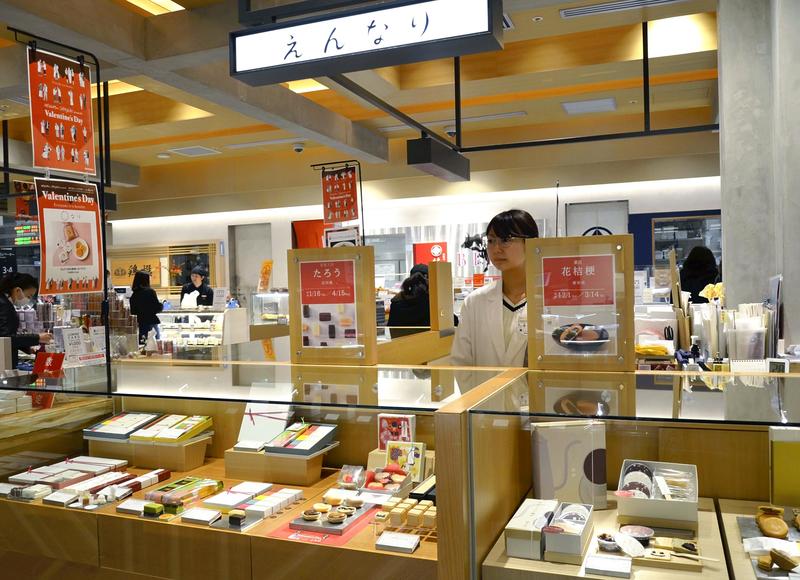
With the aim of having more young people appreciate wagashi, shopping center developer and operator Lumine Co. opened a specialized wagashi shop called Ennari at JR Shinjuku Station in 2016. Ennari is a sort of wagashi select shop where the products of three wagashi producers from across the nation are sold for a limited period.
"This shop is marketed toward people in their 20s to 40s, who are keenly aware of trends," said Mitsuko Hosogi, chief director of Lumine's business management department. "We think it would be nice if some wagashi with pretty appearances win the heart of young consumers at first sight and continue attracting them."
The shop has held an annual two-day event called Ennari Wagashi since 2018. The one in December last year featured 26 businesses selling wagashi or related products, such as drinks and dishware.
Naoko Sese, who introduces local wagashi across Japan on her website, said, "Showing wagashi's diversity and introducing new ways of enjoying it are important to connect young people who don't know about wagashi with the wagashi industry upholding its traditions."
Read more from The Japan News at https://japannews.yomiuri.co.jp/